Hey there! As a supplier of PTC air heaters, I've been getting a lot of questions lately about how the heat output of these heaters changes with the ambient temperature. So, I thought I'd write this blog to share some insights and clear up any confusion.
First off, let's quickly go over what a PTC air heater is. PTC stands for Positive Temperature Coefficient. These heaters use a special type of ceramic heating element that has a unique property - its electrical resistance increases as its temperature rises. This is different from traditional heating elements where the resistance usually stays pretty constant or changes in a different way.
Now, to the main question: Does the heat output of a PTC air heater change with the ambient temperature? The short answer is yes, it does. But to understand why, we need to dig a little deeper.
When the ambient temperature is low, the PTC heating element in the air heater is at a relatively low temperature too. At this point, its electrical resistance is also low. According to Ohm's Law (V = IR, where V is voltage, I is current, and R is resistance), with a constant voltage supply (which is usually the case in household or industrial settings), a lower resistance means a higher current flowing through the heating element. And since the power (P) dissipated by the heating element is given by P = VI (or P = I²R), a higher current results in more power being dissipated as heat. So, in a cold environment, the PTC air heater can produce a relatively high amount of heat.
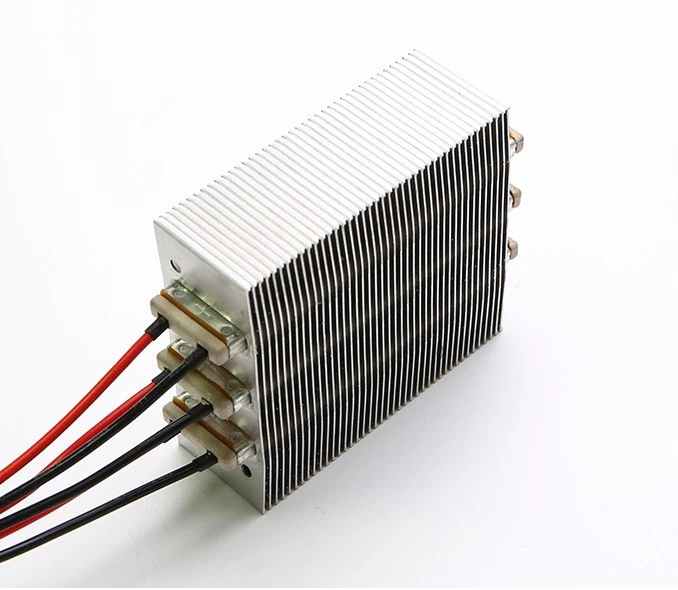
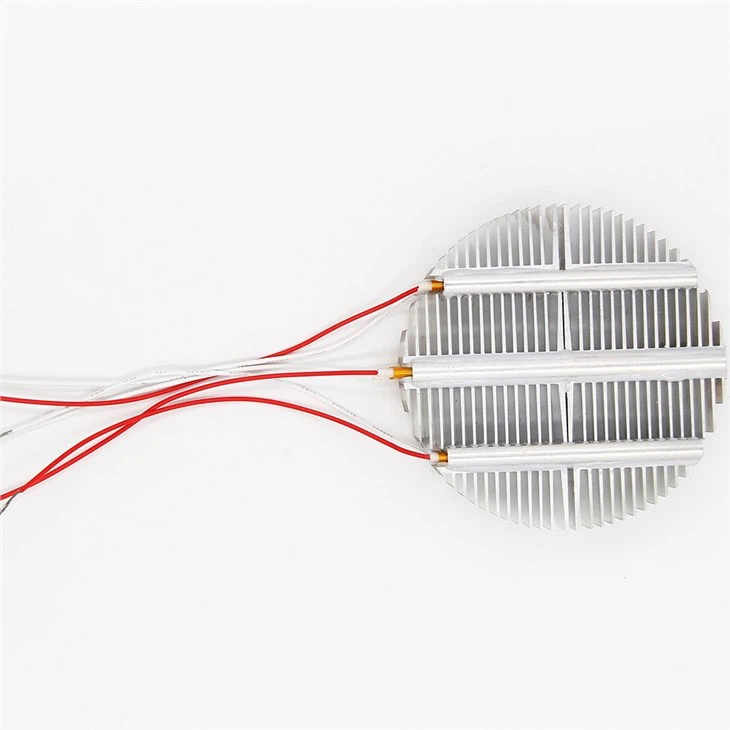
As the ambient temperature starts to rise, the PTC heating element also warms up. As its temperature increases, its electrical resistance goes up. This causes the current flowing through the element to decrease, and as a result, the power dissipated and the heat output of the heater also start to decline. This self - regulating property is one of the key advantages of PTC air heaters. It helps prevent overheating and makes them more energy - efficient compared to some other types of heaters.
Let's take a real - world example. Suppose you have a PTC air heater in a small office. On a cold winter day, when the outside temperature is around 5°C, the heater might be working hard to warm up the room. The PTC element is cool, with low resistance, and it can quickly generate a significant amount of heat to raise the room temperature. But as the room temperature reaches a comfortable 20°C, the heater's heat output will naturally decrease because the PTC element's resistance has increased.
Now, let's talk about the applications of PTC air heaters and how this temperature - dependent heat output affects them.
In ventilation systems, PTC air heaters play a crucial role. You can learn more about PTC Air Heaters in Ventilation Systems. In a ventilation system, the air temperature can vary depending on the season and the outdoor conditions. During the cold months, the PTC air heaters can provide enough heat to warm up the incoming fresh air. But as the weather gets warmer, they automatically adjust their heat output, saving energy and ensuring that the air in the building doesn't get too hot.
Another common application is in hot air curtain machines. Electric PTC Air Heater For Hot Air Curtain Machine is a great option for these machines. Hot air curtain machines are used at entrances of buildings to prevent cold air from entering and warm air from escaping. In cold weather, the PTC air heater in the curtain machine can produce a strong stream of hot air. But as the ambient temperature rises, the heater reduces its heat output, still maintaining the air curtain effect but using less energy.
PTC air heaters also have various industrial uses. For example, in some manufacturing processes where a certain temperature range needs to be maintained in a workspace. The Electric Ptc Air Heating Element can adjust its heat output according to the ambient temperature, ensuring a stable and energy - efficient heating solution.
There are also some factors that can affect how the heat output changes with the ambient temperature. The design of the PTC heating element itself is important. Different materials and manufacturing processes can result in PTC elements with different resistance - temperature characteristics. The airflow rate around the heating element also matters. A higher airflow rate can help carry away the heat more quickly, which can influence the temperature of the PTC element and its resistance.
In conclusion, the heat output of a PTC air heater definitely changes with the ambient temperature. This self - regulating feature makes them a reliable and energy - efficient choice for a wide range of applications, from home heating to industrial processes.
If you're in the market for a PTC air heater, whether it's for a ventilation system, a hot air curtain machine, or an industrial application, we've got you covered. Our PTC air heaters are designed with high - quality PTC heating elements that offer excellent performance and energy efficiency. We can provide you with the right heater for your specific needs. So, if you're interested in learning more or starting a procurement process, don't hesitate to reach out. Let's have a chat about how our PTC air heaters can meet your requirements and help you save on energy costs.
References
- Physics textbooks on electrical circuits and thermodynamics
- Technical manuals of PTC air heater manufacturers