11
Jun
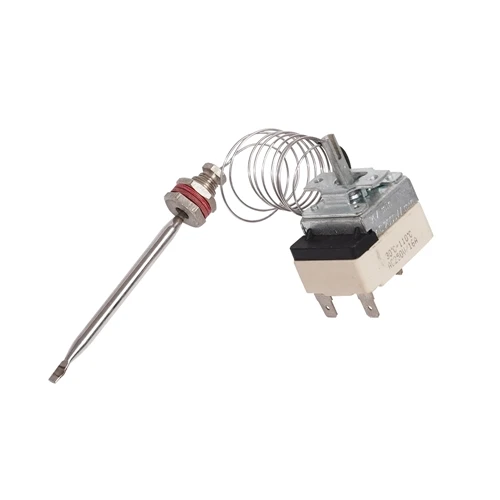 Capillary Thermostats in Commercial Ovens: Why Mechanical Temperature Control...
Commercial ovens are widely used in bakeries, restaurants, food processing plants, and catering businesses. Whether baking bread, roasting meat, or preparing pizzas, precise temperature control is essential for ensuring product quality and energy efficiency. Although digital controllers have...
14
Apr
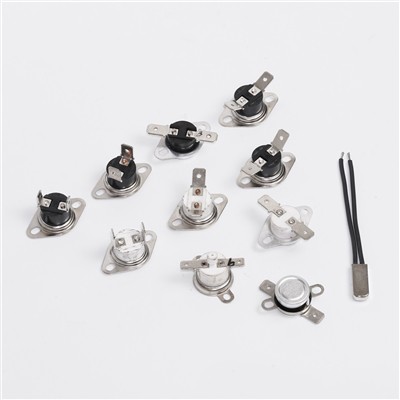 KSD Snap Disc Thermostat Explained: Working Principle, Challenges & Applicati...
1. Technical Principle & Advantages The KSD Snap Disc Thermostat uses a bimetal disc for snap-action switching, offering high reliability and cost efficiency without electronic control. 2. Industry Players Key companies include Sensata Technologies, Therm-O-Disc, Uchiya Thermostat, Cantherm,...
14
Apr
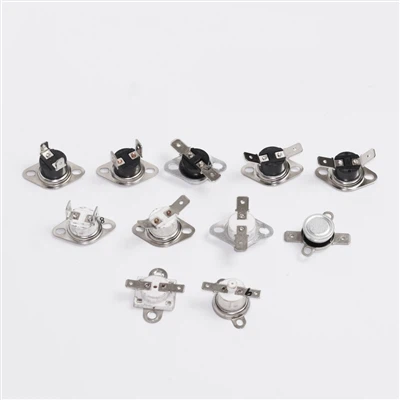 KSD Snap Disc Thermostat Selection Guide: Key Specs, Brand Comparison & Commo...
1. Overview of KSD Snap Disc Thermostat A KSD Snap Disc Thermostat is a widely used thermal control device based on a bimetal snap-action mechanism, ideal for temperature control and overheat protection. 2. Major Brands in the Market Leading manufacturers include Sensata Technologies,...
10
Feb
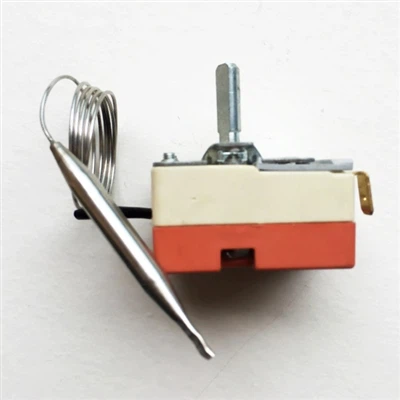 How Thermostats Achieve Precise Temperature Control?
Contents The Core Principle: A Closed-Loop Control System The Sensing Mechanism: From Physical Change to Electrical Signal 2.1. Bimetallic Strips (Mechanical Thermostats) 2.2. Electronic Sensors (Digital and Smart Thermostats) Signal Processing: Converting Raw Data into Actionable Intelligence...
02
Feb
 How to Re-cable Thermocouple Assemblies: A Cost-Effective Maintenance Strateg...
Introduction: The Economic Case for Re-cabling Long-probe thermocouples are essential components in industrial thermal systems, serving critical temperature monitoring functions in applications ranging from high-temperature furnaces and chemical reactors to industrial ovens and process heating...
26
Jan
 Why More Customers Choose Customizable KST Bimetal Thermostats
1. Rising Demands for Temperature Control Components Modern industrial equipment requires thermostats with higher safety, stability, and compatibility. 1.1 Key Advantages of KST Thermostats Simple construction Fast thermal response Independent operation Reliable protection 2. Limitations of...
26
Jan
 KST Adjustable Bimetal Thermostats – Principles, Applications, and Selection ...
1. What Are KST Adjustable Bimetal Thermostats? KST Adjustable Bimetal Thermostats are essential temperature control components widely used in industrial heating systems and electrical equipment. They operate using two metals with different thermal expansion rates to control circuit switching at...
06
Nov
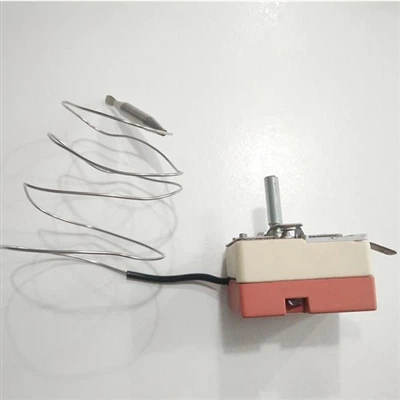 Hidden Heroes of Heat Control: How Capillary Thermostats Shape Industrial Eff...
Capillary thermostats may seem simple compared to digital controllers, but their importance in industrial temperature regulation remains unmatched. They offer mechanical reliability, immunity to electrical noise, and fail-safe switching-critical qualities in environments where electronic...
06
Nov
 Beyond Simple Temperature Control: Why Modern Capillary Thermostats Determine...
For decades, capillary thermostats have been considered a simple, almost ordinary component—often overlooked until they fail. Yet in reality, these devices play a defining role in the reliability, accuracy, and safety of heating and cooling systems. As industries push for higher efficiency and more precise thermal regulation, the performance gap between high-quality thermostats and low-cost generic units has become more obvious. Today’s customers face clear pain points: inconsistent switching accuracy, poor durability, slow thermal response, and limited customization options that prevent seamless integration into specialized equipment.
20
Oct
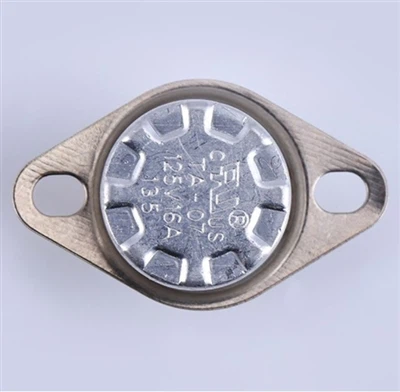 Smart Control Under High Temperatures: From Zettler to JAYE HEATER’s KSD Inno...
In high-temperature industries such as glass annealing, ceramic firing, and plastic molding, KSD thermostats face strict demands. Customers often ask: Can a KSD thermostat remain stable at high temperatures? Is its response fast enough? Can it be customized?
20
Oct
 Understanding KSD Thermostats: From Zettler to JAYE HEATER’s Temperature Cont...
In high-temperature industries such as glass annealing, ceramic firing, and plastic molding, KSD thermostats face strict demands. Customers often ask: Can a KSD thermostat remain stable at high temperatures? Is its response fast enough? Can it be customized?
17
Oct
 New Trends in KST Thermostat Selection — From Eurotherm to JAYE HEATER Qualit...
As industrial automation continues to advance, thermostats have evolved from simple on/off switches into key components for process optimization. Yet, customers still face several recurring issues when sourcing KST thermostats:
17
Oct
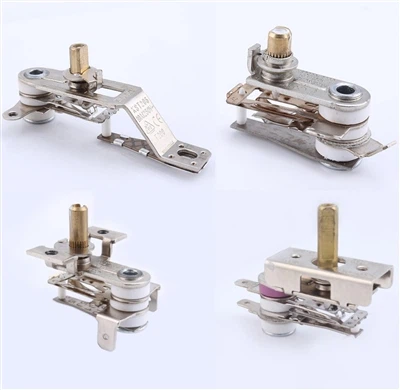 The Power of Precision — Why More Clients Choose JAYE HEATER KST Thermostats
In the fields of injection molding, industrial heating, and mold temperature control, temperature accuracy directly determines product quality and equipment lifespan. Many customers share similar pain points when choosing thermostats: unstable temperature performance, short lifespan, and high prices.
20
Aug
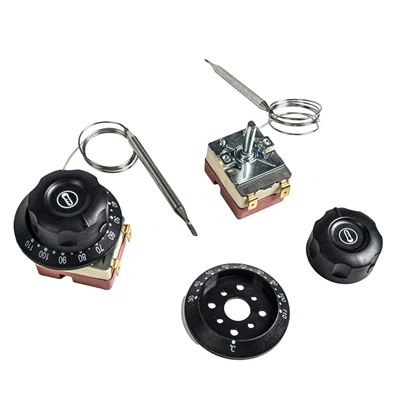 Precision in a Tube: Exploring the Capillary Thermostat Industry
With a wide range of uses in industry and in the home, temperature control is a critical issue. The capillary thermostat has proven to be a dependable and compact option for temperature sensing and control. The capillary thermostat is easy to use, reliable, versatile, and accurate, which...
05
Aug
 How does a capillary tube thermostat work?
A capillary tube thermostat is a temperature control system that makes use of a capillary tube filled with a fluid (either a gas or a liquid) that expands and contracts with temperature changes. This allows you to control the temperature of a system, like an air conditioner, refrigerator or...
01
Aug
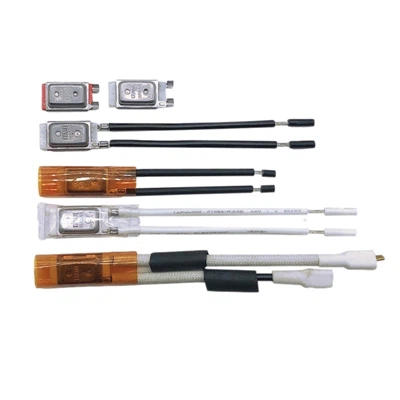 How to Use Thermal fuse overheating protector in Industrial Equipment
Determine Installation Point Install the thermal fuse in thermal contact with the critical heat source (e.g., motor winding, heater plate, control board, etc.). Avoid placing it too far from the heat source, or response time will be delayed. Wiring Wire the thermal fuse in series with the load...
25
Jul
 A Deep Dive into Plug-in Thermostats for Modern Appliances
In today's existence of energy efficiency, safety, and convenience, plug-in thermostats have become an effective and simple method of controlling heating in every shape of appliance. From a hot plate, electric stove, aquarium heater or space heater, plug-in thermostats could also be practically described as the middle of simple “on/off” power control and precise thermal control. This article will give technological, applicable, and commercial context to plug-in thermostats, which can be useful for manufacturers, suppliers, and users.
24
Jul
 Understanding the Role of Capillary Thermostats in Modern Temperature Control
In a technological age where precision and reliability dominate the functional efficiency of thermal appliances, capillary thermostats remain a tried and true method of reliable temperature control. Although many new applications are being informed by newer technologies such as digital sensors and programmable logic controllers, capillary thermostats remain the preferred choice in applications whereby mechanical simplicity, reliability and cost are the dominant factor.
22
Jul
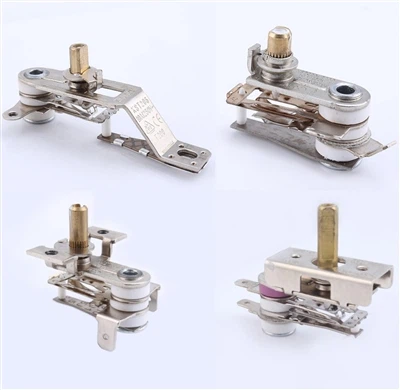 Understanding KST Adjustable Bimetal Thermostats: Function, Applications, and...
A KST adjustable bimetal thermostat is a thermal switch that can be easily explained as an automatic control circuit for temperature that is opened or closed when a specific temperature is reached. KST temperature switches open or close an electrical circuit through the bimetallic strip that is bent when heated, allowing the switch to work. The "KST" series usually identifies a type of bimetal thermostat, and there are several of these used widely in controlling machines and custom heating, ventilation, and temperature-sensitive devices. The advantages of this type of thermostat are that it is relatively small compared to other types of thermostats, very sturdy, and allows for precision control for most applications.
06
Jun
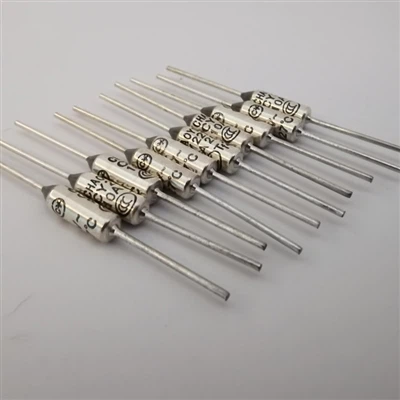 Thermal Fuses: The Silent Guardians of Electronics – Why They Fail and How to...
Thermal fuses (TCOs) are the unsung heroes of electrical safety, silently preventing fires in appliances from microwaves to industrial machinery. Yet, their critical role is often ignored—until they fail. Why do these tiny devices blow unexpectedly? How can industries and consumers optimize their use? This article explores the burning questions and practical solutions shaping the thermal fuse industry