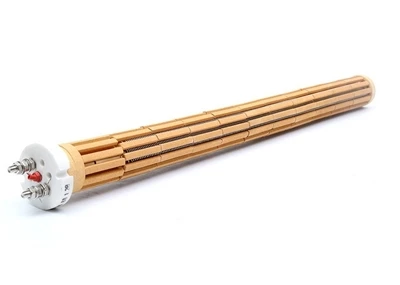
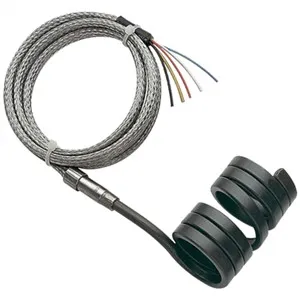
As a professional manufacturer and supplier of flat heating elements, we have gained extensive first-hand practical experience confirming that the structural shape of flat heating elements greatly determines their overall heating performance. In this blog post, we will conduct an in-depth analysis of the technical mechanisms through which various shapes of flat heating elements affect heating efficiency, heat uniformity and service durability. We will also combine practical field application cases and attach corresponding product links leading directly to our official website for your reference.
1. Understanding the Basics of Heat Transfer
Before discussing the impact of shape, it's crucial to understand the fundamental principles of heat transfer. In flat heating elements, the main modes of heat transfer are conduction, convection, and radiation.
Conduction occurs when the heat is transferred through a solid material. In a flat heating element, the electrical current passing through a resistive material generates heat, which is then conducted through the element itself and into the surrounding medium. Convection involves the transfer of heat by the movement of fluids (liquids or gases). As the heating element warms up the adjacent fluid, the fluid expands, becomes less dense, and rises, creating a convection current that distributes heat. Radiation is the emission of heat in the form of electromagnetic waves, which can travel through a vacuum or air and heat up objects in their path.
2. Impact of Shape on Heat Distribution
Rectangular Flat Heating Elements
Rectangular flat heating elements are one of the most common shapes. Their simple and uniform design allows for relatively even heat distribution across a flat surface. This makes them ideal for applications where a large, flat area needs to be heated evenly, such as in electric heating pads or flat cooking surfaces. The long, straight edges of a rectangular element ensure that heat is conducted steadily from one end to the other, reducing the likelihood of hot spots.
For instance, in an Oil Fryer Flat Heating Element, a rectangular shape can provide consistent heat across the bottom of the fryer, ensuring that food is cooked evenly. The flat surface maximizes the contact area with the oil, facilitating efficient heat transfer through conduction.


Circular Flat Heating Elements
Circular flat heating elements offer a more concentrated heat source at the center, gradually distributing heat outward in a circular pattern. This shape is advantageous in applications where a specific central area needs to be heated rapidly. In a small - scale laboratory heating apparatus or a circular cooking burner, the circular flat heating element can focus heat where it is most needed, increasing the overall heating efficiency.
Imagine a scenario where you are using a small circular electric deep fryer. A Deep Fryer Heating Element Tube with a circular flat design can quickly heat the oil in the center of the fryer, and the heat will then spread gradually to the outer edges through convection.
Custom - Shaped Flat Heating Elements
In some cases, custom - shaped flat heating elements are required to fit specific equipment or heating requirements. For example, in a complex industrial machine, a non - standard shape like an L - shaped or U - shaped flat heating element might be used. These custom shapes are designed to snake around obstacles or to provide heat in hard - to - reach areas.
However, the heat distribution in custom - shaped elements can be more challenging to manage. The bends and corners in the shape can cause uneven heat build - up, leading to hot spots. To mitigate this issue, careful engineering and the use of advanced materials are necessary to ensure consistent heat transfer.
3. Influence of Shape on Heating Efficiency
Surface Area and Heat Transfer Rate
The shape of a flat heating element directly affects its surface area, which is a critical factor in determining the heat transfer rate. Generally, a larger surface area allows for more efficient heat transfer because there is more area for conduction, convection, and radiation to occur.
For example, a flat panel heating element with fins or a textured surface has a larger surface area compared to a smooth, flat element of the same dimensions. The additional surface area provided by the fins increases the contact area with the surrounding fluid (air or liquid), enhancing the convection heat transfer. This results in a higher heating efficiency and a faster temperature increase in the target medium.
Electrical Resistance and Shape
The shape of the heating element also impacts its electrical resistance. Resistance is crucial because it determines the amount of heat generated when an electrical current passes through the element according to the formula (H = I^2RT) (where (H) is heat, (I) is current, (R) is resistance, and (T) is time).
A longer and thinner heating element typically has a higher resistance compared to a shorter and thicker one of the same material. By carefully designing the shape of the flat heating element, we can adjust its resistance to optimize the heating performance. For example, in a Flat Tubular Cartridge Heater, the shape of the tubular element can be adjusted to achieve the desired resistance and, therefore, the appropriate heating capacity.
4. Impact of Shape on Durability
Stress Distribution
During operation, flat heating elements are subjected to thermal stress caused by the expansion and contraction as they heat up and cool down. The shape of the element can have a significant impact on how these stresses are distributed.
Elements with sharp corners or sudden changes in shape are more likely to experience stress concentrations. These stress concentrations can lead to cracks and failures over time, reducing the lifespan of the heating element. On the other hand, elements with smooth, rounded shapes or gradual transitions are better able to distribute stress evenly, enhancing their durability.
For example, a Flat Immersion Tubular Heater with a smooth, cylindrical shape is less prone to stress - related failures compared to a flat heating element with rectangular cut - outs or sharp edges.
Material Fatigue
The repeated heating and cooling cycles can also cause material fatigue in flat heating elements. The shape of the element can influence the rate of material fatigue. A shape that allows for uniform heat distribution reduces the likelihood of localized overheating, which can accelerate material fatigue.
For instance, in an Electric Deep Fryer Tubular Heater, a well - designed shape that promotes even heat distribution helps to prevent premature material fatigue and extends the heater's service life.
5. Considerations for Choosing the Right Shape
When selecting a flat heating element for a specific application, several factors need to be considered. First and foremost is the heating requirement. If you need to heat a large, flat area evenly, a rectangular or square - shaped element might be the best choice. For a more concentrated heat source, a circular shape is more suitable.
The available space is also a crucial factor. In some compact devices, a custom - shaped flat heating element may be necessary to fit within the limited space. Additionally, the operating environment, such as the presence of corrosive substances or high - pressure conditions, can influence the choice of shape and material of the heating element.
Conclusion and Call to Action
In conclusion, the shape of a flat heating element has a profound impact on its heating performance, including heat distribution, heating efficiency, and durability. At our company, we understand the importance of these factors and offer a wide range of flat heating elements in various shapes to meet different customer needs.
If you are in the market for high - quality flat heating elements, whether it's for an industrial application, a household appliance, or a specialized device, we are here to help. Our team of experts can assist you in selecting the right shape and design to ensure optimal performance. Contact us today to start a procurement discussion and find the perfect flat heating element solution for your project.
References
- Incropera, F. P., & DeWitt, D. P. (2002). Fundamentals of Heat and Mass Transfer. John Wiley & Sons.
- Holman, J. P. (2002). Heat Transfer. McGraw - Hill.