As a supplier of flexible film heaters, ensuring the high performance of our products is of utmost importance. In this blog, I will share with you how to test the performance of a flexible film heater. These tests are crucial for both manufacturers like us and customers who rely on these heaters for various applications.
1. Electrical Resistance Testing
The first and most fundamental test for a flexible film heater is the electrical resistance test. Resistance is a measure of how much a material opposes the flow of electric current. For a flexible film heater, the resistance value is directly related to its power output.
To conduct this test, you will need a digital multimeter. First, make sure the heater is disconnected from any power source. Set the multimeter to the resistance (ohms) mode. Then, place the two probes of the multimeter on the two terminals of the heater. The multimeter will display the resistance value.
Compare the measured resistance with the specified value provided by the manufacturer. A significant deviation from the specified resistance may indicate a problem with the heater, such as a broken circuit or a manufacturing defect. For example, if the specified resistance is 100 ohms and the measured value is 150 ohms, there could be an issue with the conductive traces in the film.
2. Power Output Testing
Power output is another critical parameter for a flexible film heater. It determines how much heat the heater can generate. The power output of a heater can be calculated using the formula P = V^2 / R, where P is power, V is voltage, and R is resistance.
To test the power output, you need to connect the heater to a regulated power supply. Set the power supply to the rated voltage of the heater. Measure the current flowing through the heater using an ammeter. Then, calculate the power output using the formula P = VI, where I is the current.
Compare the calculated power output with the specified power rating of the heater. If the measured power output is significantly lower than the rated power, it could be due to a high resistance in the heater or an issue with the power supply.
3. Temperature Uniformity Testing
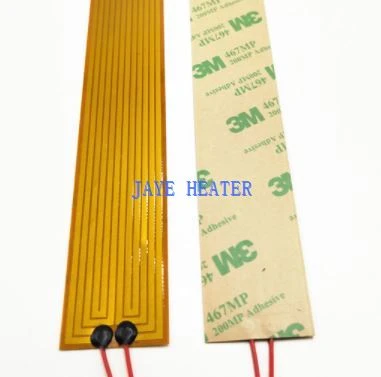
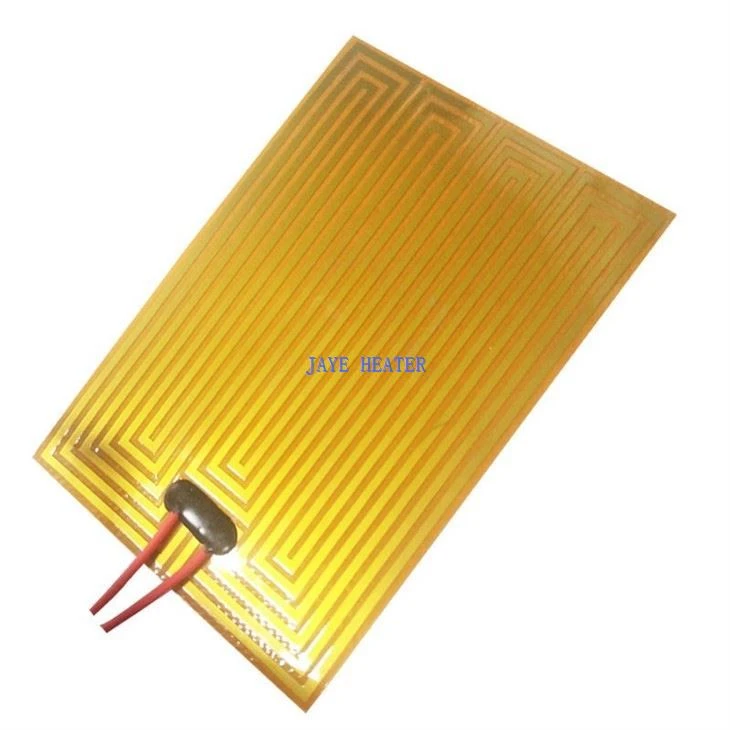
Temperature uniformity is an important factor in many applications of flexible film heaters. For example, in a Kapton Film Heater used for semiconductor manufacturing, uniform temperature distribution is crucial to ensure consistent product quality.
To test temperature uniformity, you can use an infrared thermal imaging camera. First, heat the heater to its operating temperature. Then, use the thermal imaging camera to capture an image of the heater surface. The thermal image will show the temperature distribution across the heater.
Analyze the thermal image to determine the temperature variation across the heater surface. A high-quality flexible film heater should have a relatively small temperature variation, typically within a few degrees Celsius. If there are significant hot spots or cold spots on the heater surface, it may indicate a problem with the heater design or manufacturing.
4. Thermal Response Testing
Thermal response refers to how quickly a heater can reach its operating temperature and how well it can maintain the temperature under different conditions. This is important in applications where rapid heating and precise temperature control are required, such as Poliimide Heaters For 3D Printer.
To test the thermal response, you can use a temperature sensor, such as a thermocouple, to measure the temperature of the heater over time. Connect the temperature sensor to a data logger to record the temperature readings.
Apply power to the heater and start recording the temperature. Measure the time it takes for the heater to reach its operating temperature. Also, observe how the temperature changes when the power is adjusted or when the heater is subjected to different environmental conditions.
A good flexible film heater should have a fast thermal response time and be able to maintain a stable temperature under different conditions.
5. Mechanical Flexibility Testing
One of the key features of a flexible film heater is its ability to be bent and flexed without losing its performance. Mechanical flexibility testing is important to ensure that the heater can withstand the bending and flexing it may encounter in its application.
To conduct this test, you can use a flexing machine. Mount the heater on the flexing machine and set the machine to the desired bending radius and number of cycles. The flexing machine will repeatedly bend and flex the heater.
After the specified number of cycles, perform the electrical resistance test and power output test again to check if the performance of the heater has been affected. A high-quality flexible film heater should be able to withstand a large number of bending and flexing cycles without significant degradation in performance.
6. Environmental Testing
Flexible film heaters may be used in various environmental conditions, such as high humidity, high temperature, and corrosive environments. Environmental testing is important to ensure that the heater can perform reliably under these conditions.
6.1 Humidity Testing
To test the performance of the heater under high humidity conditions, you can place the heater in a humidity chamber. Set the humidity chamber to the desired humidity level and temperature. Leave the heater in the chamber for a specified period of time.
After the test, perform the electrical resistance test and power output test to check if the performance of the heater has been affected by the high humidity. A good flexible film heater should be able to maintain its performance even in high humidity environments.
6.2 Temperature Cycling Testing
Temperature cycling testing involves subjecting the heater to repeated cycles of high and low temperatures. This test simulates the temperature changes that the heater may encounter in its application.
Place the heater in a temperature chamber and set the chamber to cycle between the desired high and low temperatures. The number of cycles and the temperature range should be determined based on the expected operating conditions of the heater.
After the temperature cycling test, perform the electrical resistance test, power output test, and temperature uniformity test to check if the performance of the heater has been affected.
6.3 Corrosion Testing
If the heater is expected to be used in a corrosive environment, corrosion testing is necessary. You can expose the heater to a corrosive agent, such as salt spray, for a specified period of time.
After the corrosion test, visually inspect the heater for any signs of corrosion. Also, perform the electrical resistance test and power output test to check if the performance of the heater has been affected.
Conclusion and Call to Action
Testing the performance of a flexible film heater is a comprehensive process that involves multiple aspects, including electrical resistance, power output, temperature uniformity, thermal response, mechanical flexibility, and environmental performance. By conducting these tests, we can ensure that our Flexible Film Heaters meet the high standards required by our customers.
If you are in the market for high-quality flexible film heaters, such as Kapton Film Heaters, Poliimide Heaters For 3D Printer, or Hydronic Coil Heaters, please feel free to contact us for more information and to discuss your specific requirements. We are committed to providing you with the best products and services.
References
- "Handbook of Heater Design and Application", John Wiley & Sons
- "Thermal Engineering Principles and Applications", McGraw - Hill