As a supplier of finned tubular heaters, I often receive inquiries about the versatility of our products. One common question is whether a finned tubular heater can be used for heating liquids. In this blog post, I'll delve into the technical aspects, advantages, limitations, and practical considerations of using finned tubular heaters for liquid heating applications.
Technical Feasibility
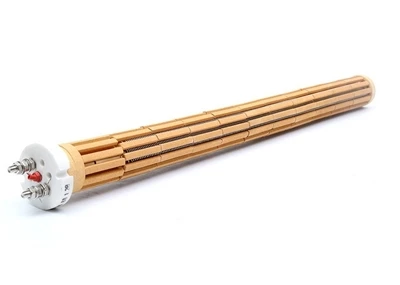
Finned tubular heaters are designed to transfer heat efficiently. They consist of a heating element enclosed in a metal tube, with fins attached to the outer surface of the tube. The fins increase the surface area available for heat transfer, which enhances the heater's ability to dissipate heat.
When it comes to heating liquids, the basic principle remains the same. The heater is immersed in the liquid, and the heat generated by the heating element is transferred to the surrounding liquid through the tube and the fins. However, there are some important factors to consider.
Advantages of Using Finned Tubular Heaters for Liquid Heating
- High Heat Transfer Efficiency: The fins on the tubular heater significantly increase the surface area in contact with the liquid. This allows for more rapid and efficient heat transfer compared to non - finned heaters. As a result, the liquid can reach the desired temperature more quickly, reducing heating times and improving overall energy efficiency.
- Uniform Heating: Finned tubular heaters can provide more uniform heating of the liquid. The increased surface area ensures that heat is distributed more evenly throughout the liquid volume. This is particularly important in applications where temperature uniformity is critical, such as in some chemical processes or food and beverage industries.
- Versatility: Our Industrial Air Finned Heaters, W Type U Type Air Duct Electric Finned Tubular Heater, and Straright & U Bend Finned Tubular Heaters come in various shapes and sizes, which can be customized to fit different liquid heating applications. Whether it's a small laboratory setup or a large industrial tank, we can provide a suitable finned tubular heater.
Limitations and Considerations
- Corrosion: The liquid being heated may be corrosive to the materials of the finned tubular heater. For example, acidic or alkaline liquids can cause corrosion of the metal tube and fins over time. It's crucial to select the appropriate materials for the heater based on the chemical properties of the liquid. Stainless steel is a common choice for its corrosion resistance, but in some cases, more specialized materials may be required.
- Scaling: Some liquids, especially those with high mineral content, can cause scaling on the surface of the heater. Scaling reduces the heat transfer efficiency and can eventually lead to overheating of the heater. Regular maintenance and cleaning are necessary to prevent scaling and ensure the long - term performance of the heater.
- Liquid Viscosity: Highly viscous liquids can pose challenges for finned tubular heaters. The flow of viscous liquids around the fins may be restricted, which can affect the heat transfer rate. In such cases, additional measures may be needed, such as using agitators to improve the liquid flow.
Practical Applications
- Chemical Processing: In chemical manufacturing, finned tubular heaters can be used to heat various chemical solutions. The ability to provide uniform heating is crucial for maintaining the quality and consistency of chemical reactions.
- Food and Beverage Industry: Finned tubular heaters are used in the food and beverage industry for heating liquids such as water, milk, and juices. They can be designed to meet strict hygiene standards, ensuring the safety of the products.
- Water Heating: In domestic and industrial water heating applications, finned tubular heaters can be used to heat water in tanks or boilers. Their high heat transfer efficiency makes them an energy - efficient choice for these applications.
Installation and Maintenance
Proper installation of finned tubular heaters is essential for their safe and efficient operation. The heater should be installed in a way that ensures good contact with the liquid and proper electrical connections. It's also important to follow the manufacturer's instructions regarding the maximum immersion depth and the orientation of the heater.
Regular maintenance is required to keep the finned tubular heater in good working condition. This includes checking for signs of corrosion, scaling, and damage to the fins or the tube. Any issues should be addressed promptly to prevent further damage and ensure the longevity of the heater.
Conclusion
In conclusion, finned tubular heaters can indeed be used for heating liquids. They offer several advantages, including high heat transfer efficiency, uniform heating, and versatility. However, it's important to consider the limitations, such as corrosion and scaling, and take appropriate measures to address them.


If you're considering using finned tubular heaters for your liquid heating applications, we'd be more than happy to assist you. Our team of experts can help you select the right heater based on your specific requirements and provide guidance on installation and maintenance. Contact us to start a discussion about your project and explore how our finned tubular heaters can meet your needs.
References
- Incropera, F. P., & DeWitt, D. P. (2002). Fundamentals of Heat and Mass Transfer. Wiley.
- Holman, J. P. (2009). Heat Transfer. McGraw - Hill.