In the field of industrial heating, ceramic bobbin heaters play a crucial role, especially when operating in a vacuum environment. As a trusted supplier of Ceramic Bobbin Heaters, I am excited to share with you the principles and key aspects of how these heaters operate under such conditions.
1. Introduction to Ceramic Bobbin Heaters
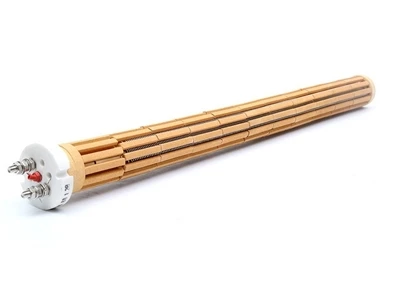
Ceramic bobbin heaters are a type of heating element that consists of a ceramic bobbin with a resistance wire wound around it. The ceramic material provides excellent electrical insulation and high-temperature resistance, making it suitable for a wide range of applications. These heaters are known for their high efficiency, uniform heating, and long service life.
2. Operating Principles in a Vacuum Environment
2.1 Heat Transfer Mechanisms
In a vacuum environment, the traditional heat transfer mechanisms such as convection are significantly reduced or even eliminated. Therefore, the primary heat transfer mode for ceramic bobbin heaters in a vacuum is radiation. When an electric current passes through the resistance wire wound around the ceramic bobbin, the wire heats up due to the Joule effect. The heat is then radiated from the surface of the heater to the surrounding objects.
The radiation heat transfer rate is determined by the Stefan - Boltzmann law, which states that the power radiated per unit area of a black body is proportional to the fourth power of its absolute temperature. Although ceramic bobbin heaters are not perfect black bodies, they still follow a similar principle. The ceramic material of the bobbin helps to enhance the radiation efficiency by providing a large surface area for heat emission.
2.2 Electrical Considerations
In a vacuum, the electrical properties of the ceramic bobbin heater need to be carefully considered. The absence of air means that there is no air to act as a dielectric, which can affect the insulation properties of the heater. Therefore, the ceramic material used in the bobbin must have excellent electrical insulation properties to prevent electrical breakdown.
The resistance wire used in the heater also needs to be carefully selected. It should have a stable resistance value over a wide temperature range and be able to withstand the high temperatures generated in a vacuum. Additionally, the wire must be properly wound around the ceramic bobbin to ensure uniform heating and prevent short - circuits.

3. Advantages of Ceramic Bobbin Heaters in a Vacuum Environment
3.1 High - Temperature Resistance
Ceramic materials have a very high melting point, which allows ceramic bobbin heaters to operate at extremely high temperatures in a vacuum. This makes them suitable for applications such as vacuum furnaces, where high - temperature processing is required.
3.2 Clean and Contamination - Free
Since there is no air in a vacuum, there is no risk of oxidation or contamination of the heater. This is particularly important in applications where a clean environment is required, such as semiconductor manufacturing.
3.3 Precise Temperature Control
Ceramic bobbin heaters can be designed to provide precise temperature control. By adjusting the electrical power supplied to the heater, the temperature can be accurately regulated, which is essential for many industrial processes.
4. Applications of Ceramic Bobbin Heaters in a Vacuum Environment
4.1 Vacuum Furnaces
Vacuum furnaces are used for various heat - treatment processes, such as annealing, hardening, and brazing. Ceramic bobbin heaters are ideal for these applications because they can provide high - temperature and uniform heating in a vacuum environment.
4.2 Semiconductor Manufacturing
In semiconductor manufacturing, a clean and precise heating environment is required. Ceramic bobbin heaters can be used in processes such as wafer heating and thin - film deposition, where they can provide the necessary heat without introducing contaminants.
4.3 Vacuum Coating
Vacuum coating processes, such as physical vapor deposition (PVD) and chemical vapor deposition (CVD), require high - temperature heating in a vacuum. Ceramic bobbin heaters can be used to heat the substrates or the evaporation sources, ensuring a stable and efficient coating process.
5. Our Product Offerings
As a supplier of Ceramic Bobbin Heaters, we offer a wide range of products to meet the diverse needs of our customers. Our Ceramic Radiation Heater is designed to provide efficient radiation heating in a vacuum environment. It features a high - quality ceramic bobbin and a carefully selected resistance wire, ensuring uniform heating and long service life.
Our Electric Ceramic Bobbin Heating Element is another popular product. It is suitable for various applications in a vacuum, including vacuum furnaces and semiconductor manufacturing. The heating element is designed to provide precise temperature control and high - temperature resistance.
We also offer Ceramic Heating Element For Hot Air Welding Machine. This product is specifically designed for hot air welding machines operating in a vacuum environment. It provides fast and efficient heating, ensuring a high - quality welding process.
6. Contact Us for Procurement
If you are interested in our Ceramic Bobbin Heaters or have any questions about their operation in a vacuum environment, please feel free to contact us. We have a team of experienced professionals who can provide you with detailed information and technical support. Whether you are looking for a standard product or a customized solution, we can meet your requirements.
References
- Incropera, F. P., & DeWitt, D. P. (2002). Fundamentals of Heat and Mass Transfer. Wiley.
- Holman, J. P. (2010). Heat Transfer. McGraw - Hill.