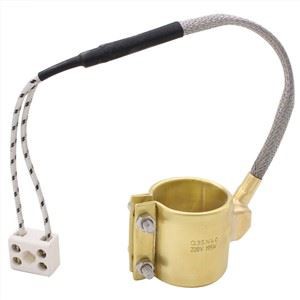
In the realm of heating technology, PTC (Positive Temperature Coefficient) heating elements have emerged as a revolutionary solution, offering self - regulating capabilities and enhanced safety. As a leading PTC heating element supplier, we understand the intricate relationship between ambient temperature and the performance of these elements, which can significantly affect their efficiency and application.
The Basics of PTC Heating Elements
PTC heating elements are made from materials that exhibit a positive temperature coefficient, meaning their electrical resistance increases as the temperature rises. This characteristic allows the element to self - regulate its temperature. When an electric current passes through the PTC element, it begins to heat up. As the temperature increases, so does the resistance. This increase in resistance reduces the current flowing through the element, which in turn limits the heat output. This self - regulating feature is one of the key advantages of PTC heating elements, making them safer and more energy - efficient compared to traditional heating elements.
There are different types of PTC heating elements available in the market, such as Polymer PTC Heater Heating Elements, PTC Self - Regulating Cartridge Heater, and Ptc Air Heating Elements. Each of these types is designed to cater to specific applications and operating conditions, but they all share the fundamental PTC property.
Influence of Ambient Temperature on Initial Heating Performance
When it comes to the initial heating performance of PTC heating elements, ambient temperature plays a crucial role. At lower ambient temperatures, the resistance of the PTC element is relatively low. According to Ohm's Law (V = IR), with a constant voltage, a lower resistance allows a higher current to flow through the element. This means that more power is dissipated as heat, resulting in a faster initial heating rate.
For instance, in a cold environment like a refrigerated warehouse where the ambient temperature might be around 0°C, a PTC air heating element will draw more current initially. This rapid heat - up is beneficial as it can quickly bring the target area to a desired temperature. On the other hand, in a warmer environment, say an office with an ambient temperature of 25°C, the initial resistance of the PTC element is higher due to the pre - existing heat. As a result, the current flow is reduced, and the heating rate is slower compared to the cold environment.
Impact on Steady - State Temperature
The steady - state temperature of a PTC heating element is also directly affected by the ambient temperature. The self - regulating nature of PTC elements allows them to reach a certain operating temperature, which is a balance between the heat generated by the element and the heat dissipated to the surroundings.
In a low - ambient - temperature environment, the heat loss from the PTC element to the surroundings is more significant. To maintain the balance, the element will operate at a relatively high temperature. The increased resistance due to the self - regulating property will limit the current flow, but the element still needs to generate enough heat to counteract the large heat loss.
Conversely, in a high - ambient - temperature environment, the heat loss from the element to the surroundings is less. The PTC element will reach a lower steady - state temperature because it doesn't need to generate as much heat to maintain the balance. For example, a PTC Self - Regulating Cartridge Heater used in a tropical climate will have a lower steady - state temperature compared to the same heater used in a polar climate.
Efficiency and Energy Consumption Effects
The efficiency of PTC heating elements is closely related to the ambient temperature. In general, PTC elements are more efficient in cold environments. As mentioned earlier, the lower initial resistance in cold conditions allows for a higher power input initially, which can quickly achieve the desired temperature. Once the element reaches its operating temperature, the self - regulating feature ensures that energy is not wasted by over - heating.


In warm environments, the slower heating rate and lower heat output requirements may lead to a less efficient operation. The element may take longer to reach a noticeable temperature increase, and the relatively high initial resistance reduces the power input. This can result in higher energy consumption per unit of heat produced. For example, a Polymer PTC Heater Heating Elements used in a constantly warm room may consume more energy overall to provide a small amount of additional heat compared to its performance in a cold room.
Application - Specific Considerations
Different applications of PTC heating elements require careful consideration of ambient temperature. In automotive heating systems, for example, the ambient temperature can vary greatly depending on the climate and season. A PTC heater used for cabin heating must be designed to perform well in both extreme cold and mild temperatures. In cold climates, it needs to quickly warm up the cabin, while in warmer climates, it should be able to regulate its output to avoid over - heating.
In industrial applications, such as plastic injection molding machines, PTC heating elements are used to maintain a specific temperature in the mold. The ambient temperature in the factory can affect the accuracy of temperature control. If the ambient temperature fluctuates widely, the PTC element may experience variations in its performance, leading to inconsistent product quality.
Choosing the Right PTC Heating Element Based on Ambient Temperature
As a PTC heating element supplier, we recommend that customers take into account the ambient temperature when selecting the appropriate product. For applications in cold environments, elements with higher power ratings and lower initial resistance may be more suitable. These elements can quickly raise the temperature in cold conditions.
On the other hand, for warm environments, elements with lower power ratings may be sufficient. They can still provide the necessary heat while operating more efficiently. Customers should also consider the temperature range of the element's self - regulation. A wider temperature range can ensure better performance in varying ambient conditions.
Conclusion and Call to Action
Understanding how ambient temperature affects the performance of PTC heating elements is crucial for both manufacturers and end - users. Whether you are in the automotive, industrial, or consumer products industry, choosing the right PTC heating element based on the ambient temperature can lead to improved efficiency, energy savings, and better product performance.
As a trusted PTC heating element supplier, we are committed to providing high - quality products that are optimized for different ambient temperatures. If you are looking for reliable PTC heating solutions, we invite you to reach out to us for a consultation. Our team of experts can help you select the most suitable PTC heating element for your specific needs.
References
- ASTM International. (20XX). Standard Test Methods for PTC Heaters.
- IEC (International Electrotechnical Commission). (20XX). Safety Standards for PTC Heating Elements.
- Scientific journals such as "Journal of Heating Technology" and "Thermal Science" have published research on the performance of PTC heating elements under different environmental conditions.