Hey there! As a supplier of Drum Silicone Heaters, I've been getting a lot of questions lately about how the thermal conductivity of silicone material impacts a heater's performance. So, I thought I'd take a deep dive into this topic and share some insights with you.
First off, let's talk about what thermal conductivity is. Simply put, thermal conductivity is a measure of a material's ability to conduct heat. In the context of silicone heaters, it refers to how well the silicone can transfer heat from the heating element to the object being heated, like an oil drum.

The thermal conductivity of silicone material plays a crucial role in the performance of a heater. A higher thermal conductivity means that the silicone can transfer heat more efficiently. This is super important because it directly affects how quickly the heater can warm up the contents of the drum. If the thermal conductivity is low, the heater will take longer to reach the desired temperature, and it might even struggle to maintain that temperature.
Let's break down the key ways thermal conductivity impacts a heater's performance:
Heating Speed
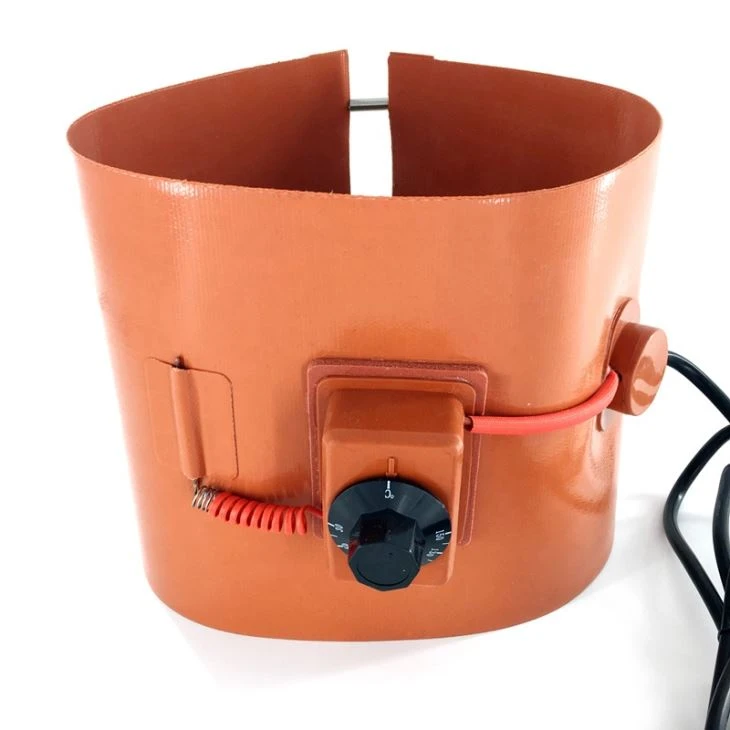
One of the most obvious effects of thermal conductivity is on the heating speed. When you have a silicone heater with high thermal conductivity, it can quickly transfer heat from the heating element to the drum. This means that the contents of the drum will heat up faster. For example, if you're using a Electric Silicone Oil Drum Heater Belt to heat up oil in a drum, a high - thermal - conductivity silicone will ensure that the oil reaches the optimal temperature in a shorter amount of time. This is especially important in industrial settings where time is money, and you need to get the job done quickly.
Energy Efficiency
Another important aspect is energy efficiency. A silicone material with good thermal conductivity can transfer heat more effectively, which means that less energy is wasted. When the heater can transfer heat efficiently, it doesn't have to work as hard to maintain the desired temperature. This translates into lower energy consumption and cost savings in the long run. If you're using a Fiberglass Insulated Silicone Drum Heaters, the high - thermal - conductivity silicone will help make the heater more energy - efficient, reducing your electricity bills.
Temperature Uniformity
Thermal conductivity also affects the temperature uniformity across the drum. A high - thermal - conductivity silicone can distribute heat evenly throughout the drum. This is crucial because it ensures that all parts of the drum's contents are heated to the same temperature. For instance, if you're heating a drum of chemicals, uneven heating could lead to inconsistent chemical reactions. With a Barrel Shape Silicone Rubber Heater made of high - thermal - conductivity silicone, you can be confident that the temperature inside the drum will be uniform.
Durability
Believe it or not, thermal conductivity can also impact the durability of the heater. When the silicone can transfer heat efficiently, it reduces the stress on the heating element. This is because the element doesn't have to work as hard to maintain the temperature. As a result, the heater is less likely to overheat and break down. A high - thermal - conductivity silicone can help extend the lifespan of your drum heater, saving you money on replacements.
Now, let's talk about some factors that can affect the thermal conductivity of silicone material. One of the main factors is the type of filler used in the silicone. Different fillers have different thermal conductivities, and choosing the right filler can significantly improve the overall thermal conductivity of the silicone. Another factor is the density of the silicone. Generally, a denser silicone will have a higher thermal conductivity.
As a supplier of Drum Silicone Heaters, we understand the importance of thermal conductivity in heater performance. That's why we carefully select the silicone materials for our heaters to ensure they have the best possible thermal conductivity. Our heaters are designed to provide fast, efficient, and uniform heating, making them ideal for a wide range of applications.
If you're in the market for a high - quality drum heater, we'd love to have a chat with you. Whether you need a Electric Silicone Oil Drum Heater Belt, a Fiberglass Insulated Silicone Drum Heaters, or a Barrel Shape Silicone Rubber Heater, we've got you covered. Contact us to discuss your specific requirements and find the perfect heater for your needs.
References
- "Thermal Conductivity of Polymers and Polymer Composites" by X. Zhang and D. Shimizu.
- "Silicone Rubber: Properties and Applications" by A. L. Cooper.