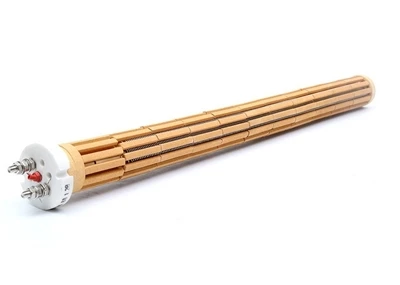
When sourcing flat cartridge heaters, many buyers overlook a critical specification: heater width. As an experienced flat cartridge heater supplier, we know that the width of a flat cartridge heater plays a vital role in its heat‑transfer efficiency and real‑world working performance.
In this article, we break down exactly how width affects flat cartridge heater output and performance, helping you choose the right flat cartridge heater for your project with confidence.
Let's start with heat transfer efficiency. The width of a flat cartridge heater plays a crucial role in how effectively it can transfer heat to the target object. A wider heater generally has a larger surface area in contact with the material it's heating. This increased surface area allows for more efficient heat transfer because there are more points of contact where heat can move from the heater to the object.
For example, if you're using a Flat Cartridge Heater Element to heat a flat plate, a wider heater will cover more of the plate's surface. This means that heat can be distributed more evenly across the plate, reducing the chances of hot spots and ensuring that the entire plate reaches the desired temperature. On the other hand, a narrower heater might only heat a small section of the plate, leading to uneven heating and potentially affecting the quality of your product.
Power Density
Another important factor is power density. Power density refers to the amount of power (in watts) that is dissipated per unit area of the heater's surface. A wider flat cartridge heater typically has a lower power density compared to a narrower one, assuming the same wattage.
Lower power density can be beneficial in many applications. It reduces the risk of overheating the heater itself, which can lead to premature failure. When the power is spread out over a larger surface area, the temperature of the heater remains more stable. This is especially important in applications where the heater needs to operate continuously for long periods, such as in Fuel Cell Heating Elements.
However, in some cases, a higher power density might be required. For instance, if you need to heat a small, specific area quickly, a narrower heater with a higher power density can be more effective. It can deliver a concentrated amount of heat to the target area in a shorter time.


Response Time
The width of a flat cartridge heater also affects its response time, which is the time it takes for the heater to reach its set temperature. A wider heater generally has a longer response time compared to a narrower one.
This is because a wider heater has more mass and a larger volume of material that needs to be heated up. It takes more energy and time to raise the temperature of a larger heater to the desired level. In contrast, a narrower heater has less mass, so it can heat up more quickly.
If your application requires rapid heating, such as in a Single Head Flat Heating Tube used for spot heating, a narrower heater might be the better choice. But if you can tolerate a longer heating time and need more even heat distribution, a wider heater is likely to be more suitable.
Installation and Compatibility
When it comes to installation and compatibility, the width of the flat cartridge heater is a key consideration. You need to ensure that the heater can fit into the available space and be properly integrated with your heating system.
A wider heater might require more space for installation. If you have limited space in your equipment, a narrower heater may be necessary. Additionally, you need to make sure that the width of the heater is compatible with the mounting system and the object you're heating. For example, if you're using a Manifold Flat Cartridge Heaters, the width of the heater must match the dimensions of the manifold to ensure proper heat transfer.
Cost Considerations
Finally, cost is always a factor when making a purchasing decision. Generally, wider flat cartridge heaters tend to be more expensive than narrower ones. This is because they require more materials to manufacture and may have more complex production processes.
However, it's important to look at the overall cost-benefit ratio. A wider heater might cost more upfront, but it could save you money in the long run by providing more efficient heat transfer, longer lifespan, and better performance. You need to weigh the initial cost against the potential savings and benefits in your specific application.
Conclusion
In conclusion, the width of a flat cartridge heater has a significant impact on its performance in terms of heat transfer efficiency, power density, response time, installation, and cost. When choosing a flat cartridge heater, you need to carefully consider your application requirements and balance these factors to find the right width for your needs.
If you're in the market for a Flat Type Heating Element or any other type of flat cartridge heater, I'm here to help. I've got a wide range of heaters with different widths and specifications to meet your specific needs. Whether you need a heater for a small, high-speed application or a large, continuous heating process, I can provide you with the right solution.
Don't hesitate to reach out if you have any questions or want to discuss your heating requirements in more detail. Let's work together to find the perfect flat cartridge heater for your project.
References
- "Principles of Heat Transfer" by Frank P. Incropera and David P. DeWitt
- "Industrial Heating Equipment Handbook" edited by William R. Wolfe