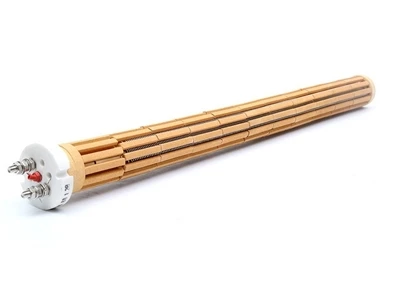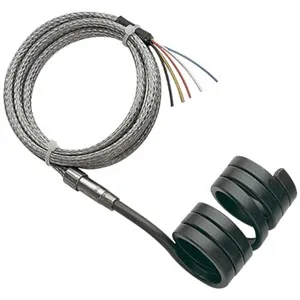
Hey there, if you’ve ever stared at a piece of machinery that just won’t heat up right, I feel you. As someone who’s been in the ceramic band heater game for years—talking to guys running injection molds, extruders, all sorts of process gear—I can’t tell you how many times I’ve heard, “Wait, I just bought the heater, why’s it underperforming so hard?” 9 times out of 10? It’s not the heater itself—it’s the size. Picking the wrong ceramic band heater size is like wearing shoes two sizes too big: it might fit (sorta), but it’s useless for what you actually need it for, and it’ll just cause headaches down the line.
Let’s break this down real, no jargon fluff. First, let’s make sure we’re on the same page: these aren’t those tiny little kitchen heaters. We’re talking about industrial ones—your Ceramic Heater Bands that wrap around things like barrels, molds, extruders, to keep materials at a precise temp for manufacturing. Size here isn’t just how big the heater is—there are two non-negotiable numbers: inner diameter (ID) and length. Mess either of those up, and you’re dealing with cold spots, wasted energy, or even premature heater failure. I’ve seen it happen so many times with new clients who skip the basic measurements because they think “one size fits all” works. Spoiler: it doesn’t.
First step: Don’t guess. Measure twice, order once. I know, I know—you’re busy, your machine’s down, you just want to slap a new heater on and get back to work. But I’ve had clients who measured with a tape that was stretched out, or rounded to the nearest inch, and ended up with a heater that was either too loose (gap between heater and barrel = heat escapes like a sieve) or too tight (you have to force it on, cracking the ceramic elements before it even runs). For ID, wrap a flexible measuring tape around the exact spot you’re heating—make sure it’s snug, no sag, because if that barrel’s slightly oval (which a lot of older machinery is), you need to measure the widest and narrowest point. Average them, that’s your ID. Then for length: measure the straight part of the barrel or mold you’re wrapping—don’t include grooves or flanges where the heater can’t sit flat. If you need multiple heaters, add a tiny gap (like 1/8 of an inch) between each to avoid overheating, but that’s only if you’re covering a longer area than one standard length.
Wait, but what about if you’re replacing an old heater? That’s the easy way out—pull the old one, write down the ID and length, and order the same. But hold up—sometimes old heaters were undersized because the previous owner tried to cut costs. If that old heater was running 24/7 just to hit 300°F, that’s a red flag. It might be time to size up a little, but only if your machine can handle the wattage (more on that in a sec).
Now, here’s a common mistake with niche uses: if you’re in injection molding, don’t just grab any old ceramic heater band. An Injection Molding Ceramic Band Heater is built specifically for those tight, high-temperature molds—they’re designed to fit the smaller, precise IDs most injection machines use, and they distribute heat evenly across the whole mold surface. A generic heater might be cheaper, but it’ll leave a cold spot on your mold, making your parts warp or have uneven finish. I had a plastic parts maker last year who switched to generic heaters and had to scrap 20% of his parts for a month—switched to the right-sized injection molding ones, and that scrap rate dropped to less than 1%. Worth every extra dollar.
Next up: high-temperature applications. If you’re working with something that needs to hit 1000°F or more, like processing high-performance plastics or metals, you can’t use a standard heater. A High Temperature Ceramic Electric Band Heater uses denser ceramic insulation and thicker heating elements that handle those temps without failing. If you size this wrong—say you get a heater that’s too small to keep up with the heat needed—those elements will burn out in weeks, not months. I’ve had clients try to save a buck on high-temp sizes, and they end up replacing heaters every week, which is way more costly in the long run.
Let’s talk about extruders, because that’s another big one for our business. Single screw extruders rely on consistent heat along the barrel to melt plastic or rubber evenly. The right size Single Screw Extruder Heating Element (which is just a specific type of ceramic band heater) is critical here. The length of the heater needs to cover the entire heated section of the extruder barrel—no overlapping, no gaps. If it’s too short, the end of the barrel stays cold, so your material exits unevenly, leading to wonky extruded parts (think pipes, tubing, whatever you’re making). I worked with a extrusion company last year who was using heaters that were 2 inches too short, and their pipe walls were inconsistent by 30%—fixed the size, and they got rid of all the rejected product from that batch.
Wait, we can’t forget watt density here. This ties directly to size, even if it’s not a physical measurement. Watt density is how much heat is packed into a given area of the heater. If you have a small ID, you can’t cram the same amount of watts into it as a large ID—too high a density = overheating the ceramic, cracking it. Too low, and you can’t hit the temp you need. So when you pick your size, make sure it matches the watt density required for your application. For example, a small injection mold heater (ID 2 inches, length 4 inches) needs a higher watt density than a big extruder barrel (ID 8 inches, length 12 inches) because the smaller surface area has to generate the same heat. This is where a supplier that knows their stuff comes in—we don’t just sell you a size, we check if the wattage matches too.
Let’s run through a quick example to make this concrete. Say you have an old injection mold with a heater that’s 3 inches ID, 5 inches long. The old one burned out, so you order the same size—easy, right? But wait, your mold runs at 500°F, and the old heater was a standard density. If your new mold needs to hit 700°F, you might need the same size but higher density, or a slightly larger size (since more surface area can handle more heat without overheating). That’s the kind of nuance that comes from actual experience, not just a size chart.


Another thing to watch out for: custom vs. standard sizes. A lot of machinery is old, so standard sizes (we have a whole range of sizes for Ceramic Heater Band products) might not fit exactly. If you have a weird ID or length, don’t force a standard size—order a custom one. It might cost a little more upfront, but it’ll save you from downtime and wasted product. I’ve had clients try to trim a heater to fit, which cuts through the ceramic insulation and exposes the heating element, leading to short circuits. Not good, and definitely not worth the cost.
Here’s the part no one tells you: don’t ignore the gap. When you wrap a ceramic band heater around a barrel, there’s a small gap where the ends meet—usually around 1/2 inch. The size of that gap depends on how adjustable the heater is. For example, some heaters expand a little, so if you measure a barrel that’s 6 inches ID, you might order a 6-inch heater with a gap that lets it stretch to 6.1 inches to fit snugly. If you don’t account for that gap, you might order a heater that’s too loose—so it shifts around, creates gaps where heat escapes, and wears out the heater faster.
I know this feels like a lot, but it’s really about being precise, not complicated. Let’s recap the key points before we wrap this up: 1) Measure the exact ID (average widest/narrowest if the surface is oval) and length of the heated area, no guesswork. 2) Match the heater type to your application (injection molding, high temp, extruder—they’re not all the same). 3) Check watt density with your size to make sure it can handle your required temp. 4) If your size is weird, go custom instead of forcing a standard.
At the end of the day, picking the right ceramic band heater size is all about matching your specific equipment and process, not just grabbing the cheapest or the most common size. If you’re still not sure, don’t wing it—reach out to our team to work through the details. We’ve helped hundreds of manufacturers dial in their heater sizes, cut their downtime, and reduce scrap. Whether you need a quick quote for a replacement or want to design a custom heater for a new machine, we’re here to make sure you get the right fit the first time.
References:
- Industrial Heating Equipment Association. (2021). "Ceramic Band Heater Sizing Best Practices." Industrial Heating Magazine.
- Plastics Technology. (2022). "Optimizing Heater Sizing for Injection Molding and Extrusion Processes.
- ASM International. (2020). "High-Temperature Ceramic Heater Performance and Sizing Considerations." Materials Science and Technology Conference.