The field of optical properties of substances is a fascinating area of scientific research that intersects with many industrial applications. In recent years, the use of vacuum pump flat heaters has emerged as a significant factor in influencing these optical properties. As a leading supplier of Vacuum Pump Flat Heaters, I have witnessed firsthand the impact of our products on the optical characteristics of heated substances. In this blog post, I will explore the effects of vacuum pump flat heaters on the optical properties of heated substances, delving into the scientific principles and real - world applications.
1. Understanding Vacuum Pump Flat Heaters
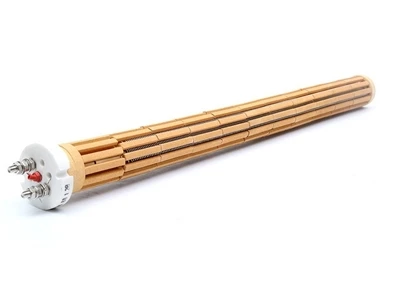
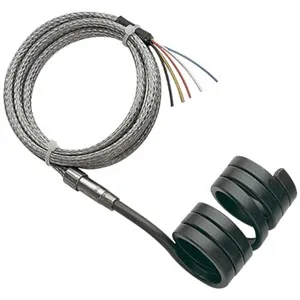
Vacuum pump flat heaters are designed to provide uniform and controlled heating in a vacuum environment. They are commonly used in various industries, including semiconductor manufacturing, optical coating, and molecular distillation. Our company offers a wide range of these heaters, such as the Triangle Coil Flat Heating Element. This unique design allows for efficient heat transfer and distribution, which is crucial for achieving consistent results in heating processes.
The flat heater construction typically consists of a resistive heating element embedded in a flat substrate. This design ensures that the heat is evenly spread over the surface, which is especially important when heating substances in a vacuum. The resistance of the heating element generates heat when an electric current is passed through it, and the flat shape allows for direct contact with the substance to be heated, minimizing heat loss.
2. How Heating Affects the Optical Properties of Substances
Optical properties of substances, such as refractive index, absorbance, and transmittance, are highly dependent on their molecular structure and physical state. When a substance is heated, its molecules gain kinetic energy, increasing their vibrational and rotational motions. This increased molecular activity can lead to changes in the way the substance interacts with light.
Take refractive index, for example. The refractive index of a material is a measure of how much light bends when passing through it. Heating a substance can cause the density of the material to change, either by expanding the material or altering its molecular packing. These density changes can directly affect the refractive index. In some cases, as the temperature increases, the refractive index of a substance may decrease because the increased molecular spacing reduces the optical path length of light within the material.
Absorbance is another important optical property. The absorption of light by a substance is related to the energy levels of its molecules. When a substance is heated, the distribution of its molecular energy levels can change. Some molecules may transition to higher energy states, which can alter the wavelengths of light that the substance can absorb. For instance, a normally transparent material may start to absorb light in certain spectral regions when heated, causing it to appear colored or opaque.
3. Vacuum Environment and Its Role
The use of a vacuum environment in conjunction with flat heaters is not just a matter of convenience; it has a profound impact on the heating process and the resulting changes in optical properties. In a vacuum, there is no air or other gases to interfere with the heating process. This eliminates issues such as convective heat transfer, which can cause uneven heating in a normal atmosphere. It also prevents oxidation and other chemical reactions that could potentially change the composition of the substance being heated, thus providing a more controlled environment for studying and manipulating optical properties.
For applications in Diffusion Pump Heaters in Molecular Distillation, the vacuum environment combined with flat heaters is essential. Molecular distillation requires precise temperature control to separate substances based on their molecular weights. The uniform heating provided by flat heaters ensures that the temperature remains consistent throughout the process, which is critical for maintaining the optical properties of the separated substances.
4. Specific Applications and Optical Property Changes
4.1 Optical Coating
In the field of optical coating, vacuum pump flat heaters play a vital role. Optical coatings are thin layers of materials applied to optical components to enhance their performance, such as increasing transmittance or reducing reflectance. The use of flat heaters, like our Diffusion Pump Heaters For Vacuum Coating Systems, can significantly affect the optical properties of these coatings.
During the deposition process of the coating material, heating the substrate (onto which the coating is applied) using a flat heater can change the structure and density of the coating. For example, higher temperatures can promote better adhesion between the coating and the substrate and can also lead to a more uniform grain structure in the coating. This, in turn, can improve the optical properties of the coating, such as increasing its transmittance in the desired wavelength range.
4.2 Semiconductor Manufacturing
In semiconductor manufacturing, vacuum pump flat heaters are used to heat wafers during various processes, including annealing and doping. The heating can have a direct impact on the optical properties of the semiconductor materials. For instance, the crystallinity of the semiconductor can be altered by heating, which affects its absorbance and refractive index. By using a Vacuum Diffusion Pump Heater to control the heating process precisely, manufacturers can tailor the optical properties of the semiconductor devices for specific applications, such as in optoelectronic devices.
4.3 Molecular Distillation
As mentioned earlier, molecular distillation processes rely on the combination of vacuum and flat heating. The substances being distilled often have different optical properties before and after the process. The flat heaters in Flat Oil Diffusion Pump Heater ensure that the temperature is maintained at an optimal level for the separation of different molecular species. The separation process can result in substances with different optical properties due to the removal of impurities or the concentration of specific components.
5. Advantages of Our Vacuum Pump Flat Heaters
Our vacuum pump flat heaters offer several advantages that make them ideal for applications where controlling the optical properties of heated substances is crucial. Firstly, the uniform heating provided by our flat heaters ensures that the entire substance is heated evenly, reducing the risk of localized temperature variations that could cause inconsistent changes in optical properties.
Secondly, our heaters are highly customizable. We can design heaters with specific power ratings, sizes, and shapes to meet the unique requirements of different applications. This flexibility allows us to provide solutions that are tailored to the exact needs of our customers, whether they are working on small - scale research projects or large - scale industrial production.
Finally, our products are built with high - quality materials and advanced manufacturing techniques, ensuring reliability and long - term performance. This means that customers can rely on our heaters to provide consistent heating over extended periods, which is essential for maintaining stable optical properties of the heated substances.


6. Conclusion and Call to Action
In conclusion, vacuum pump flat heaters have a significant effect on the optical properties of heated substances. Through careful control of temperature and a vacuum environment, these heaters enable us to manipulate the molecular structure of substances, thereby altering their refractive index, absorbance, and other optical characteristics. This has far - reaching implications in many industries, from optical coating to semiconductor manufacturing.
If you are involved in any application where the optical properties of substances need to be controlled or modified through heating, our vacuum pump flat heaters could be the perfect solution for you. We invite you to contact us to discuss your specific requirements and explore how our products can help you achieve your goals.
References
- Smith, J. K. (2018). Principles of Optical Materials. Elsevier.
- Jones, R. M. (2020). Vacuum Technology and Applications. Wiley.
- Brown, A. B. (2019). Handbook of Semiconductor Manufacturing Processes. Springer.