As a supplier of flat cartridge heaters, I get asked a lot about how to choose the right wattage for these nifty heating devices. It's a crucial decision, and getting it wrong can lead to all sorts of headaches, from underheating to overheating. So, let's dive into the nitty - gritty of picking the perfect wattage for your flat cartridge heater.
Understanding the Basics of Wattage
First things first, what exactly is wattage? In simple terms, wattage is a measure of how much power a heater uses and how much heat it can produce. The higher the wattage, the more heat the flat cartridge heater will generate. But it's not just a matter of going for the highest wattage you can find. You need to consider a bunch of factors to make an informed choice.
Factors to Consider When Choosing Wattage
1. The Size of the Area to be Heated
One of the most important factors is the size of the area you want to heat. If you're using the Square Cartridge Heater to heat a small, enclosed space, like a tiny laboratory chamber, you won't need a high - wattage heater. A lower - wattage heater can easily reach and maintain the desired temperature in a small area without using excessive energy.
On the other hand, if you're looking at heating a large industrial mold or a big manifold, you'll definitely need a higher - wattage heater. For instance, Manifold Flat Cartridge Heaters used in large - scale plastic injection molding machines often require high wattages to ensure that the plastic melts evenly and quickly.
2. The Desired Temperature
The temperature you want to achieve also plays a huge role in determining the wattage. If you only need to heat a material to a relatively low temperature, say around 50 - 100 degrees Celsius, a lower - wattage heater will do the job just fine. But if you're dealing with applications where you need to reach extremely high temperatures, like in some metal - working processes, you'll need a heater with a much higher wattage.
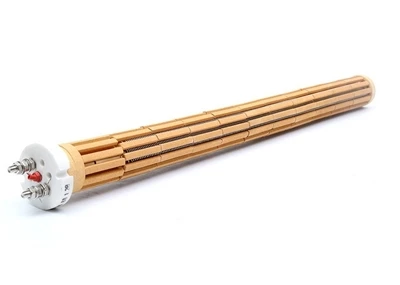
For example, Diffusion Pump Heater Element used in high - vacuum systems often need to reach very high temperatures to function properly. These heaters typically require a high wattage to generate enough heat to maintain the necessary vacuum conditions.
3. The Insulation of the System
The insulation of the area or equipment where the heater will be installed is another key factor. If the system is well - insulated, less heat will escape, and you can get away with a lower - wattage heater to maintain the desired temperature. Good insulation acts like a blanket, keeping the heat in and reducing the amount of energy needed to keep things warm.
However, if the system has poor insulation, a lot of heat will be lost to the surroundings. In this case, you'll need a higher - wattage heater to compensate for the heat loss and still reach the required temperature.
4. The Heating Time
How quickly you need to heat up the area or material is also important. If you're in a hurry and need to reach the desired temperature in a short amount of time, you'll need a heater with a higher wattage. A high - wattage heater can pump out a lot of heat quickly, allowing for rapid heating.
But if you have more time and can afford a slower heating process, a lower - wattage heater might be a better choice. It will use less energy and can still get the job done, just at a more leisurely pace.
Calculating the Right Wattage
Now that we've covered the factors, how do you actually calculate the right wattage? Well, there's no one - size - fits - all formula, but here's a general approach.


First, you need to determine the heat loss of the system. This involves looking at things like the surface area of the object being heated, the temperature difference between the inside and outside of the system, and the insulation properties. You can use some basic heat transfer equations to estimate the heat loss.
Once you have an estimate of the heat loss, you can add a bit of extra wattage to account for any inefficiencies in the heating process and to ensure that you can reach the desired temperature quickly. A good rule of thumb is to add about 10 - 20% extra wattage on top of the calculated heat loss.
For example, if your calculations show that you need 500 watts to make up for the heat loss, you might want to choose a heater with a wattage of 550 - 600 watts.
Common Mistakes to Avoid
When choosing the wattage for a flat cartridge heater, there are a few common mistakes that people make. One of the biggest mistakes is over - sizing the heater. Going for a much higher wattage than you actually need can lead to overheating, which can damage the material being heated, shorten the lifespan of the heater, and waste a lot of energy.
Another mistake is under - sizing the heater. If the wattage is too low, the heater won't be able to reach or maintain the desired temperature, which can cause production delays and affect the quality of your work.
Why Choose Our Flat Cartridge Heaters
As a supplier, we take pride in offering high - quality flat cartridge heaters. We understand the importance of getting the wattage right, and our team of experts can help you choose the perfect heater for your specific needs. Our heaters are designed to be efficient, reliable, and long - lasting, so you can trust that they'll do the job without any hassle.
Whether you're looking for a Square Cartridge Heater for a small - scale project or a Manifold Flat Cartridge Heaters for a large industrial application, we've got you covered. And if you're in the market for a Diffusion Pump Heater Element, we have top - notch options available as well.
Let's Talk
If you're still not sure which wattage is right for you or if you have any other questions about our flat cartridge heaters, don't hesitate to reach out. We're here to help you make the best decision and ensure that you get the most out of your heating solution. Contact us to start a discussion about your requirements and let's work together to find the perfect flat cartridge heater for your project.
References
- Incropera, F. P., & DeWitt, D. P. (2002). Fundamentals of Heat and Mass Transfer. Wiley.
- Holman, J. P. (2002). Heat Transfer. McGraw - Hill.