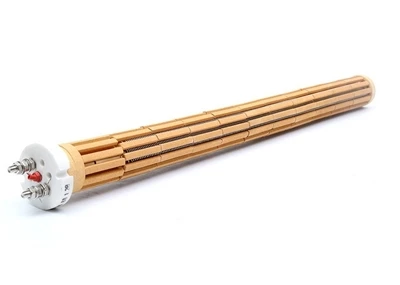
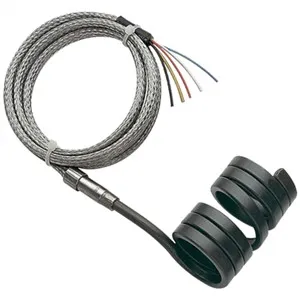
Accurately measuring the temperature of a thick film heater is crucial for various industrial and commercial applications. As a leading thick film heater supplier, we understand the significance of precise temperature measurement in ensuring the optimal performance, safety, and longevity of our products. In this blog post, we will delve into the methods and considerations for accurately measuring the temperature of thick film heaters.
Understanding Thick Film Heaters
Before we explore the temperature measurement techniques, let's briefly understand what thick film heaters are. Thick film heaters are a type of electric heater that consists of a resistive element printed onto a ceramic or stainless - steel substrate. These heaters offer several advantages, including high power density, fast heating rates, and excellent temperature control. They are widely used in a variety of applications such as Dry Oven Thick Film Heater, Screen Printed Thick Film Heating Elements, Thick Film Heater Plate For Pizza Maker, Thick Film Geyser Instant Water Heater, and Thick Film Flat Heater.
Importance of Accurate Temperature Measurement
Accurate temperature measurement is essential for several reasons. Firstly, it ensures that the heater operates within the desired temperature range, preventing overheating or under - heating, which can lead to product failure or reduced efficiency. Secondly, it helps in maintaining consistent product quality in applications where temperature control is critical, such as in food processing and scientific research. Thirdly, it enhances safety by preventing thermal runaway, which can cause fires or other hazards.
Methods of Temperature Measurement
Thermocouples
Thermocouples are one of the most commonly used temperature measurement devices for thick film heaters. They work based on the Seebeck effect, which states that when two different metals are joined at two junctions and there is a temperature difference between the junctions, a voltage is generated. The voltage is proportional to the temperature difference, allowing for temperature measurement.
Advantages of thermocouples include a wide temperature range, fast response time, and relatively low cost. They can measure temperatures from - 200°C to over 2000°C, making them suitable for a variety of high - temperature applications. However, thermocouples have some limitations. They are less accurate than some other temperature sensors, usually with an accuracy of ±0.5°C to ±5°C. They also require a reference junction compensation, as the output voltage is related to the temperature difference between the measuring junction and the reference junction.
To use a thermocouple to measure the temperature of a thick film heater, the measuring junction should be in direct contact with the heater surface. This can be achieved by using a thermocouple with a suitable probe or by attaching the thermocouple securely to the heater using a high - temperature adhesive or a mechanical clamp.
Resistance Temperature Detectors (RTDs)
Resistance Temperature Detectors (RTDs) are another popular option for temperature measurement. They operate on the principle that the electrical resistance of a metal changes with temperature. Platinum is the most commonly used material for RTDs because of its high stability, linearity, and wide temperature range.
RTDs offer high accuracy, typically with an accuracy of ±0.1°C to ±1°C. They also have good repeatability and long - term stability. However, they are more expensive than thermocouples and have a slower response time.
When using an RTD to measure the temperature of a thick film heater, it is important to ensure good thermal contact between the RTD and the heater surface. This can be done by using a heat - conducting paste or by embedding the RTD in the heater substrate during the manufacturing process.
Infrared Thermometers
Infrared thermometers measure the temperature of an object by detecting the infrared radiation emitted by the object. They are non - contact temperature sensors, which means they can measure the temperature of a thick film heater without physically touching it.
The main advantage of infrared thermometers is their non - contact nature, which makes them suitable for measuring the temperature of moving objects or objects in hard - to - reach places. They also have a fast response time. However, infrared thermometers are affected by the emissivity of the object being measured. The emissivity is a measure of how well an object emits infrared radiation, and different materials have different emissivities. Therefore, accurate temperature measurement with an infrared thermometer requires knowledge of the emissivity of the thick film heater surface.


To use an infrared thermometer for thick film heater temperature measurement, the thermometer should be pointed directly at the heater surface, and the emissivity settings of the thermometer should be adjusted according to the material of the heater.
Considerations for Accurate Temperature Measurement
Thermal Contact
Regardless of the temperature measurement method used, good thermal contact between the temperature sensor and the thick film heater is essential for accurate measurement. Poor thermal contact can lead to a temperature difference between the sensor and the heater, resulting in inaccurate readings.
Sensor Placement
The placement of the temperature sensor on the thick film heater can also affect the accuracy of the measurement. It is important to place the sensor in a location that represents the average temperature of the heater or the critical temperature point, depending on the application requirements.
Environmental Factors
Environmental factors such as ambient temperature, humidity, and air flow can also influence the temperature measurement. For example, a high - speed air flow over the heater can cause a cooling effect, which may lead to inaccurate temperature readings. Therefore, it is necessary to take these environmental factors into account when measuring the temperature of a thick film heater.
Calibration
Calibration is an important step in ensuring the accuracy of temperature measurement. All temperature sensors should be calibrated regularly against a known temperature standard. Calibration can be performed in - house using a calibration bath or a dry - block calibrator, or it can be sent to a professional calibration laboratory.
Conclusion
Accurately measuring the temperature of a thick film heater is a complex but essential task. By understanding the different temperature measurement methods, such as thermocouples, RTDs, and infrared thermometers, and considering factors such as thermal contact, sensor placement, environmental factors, and calibration, we can ensure accurate temperature measurement.
As a thick film heater supplier, we are committed to providing high - quality products and professional technical support. If you are in need of thick film heaters for your applications, or if you have any questions regarding temperature measurement or heater performance, we encourage you to contact us to discuss your specific requirements. Our team of experts is ready to assist you in finding the most suitable solutions for your projects.
References
- "Thermal Measurement and Instrumentation" by John P. Holman
- "Temperature Measurement" from the Handbook of Modern Sensors by Jacob Fraden
- Manufacturer's datasheets for thermocouples, RTDs, and infrared thermometers