The Basics of Thick Film Heaters
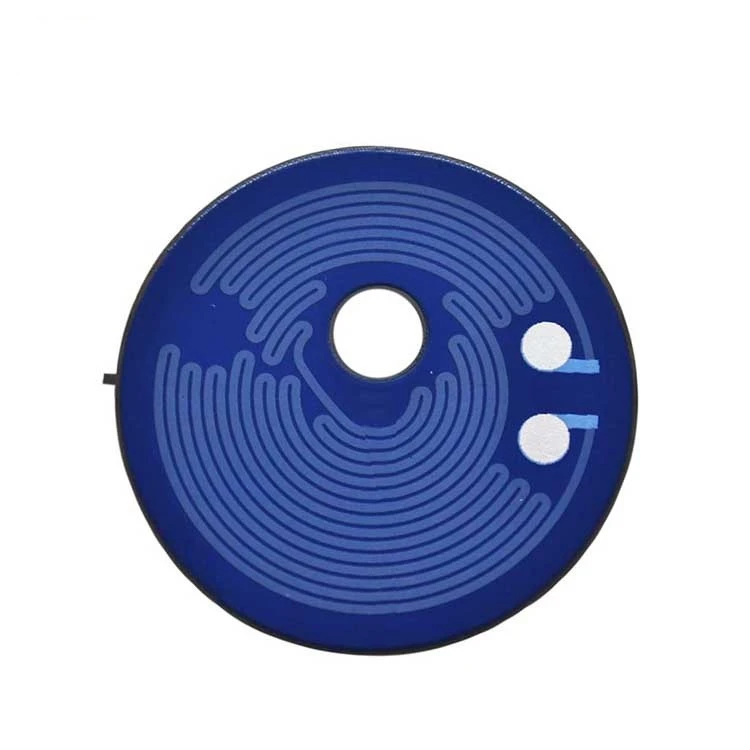
A thick film heater is an electrical heating device that utilizes a thick film technology to generate heat. The thick film is a layer of resistive material printed onto a substrate, typically ceramic or metal. This resistive layer creates heat when an electric current is passed through it, based on the principle of Joule heating. The Joule's law states that the heat produced (H) in a conductor is proportional to the square of the current (I), the resistance (R) of the conductor, and the time (t) for which the current flows, expressed as (H = I^{2}Rt).
The manufacturing process of thick film heaters involves several steps. First, a substrate material is selected based on the application requirements. Ceramic substrates are popular due to their high thermal conductivity, electrical insulation properties, and chemical resistance. Metal substrates, on the other hand, offer good mechanical strength and can be easily formed into various shapes.
Next, a resistive paste is screen - printed onto the substrate in a specific pattern. This pattern is designed to control the resistance and power distribution of the heater. After printing, the substrate is fired at a high temperature in a furnace. This firing process cures the resistive paste, making it adhere firmly to the substrate and stabilizing its electrical properties.

Advantages of Thick Film Heaters
Thick film heaters offer numerous advantages over traditional heating elements, which is why they have gained widespread popularity in recent years.
- High Efficiency: Thick film heaters have a very high power density, which means they can generate a large amount of heat in a relatively small area. This high power density results in faster heating times and lower energy consumption compared to other types of heaters. For example, in applications where rapid heating is required, such as in instant hot water heaters, thick film heaters can heat water to the desired temperature in a matter of seconds, saving significant amounts of energy.
- Precise Temperature Control: The resistive pattern on a thick film heater can be precisely designed to provide uniform heat distribution across the surface. This allows for accurate temperature control, which is crucial in many applications such as medical devices, food processing equipment, and laboratory instruments. By maintaining a consistent temperature, thick film heaters ensure the quality and reliability of the final product.
- Compact and Lightweight: Thick film heaters are thin and lightweight, making them ideal for applications where space is limited. They can be easily integrated into small devices and equipment without adding significant weight or bulk. For instance, in portable electronic devices or handheld medical instruments, the compact size of thick film heaters is a major advantage.
- Durability and Longevity: The thick film resistive layer is firmly bonded to the substrate, which provides excellent mechanical and environmental stability. Thick film heaters can withstand high temperatures, shock, and vibration, making them suitable for harsh operating conditions. Additionally, they have a long service life, reducing the need for frequent replacements.
Applications of Thick Film Heaters
The versatility of thick film heaters makes them suitable for a wide range of applications in various industries.
- Domestic Appliances: In the domestic sector, thick film heaters are commonly used in appliances such as kettles, coffee makers, and water dispensers. The Thick Film Kettle Heater Element offers rapid heating and precise temperature control, ensuring that water is heated quickly and efficiently to the optimal temperature for brewing tea or coffee.
- Industrial Processes: Thick film heaters play a crucial role in many industrial processes. For example, in dry ovens, the Dry Oven Thick Film Heater provides uniform heat distribution, which is essential for drying and curing processes. They are also used in plastic molding machines, where they help to heat the molds to the required temperature for shaping plastic materials.
- Medical and Laboratory Equipment: In the medical and laboratory fields, thick film heaters are used in devices such as blood analyzers, incubators, and thermal cyclers. These heaters provide accurate temperature control, which is critical for maintaining the integrity of biological samples and conducting reliable experiments.
- Food Service Equipment: In the food service industry, thick film heaters are used in equipment such as hot plates and instant hot shower heaters. The Thick Film Instant Hot Plate offers rapid heating and uniform temperature distribution, ensuring that food is cooked evenly. The Thick Film Instant Hot Shower Heater provides instant hot water, eliminating the need for a large storage tank.
Design Considerations for Thick Film Heaters
When designing a thick film heater, several factors need to be considered to ensure optimal performance and reliability.
- Power Requirements: The power output of a thick film heater depends on the application requirements. Higher power is needed for applications that require rapid heating or high - temperature operation. The resistance of the resistive layer is carefully calculated to achieve the desired power output at a given voltage.
- Temperature Range: Different applications require different temperature ranges. Thick film heaters can be designed to operate at temperatures ranging from a few degrees Celsius to several hundred degrees Celsius. The substrate material and the resistive paste are selected based on the required temperature range to ensure stable operation.
- Mounting and Connection: The heater needs to be securely mounted and correctly connected to the power supply. Various mounting options are available, such as adhesive mounting, mechanical fastening, or clamping. The electrical connections should be made using appropriate connectors or wires to ensure good electrical conductivity and reliability.
Quality Assurance and Customization
As a thick film heater supplier, we understand the importance of quality assurance. Our thick film heaters undergo rigorous testing procedures to ensure that they meet the highest standards of performance and reliability. We use advanced testing equipment to measure parameters such as resistance, power output, and temperature distribution.
We also offer customization services to meet the specific needs of our customers. Whether you need a heater with a specific shape, size, power output, or temperature range, our experienced engineering team can design and manufacture a custom thick film heater for you. For example, Flat Thick Film Heaters can be tailored to your exact specifications, ensuring a perfect fit for your application.
Contact Us for Procurement and Consultation
If you are in the market for high - quality thick film heaters, we invite you to contact us for procurement and consultation. We can provide you with detailed product information, technical support, and competitive pricing. Our team of experts will work closely with you to understand your requirements and recommend the most suitable thick film heater solutions for your application.
In conclusion, thick film heaters are a versatile and efficient heating solution with a wide range of applications. Their high efficiency, precise temperature control, compact size, and durability make them an ideal choice for various industries. As a trusted thick film heater supplier, we are committed to providing our customers with the best products and services.
References
- ASM Handbook Committee. (2004). ASM Handbook, Volume 5: Surface Engineering. ASM International.
- Dorf, R. C. (1997). The Electrical Engineering Handbook. CRC Press.
- Henney, R. J., & Frear, D. R. (1993). Thick film hybrid microelectronics technology and applications. Chapman & Hall.