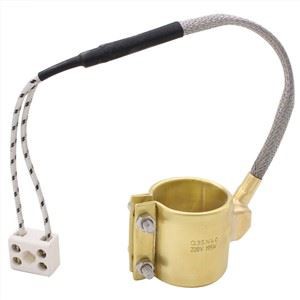
As a supplier of flat tubular heaters, I've encountered numerous inquiries regarding the disparities between flat tubular heaters and quartz heaters. This blog aims to shed light on these differences, helping you make an informed decision when choosing a heating solution for your needs.
Working Principles
Let's start by understanding the fundamental working principles of these two types of heaters. A flat tubular heater operates based on the Joule - heating effect. Inside the flat tubular structure, a heating element, usually made of high - resistance alloy like nichrome, is enclosed. When an electric current passes through this high - resistance wire, electrical energy is converted into heat energy. The heat is then transferred to the surrounding environment through conduction, convection, and radiation. The flat tubular design allows for a relatively large surface area in contact with the medium to be heated, which enhances the heat transfer efficiency.
On the contrary, a quartz heater utilizes infrared radiation. The heating element in a quartz heater is a tungsten filament enclosed within a quartz tube. When an electric current is applied, the tungsten filament gets extremely hot and emits infrared rays. These infrared rays travel through the air without significantly heating the air itself. Instead, they are absorbed by solid objects in their path, which then convert the absorbed infrared energy into heat. This is similar to how we feel the warmth of the sun even though the air in between is not directly heated.
Heating Performance
In terms of heating speed, quartz heaters are often faster. Since they heat objects directly through infrared radiation, there is no need to heat the surrounding air first. This makes them ideal for quickly warming up a small area or a person directly. For example, in a cold office, a quartz heater can start making you feel warm within a minute or two.


Flat tubular heaters, while they may take a bit longer to reach the desired temperature, provide more uniform heating. Due to their larger surface area and the way they transfer heat through conduction and convection in addition to radiation, they can heat a larger volume more evenly. They are well - suited for applications where a consistent temperature across a larger space or in a medium (such as in an industrial deep - fryer) is required. Our Industrial Deep Fryer Heating Element is a great example. It can maintain a stable and uniform temperature in the oil, ensuring that the food is cooked evenly.
Energy Efficiency
Energy efficiency is a crucial factor when considering a heater. Quartz heaters are typically more efficient in terms of focusing heat on a specific target. Since they directly heat objects without heating the surrounding air, less energy is wasted. However, their efficiency drops significantly if there are no solid objects in the path of the infrared rays, as the energy will just pass through the empty space.
Flat tubular heaters, as mentioned earlier, provide more comprehensive heating of a space. In applications where a large area or volume needs to be heated continuously, they can be more energy - efficient in the long run. This is because they can maintain a more stable temperature with less energy fluctuation. Our Flat Tubular Heating Element is designed for high - energy efficiency, with optimized heat transfer mechanisms to reduce energy consumption.
Durability and Lifespan
Durability is an aspect where flat tubular heaters have an edge. The construction of a flat tubular heater is relatively robust. The heating element is well - protected inside the tubular structure, which is often made of stainless steel or other durable materials. Our Stainless Steel Flat Tubular Heater is built to last, with corrosion - resistant stainless - steel sheaths that can withstand harsh environments.
Quartz heaters, on the other hand, are more fragile. The quartz tube that encloses the tungsten filament can be easily damaged if it is dropped or exposed to physical impacts. Also, the tungsten filament has a limited lifespan, and it may need to be replaced more frequently compared to the heating elements in flat tubular heaters.
Applications
The differences in their properties lead to different application scenarios. Quartz heaters are commonly used for personal heating in homes, offices, and outdoor patios. They are also popular in hair dryers and some small - scale heating appliances where rapid and targeted heating is required.
Flat tubular heaters have a broader range of industrial and commercial applications. They are widely used in industrial equipment such as heat exchangers, drying ovens, and, as mentioned before, deep - fryers. In the food industry, they are essential for maintaining the right temperature in various cooking processes. In the chemical industry, they can be used to heat chemical solutions in reactors.
Cost
Initially, quartz heaters are generally cheaper in terms of purchase price. They are relatively simple in design and construction, which reduces the manufacturing cost. However, considering the replacement cost of the filament and its shorter lifespan, the long - term cost of using a quartz heater may increase.
Flat tubular heaters usually have a higher upfront cost due to their more complex construction and better - quality materials. But their longer lifespan and better performance in certain applications make them a more cost - effective choice in the long - run, especially for industrial and commercial users who require continuous and reliable heating.
Safety
Safety is of utmost importance when using any heating device. Quartz heaters can get very hot on the surface, and there is a risk of burns if touched directly. Also, since they emit intense infrared radiation, there is a concern about the potential harm to the eyes if one looks directly at the glowing filament for an extended period.
Flat tubular heaters are generally safer in terms of surface temperature. The heat is distributed more evenly over the larger surface area, so the surface temperature is usually lower compared to quartz heaters. Additionally, the design of flat tubular heaters often includes safety features such as over - temperature protection, making them a more reliable choice in many applications.
Conclusion
In summary, the choice between a flat tubular heater and a quartz heater depends on your specific needs. If you need rapid, targeted heating for personal use in a small area, a quartz heater may be the right option. However, for applications where uniform heating, durability, and long - term cost - effectiveness are required, especially in industrial and commercial settings, a flat tubular heater is a better choice.
As a supplier of high - quality flat tubular heaters, we offer a wide range of products to meet various customer requirements. Whether you need a standard product or a customized solution, we are ready to assist you. If you are interested in purchasing our flat tubular heaters or have any questions regarding our products, please feel free to contact us for a purchase discussion. We are committed to providing you with the best heating solutions and excellent customer service.
References
- "Heating Element Handbook", published by a leading manufacturer of heating elements.
- Articles from industry - specific journals related to heating technology.