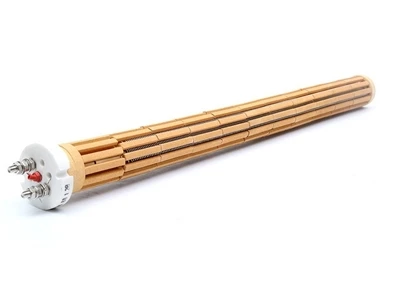
As a leading supplier of [link text="Finned Tubular Heaters" url="/industrial-tubular-heater/finned-tubular-heater/"], we are constantly exploring the factors that influence their performance. One such crucial factor is the surface roughness of the fins. In this blog, we will delve into the effects of fin surface roughness on heat transfer in a finned tubular heater.
Understanding Finned Tubular Heaters
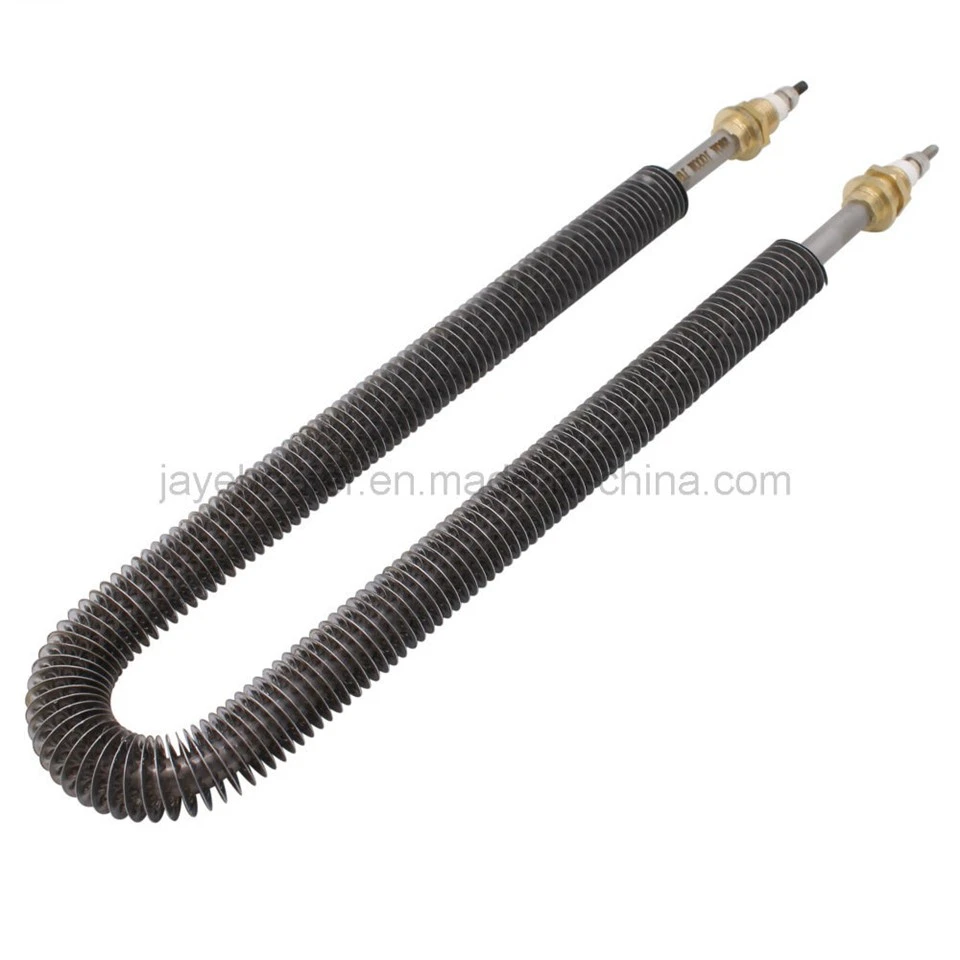
Finned tubular heaters are designed to increase the surface area available for heat transfer. They consist of a tubular heating element with fins attached to its outer surface. These fins significantly enhance the heat transfer rate between the heater and the surrounding medium, whether it's air, water, or another fluid. Our company offers a wide range of finned tubular heaters, including [link text="Electric Finned Heaters" url="/industrial-tubular-heater/finned-tubular-heater/electric-finned-heaters.html"], [link text="Heat Exchange Finned Tubular Heater" url="/industrial-tubular-heater/finned-tubular-heater/heat-exchange-finned-tubular-heater.html"], [link text="Load Bank Finned Heating Element" url="/industrial-tubular-heater/finned-tubular-heater/load-bank-finned-heating-element.html"], [link text="Air Finned Heater" url="/industrial-tubular-heater/finned-tubular-heater/air-finned-heater.html"], and [link text="Industrial Air Tubular Heater" url="/industrial-tubular-heater/finned-tubular-heater/industrial-air-tubular-heater.html"].
The Role of Surface Roughness in Heat Transfer
Surface roughness refers to the irregularities present on the surface of the fins. These irregularities can range from microscopic bumps and valleys to larger-scale protrusions. The degree of surface roughness can have a profound impact on the heat transfer process in several ways.
1. Enhanced Turbulence
A rough surface promotes turbulence in the fluid flowing over the fins. Turbulence disrupts the boundary layer, a thin layer of fluid that forms near the surface and acts as a barrier to heat transfer. By breaking up the boundary layer, turbulence allows for more efficient mixing of the fluid, which in turn increases the convective heat transfer coefficient. This means that heat can be transferred more quickly from the fin surface to the fluid.
2. Increased Surface Area
Surface roughness effectively increases the effective surface area available for heat transfer. The additional surface area provided by the irregularities allows for more contact between the fin and the fluid, facilitating a greater amount of heat to be transferred. This is particularly beneficial in applications where space is limited, as it allows for a higher heat transfer rate without the need to increase the physical size of the heater.
3. Altered Flow Patterns
The presence of surface roughness can also alter the flow patterns of the fluid around the fins. This can lead to the formation of secondary flows and vortices, which further enhance the mixing of the fluid and improve heat transfer. These flow patterns can be complex and depend on factors such as the shape and size of the roughness elements, as well as the flow velocity and properties of the fluid.
Factors Affecting the Impact of Surface Roughness
While surface roughness generally has a positive effect on heat transfer, the magnitude of this effect can be influenced by several factors.
1. Fluid Properties
The properties of the fluid, such as its viscosity, thermal conductivity, and Prandtl number, play a significant role in determining how surface roughness affects heat transfer. For example, in a highly viscous fluid, the boundary layer is thicker, and the impact of surface roughness on turbulence and heat transfer may be less pronounced. On the other hand, in a fluid with high thermal conductivity, the effect of increased surface area due to roughness may be more significant.
2. Flow Velocity
The velocity of the fluid flowing over the fins also affects the influence of surface roughness. At low flow velocities, the boundary layer is relatively thick, and the roughness elements may not be able to penetrate it effectively. As the flow velocity increases, the boundary layer becomes thinner, and the roughness elements can have a greater impact on turbulence and heat transfer.
3. Roughness Characteristics
The size, shape, and distribution of the roughness elements on the fin surface can have a significant impact on heat transfer. For example, roughness elements that are too large or too closely spaced may cause excessive flow resistance, which can reduce the overall heat transfer performance. On the other hand, well-designed roughness patterns can optimize the flow and heat transfer characteristics.
Experimental Studies and Practical Applications
Numerous experimental studies have been conducted to investigate the effect of fin surface roughness on heat transfer in finned tubular heaters. These studies have provided valuable insights into the complex relationship between surface roughness, fluid flow, and heat transfer.
In practical applications, surface roughness is often carefully controlled to achieve the desired heat transfer performance. For example, in aerospace applications, where weight and space are critical factors, finned tubular heaters with optimized surface roughness can provide a high heat transfer rate while minimizing the size and weight of the heater. Similarly, in industrial heating processes, such as drying and curing, the use of finned tubular heaters with appropriate surface roughness can improve the efficiency and productivity of the process.

Conclusion
In conclusion, the surface roughness of the fins in a finned tubular heater has a significant impact on heat transfer. By promoting turbulence, increasing the surface area, and altering the flow patterns, surface roughness can enhance the convective heat transfer coefficient and improve the overall heat transfer performance of the heater. However, the optimal surface roughness for a given application depends on several factors, including the fluid properties, flow velocity, and desired heat transfer rate.
As a supplier of finned tubular heaters, we understand the importance of surface roughness in achieving the best possible heat transfer performance. We offer a variety of fin designs and surface treatments to meet the specific needs of our customers. Whether you are looking for [link text="Electric Finned Heaters" url="/industrial-tubular-heater/finned-tubular-heater/electric-finned-heaters.html"] for a small-scale application or [link text="Industrial Air Tubular Heater" url="/industrial-tubular-heater/finned-tubular-heater/industrial-air-tubular-heater.html"] for a large industrial process, our team of experts can help you select the right heater with the optimal surface roughness.
If you are interested in learning more about our finned tubular heaters or discussing your specific heating requirements, we encourage you to contact us. Our experienced sales team is ready to assist you in finding the best solution for your application.
References
[1] Incropera, F. P., DeWitt, D. P., Bergman, T. L., & Lavine, A. S. (2019). Fundamentals of Heat and Mass Transfer (7th ed.). Wiley.
[2] Kays, W. M., & Crawford, M. E. (1993). Convective Heat and Mass Transfer (3rd ed.). McGraw-Hill.
[3] Bejan, A. (2013). Convection Heat Transfer (4th ed.). Wiley.