Hey there! If you're in the market for a vacuum pump flat heater, one of the questions you're probably asking yourself is, "What is the installation size of a typical vacuum pump flat heater?" Well, you've come to the right place. As a supplier of vacuum pump flat heaters, I've got all the info you need.
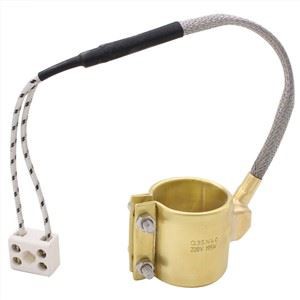
First off, let's talk about what a vacuum pump flat heater actually is. These heaters are used in a variety of applications, from industrial manufacturing to scientific research. They're designed to provide uniform heat distribution in a vacuum environment, which is crucial for many processes. For example, in molecular distillation, Diffusion Pump Heaters in Molecular Distillation play a key role in separating different components based on their molecular weights.
Now, back to the installation size. There's no one - size - fits - all answer here because it depends on several factors. The type of vacuum pump you're using is a major factor. Different pumps have different requirements for heat input and distribution, and this will affect the size of the heater you need.
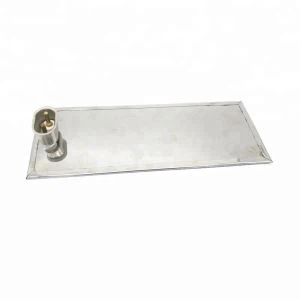
Let's start with the physical dimensions. The length and width of a typical vacuum pump flat heater can vary widely. For smaller, laboratory - scale vacuum pumps, you might find heaters that are as small as a few inches in length and width. These compact heaters are perfect for applications where space is limited, like in some smaller research setups.
On the other hand, for large - scale industrial vacuum pumps, the flat heaters can be much larger. They could be several feet long and wide to provide enough heat to handle the high - volume processes. For instance, Triangle Coil Flat Heating Element can come in various sizes to fit different industrial vacuum pump systems.


Another important aspect is the thickness. The thickness of a flat heater is also determined by the application. Thicker heaters can generally hold more heat and provide a more stable heat output, but they might take longer to heat up. Thinner heaters, on the other hand, heat up faster but might not be able to maintain a high - level heat output for as long.
The power density of the heater is also related to its size. A higher power density means that the heater can produce more heat per unit area. If your vacuum pump requires a high heat input in a small space, you'll need a heater with a high power density. This often means a smaller physical size with a more concentrated heat source. But it's important to note that high - power - density heaters can also generate more heat and might require better cooling systems.
The material of the heater also plays a role in determining the installation size. Different materials have different thermal conductivities, heat capacities, and temperature limits. For example, some advanced ceramic heaters can offer high - temperature performance in a relatively small size. While metal - based heaters might need to be larger to achieve the same level of heat output, depending on the specific metal used.
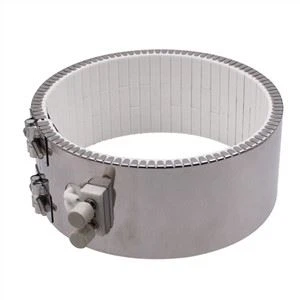
Let's take a look at Flat Oil Diffusion Pump Heater. These heaters are designed for oil diffusion pumps, which are commonly used in high - vacuum applications. The size of these heaters depends on the capacity of the oil diffusion pump. A small - capacity pump might only need a heater that's a few inches in diameter, while a large - capacity pump could require a heater that's over a foot in diameter.
When it comes to installation, you also need to consider the mounting requirements. Some flat heaters are designed to be mounted directly onto the vacuum pump, while others might require additional brackets or fixtures. This can add to the overall space needed for installation. Make sure to measure the available space in your system carefully before choosing a heater.
In addition to the physical installation size, you should also think about the electrical connections. The wiring and connectors for the heater need to be able to handle the power requirements of the heater. Larger heaters usually require higher - gauge wires to prevent overheating and electrical issues. You'll also need to ensure that there's enough space around the electrical connections for easy access and maintenance.
To sum it up, the installation size of a typical vacuum pump flat heater isn't a fixed number. It can range from very small, a few inches in dimensions, to quite large, several feet in length and width, depending on the type of vacuum pump, the application, power requirements, and mounting needs.
If you're still unsure about what size of vacuum pump flat heater is right for you, don't worry. We're here to help! As a supplier of vacuum pump flat heaters, we have a wide range of products to meet your needs. Just tell us about your specific requirements, the type of vacuum pump you're using, and the application, and we'll be able to recommend the best - fitting heater for you.
We understand that every customer's situation is unique, and we're committed to providing the best solutions. Whether you're working on a small - scale research project or a large - scale industrial operation, our team of experts can assist you in making the right choice. So, if you're interested in purchasing a vacuum pump flat heater, feel free to reach out to us for a detailed consultation and to discuss your procurement options. Let's work together to find the perfect heater for your vacuum pump system!
References
- Industry standards and specifications for vacuum pump flat heaters
- Manufacturer's data sheets for various vacuum pump flat heater models