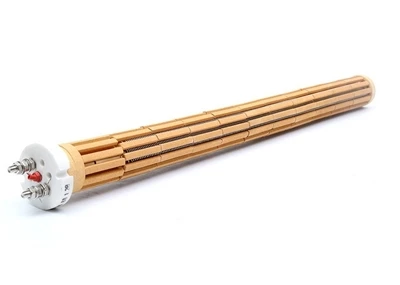
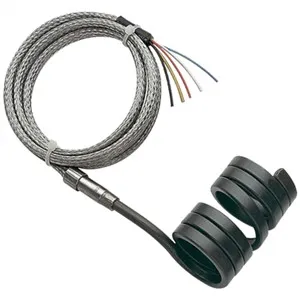
The power rating of a flat heating element is a crucial parameter that determines its performance and suitability for various applications. As a leading supplier of flat heating elements, I understand the importance of this specification and its impact on the overall functionality of heating systems. In this blog post, I will delve into the concept of power rating, its significance, and how it relates to the products we offer.


Understanding Power Rating
Power rating, measured in watts (W), represents the rate at which a heating element converts electrical energy into heat. It is a fundamental characteristic that dictates how quickly a heating element can raise the temperature of a given medium and maintain the desired heat level. A higher power rating generally means faster heating and the ability to handle larger loads, while a lower power rating is suitable for applications where a more gradual or controlled heating process is required.
The power rating of a flat heating element is determined by several factors, including the material of the heating element, its dimensions, and the voltage applied. Different materials have varying electrical resistivities, which affect the amount of heat generated for a given current. For instance, nichrome, a common material used in heating elements, has a relatively high resistivity, allowing it to produce a significant amount of heat when an electric current passes through it.
The dimensions of the heating element also play a crucial role in determining its power rating. A larger surface area generally allows for more heat dissipation, which can increase the power rating. However, this also depends on the design and construction of the element. For example, a flat heating element with a thinner cross - section may have a higher resistance and thus a different power output compared to a thicker one, even if they have the same surface area.
Significance of Power Rating
The power rating of a flat heating element is of utmost importance in various applications. In industrial settings, it is essential for processes such as heat treating, drying, and melting. For example, in a heat - treating furnace, a heating element with an appropriate power rating is required to quickly and uniformly heat the metal components to the desired temperature. If the power rating is too low, the heating process will be slow, leading to inefficiencies and potentially affecting the quality of the treated materials.
In consumer applications, the power rating is equally important. Consider a Flat Oil Diffusion Pump Heater. This type of heater is used in vacuum systems to heat the oil in the diffusion pump. A proper power rating ensures that the oil reaches the optimal temperature for efficient pumping, which is crucial for maintaining a high - quality vacuum environment.
Another example is the Oil Immersion Heater For Deep Fryer and Deep Fat Fryer Heating Element. In a deep fryer, the power rating of the heating element determines how quickly the oil can be heated to the frying temperature. A higher power rating means less waiting time for the user and more efficient frying operations.
Calculating Power Rating
The power rating of a flat heating element can be calculated using the formula (P = VI), where (P) is the power in watts, (V) is the voltage in volts, and (I) is the current in amperes. According to Ohm's law, (V=IR), where (R) is the resistance of the heating element. By substituting (I = \frac{V}{R}) into the power formula, we get (P=\frac{V^{2}}{R}).
To calculate the power rating accurately, one needs to know the resistance of the heating element and the voltage applied. The resistance can be measured using a multimeter, and the voltage is usually determined by the power supply of the system. However, it is important to note that the resistance of the heating element may change with temperature, which can affect the power output.
Selecting the Right Power Rating
When selecting a flat heating element, it is crucial to choose the right power rating for the specific application. This requires a careful consideration of several factors. First, the size of the area to be heated is an important factor. A larger area will generally require a heating element with a higher power rating to ensure uniform heating.
The desired temperature rise and the time available for heating also need to be taken into account. If a rapid temperature increase is required, a higher power rating is necessary. On the other hand, if a slow and controlled heating process is preferred, a lower power rating may be more suitable.
The ambient temperature and the insulation of the system also affect the power rating selection. In a cold environment or a poorly insulated system, more power may be needed to maintain the desired temperature.
Our Products and Power Ratings
As a supplier of flat heating elements, we offer a wide range of products with different power ratings to meet the diverse needs of our customers. Our Flat Oil Diffusion Pump Heater is available in various power ratings, allowing customers to choose the one that best suits their vacuum system requirements. Whether it is a small - scale laboratory vacuum pump or a large - scale industrial vacuum system, we have the right heating element.
Our Oil Immersion Heater For Deep Fryer and Deep Fat Fryer Heating Element are designed with different power ratings to accommodate different sizes of deep fryers. From home - use fryers to commercial - grade ones, we can provide the appropriate heating element to ensure efficient and consistent frying.
Contact Us for Your Heating Element Needs
If you are in the market for a flat heating element and need assistance in selecting the right power rating for your application, our team of experts is here to help. We have extensive experience in the heating element industry and can provide you with professional advice and high - quality products. Whether you are an industrial manufacturer, a laboratory researcher, or a consumer looking for a reliable heating solution, we are committed to meeting your needs.
Please feel free to reach out to us to discuss your specific requirements and start the procurement process. We look forward to working with you to find the perfect flat heating element for your project.
References
- Incropera, F. P., & DeWitt, D. P. (2002). Fundamentals of Heat and Mass Transfer. John Wiley & Sons.
- Boylestad, R. L. (2010). Introductory Circuit Analysis. Pearson Prentice Hall.