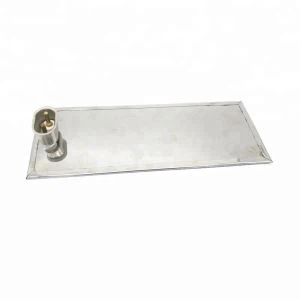
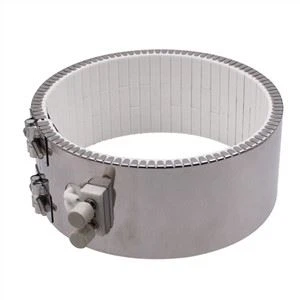
Hey there! As a supplier of Mica Band Heaters, I often get asked a bunch of questions about what these heaters can and can't do. One question that pops up quite a bit is, "Can Mica Band Heaters be used for heating gases?" Well, let's dig into this topic and find out.
How Mica Band Heaters Work
First off, let's understand how Mica Band Heaters work. These heaters are made up of a resistance heating element that's sandwiched between layers of mica insulation. The mica is great because it's a good electrical insulator but also a decent conductor of heat. This setup allows the heater to generate and transfer heat efficiently.
The way it works is simple. When an electric current passes through the resistance element, it heats up due to the resistance it offers to the flow of electricity. The heat then radiates outwards from the element, through the mica insulation, and onto the object or substance you're trying to heat.
Heating Gases: Is It Possible?
Now, the big question: can Mica Band Heaters be used for heating gases? The short answer is yes, they can. But there are a few things to consider.
Gases are different from solids or liquids. They're less dense, and they tend to move around a lot more. This means that heating a gas requires a bit more finesse compared to heating a solid object like a metal barrel.
One of the main challenges with heating gases is ensuring that the heat is evenly distributed. Since gases can flow and move, there's a risk that some parts of the gas will be heated more than others. This can lead to uneven temperatures and potentially affect the process you're using the heated gas for.
However, Mica Band Heaters have some features that make them suitable for heating gases. Their efficient heat transfer properties mean that they can quickly raise the temperature of the gas. And if the heater is designed properly, it can help to distribute the heat more evenly.


Advantages of Using Mica Band Heaters for Gas Heating
There are several advantages to using Mica Band Heaters for heating gases.
Efficiency: Mica Band Heaters are known for their high efficiency. They can convert a large percentage of the electrical energy they consume into heat. This means that you can heat the gas quickly and with less energy waste.
Compact Design: These heaters have a compact design, which makes them easy to install in various setups. Whether you're working in a small laboratory or a large industrial facility, you can find a way to fit a Mica Band Heater into your gas - heating system.
Temperature Control: Mica Band Heaters can be easily controlled to maintain a specific temperature. This is crucial when heating gases, as many processes require precise temperature control to work properly.
Applications of Mica Band Heaters in Gas Heating
There are several applications where Mica Band Heaters can be used to heat gases.
Chemical Processing: In the chemical industry, many reactions require gases to be heated to specific temperatures. Mica Band Heaters can be used to heat the gases involved in these reactions, ensuring that the process runs smoothly.
Food and Beverage Industry: In some food and beverage processes, gases need to be heated. For example, in the production of certain types of beverages, carbon dioxide gas may need to be heated to a specific temperature. Mica Band Heaters can be used to achieve this.
Laboratory Experiments: In laboratories, researchers often need to heat gases for various experiments. Mica Band Heaters are a convenient and efficient way to do this, as they can be easily adjusted to the required temperature.
Our Mica Band Heater Products
As a supplier, we offer a range of Mica Band Heaters that are suitable for heating gases.
One of our popular products is the Stainless Steel Mica Barrel Heater. This heater is made of high - quality stainless steel, which makes it durable and resistant to corrosion. It's designed to provide efficient heat transfer, making it a great choice for heating gases.
Another product is the Stainless Steel Mica Band Heater For Injection Molding Machine. While it's commonly used in injection molding machines, it can also be used for heating gases in other applications. Its compact design and precise temperature control make it a versatile option.
We also have the Extrusion Die Mica Band Heater. This heater is specifically designed for use in extrusion processes, but it can also be used to heat gases. It offers excellent heat distribution, which is important when heating gases.
Considerations for Using Mica Band Heaters to Heat Gases
Before using a Mica Band Heater to heat gases, there are a few things you need to consider.
Gas Properties: Different gases have different properties, such as density, specific heat capacity, and flammability. You need to understand these properties to ensure that the heater can effectively heat the gas and that there are no safety risks.
Flow Rate: The flow rate of the gas is also important. If the gas is flowing too fast, the heater may not be able to heat it evenly. On the other hand, if the flow rate is too slow, the gas may overheat.
Safety: When heating gases, safety is always a concern. You need to ensure that the heater is installed properly and that there are no potential fire or explosion hazards.
Conclusion
So, to answer the question, "Can Mica Band Heaters be used for heating gases?" The answer is a definite yes. With their efficiency, compact design, and good temperature control, Mica Band Heaters are a great option for heating gases in a variety of applications.
If you're in the market for a Mica Band Heater for gas heating or any other application, we're here to help. We can provide you with the right heater for your needs and offer support throughout the process. Don't hesitate to reach out to us for more information and to discuss your specific requirements.
References
- "Industrial Heating Handbook" by John W. Evans
- "Heat Transfer Principles and Applications" by Mark M. Woods