May 21, 2025
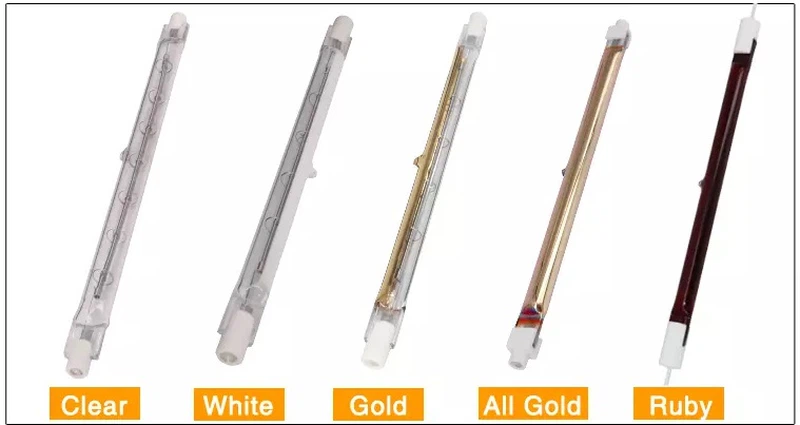
IR (Infrared) lamp quartz tubes are a crucial heating element in plastic thermoforming processes. They emit infrared radiation to heat plastic sheets uniformly before forming them into desired shapes using molds. Here's how they work:
IR lamps contain a tungsten filament inside a quartz tube, which heats up when electricity passes through it.
The quartz tube is transparent to infrared wavelengths, allowing efficient transmission of radiant heat.
The emitted IR radiation (typically in the short to medium-wave range, 1–4 μm) directly heats the plastic sheet without heating the surrounding air significantly.
Different plastics (e.g., PET, PVC, ABS, PP, HIPS) absorb IR radiation at varying wavelengths.
The plastic sheet softens as its temperature rises above its glass transition temperature (Tg), making it pliable for forming.

Multiple IR lamp quartz tubes are arranged in heating zones to ensure even heat distribution.
Reflectors (often made of polished aluminum or gold-coated surfaces) direct IR energy toward the plastic sheet, improving efficiency.
Temperature is controlled via PID controllers or SCR power regulators to prevent overheating or uneven softening.
Fast Heating – Quartz tubes heat up and cool down quickly, allowing precise control.
High Efficiency – Minimal energy loss compared to convection heating.
Long Lifespan – Quartz resists thermal shock and degradation.
Selective Wavelength Emission – Can be tuned to match the plastic's absorption spectrum.
Plastic Sheet Loading – The sheet is clamped in a frame.
Preheating – IR lamps soften the sheet uniformly.
Forming – Vacuum, pressure, or mechanical force shapes the plastic over a mold.
Cooling & Trimming – The formed part cools and is cut to final shape.
IR lamp quartz tubes provide rapid, efficient, and controllable heating for plastic thermoforming, making them ideal for industries like packaging, automotive, and consumer goods. Their ability to deliver targeted heat ensures consistent material properties and high-quality formed parts.