
Apr 15, 2025
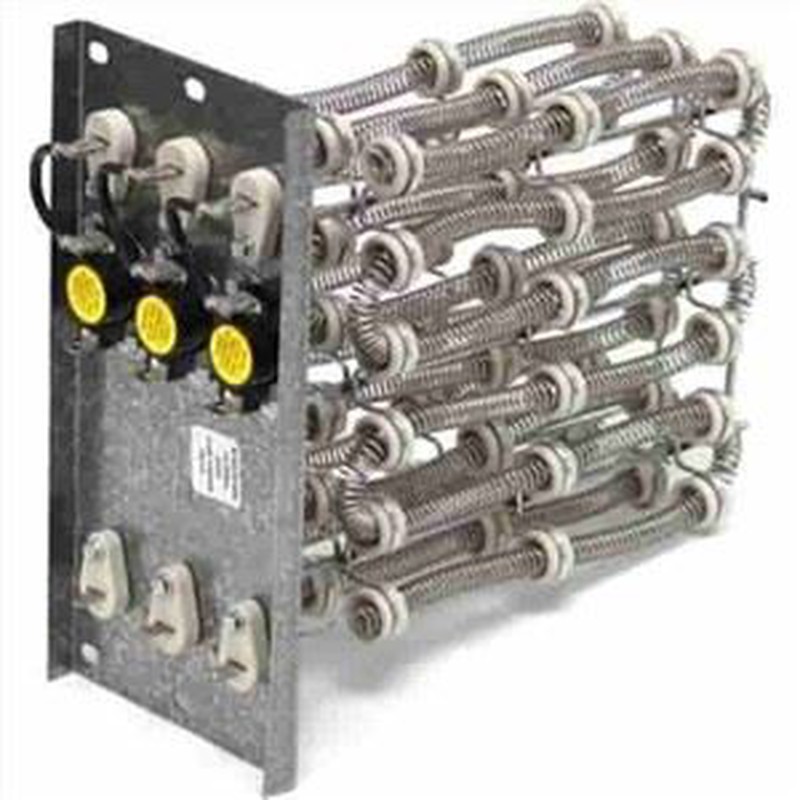
Open coil electric air heaters are widely used in industrial ovens and furnaces to provide efficient and reliable air heating for various processes such as curing, drying, and baking. These heaters use exposed resistance wire to convert electrical energy into heat, ensuring rapid and uniform heating of air within the equipment.

Electric Current Flow
An electric current flows through the resistance wire, typically made of Nickel-Chromium (NiCr) or Kanthal alloys, which have a high resistance and are designed to withstand high temperatures.
Rapid Heating of the Coil
As the current passes through the wire, the resistance generates heat, causing the wire to heat up to extremely high temperatures (up to 1100°C / 2012°F).
Air Circulation
The heater's fan or blower pushes ambient air through the coil. As the air flows over the heated wire, it absorbs the heat energy, becoming warm or hot air.
Even Heat Distribution
The heated air is then circulated inside the oven or furnace, ensuring uniform temperature distribution throughout the chamber. This is essential for consistent heating, whether for drying, curing, or heat treatment of materials.
Fast Response Time
Open coil heaters heat up quickly and respond to temperature adjustments almost immediately, making them ideal for environments requiring precise temperature control.
High Thermal Efficiency
The exposed coil design allows for efficient heat transfer from the coil to the air, maximizing the thermal efficiency of the system.
Customization
Open coil heaters can be custom-designed to meet the specific size, wattage, and shape requirements of industrial ovens or furnaces, providing flexibility in application.
Compact Design
The open coil structure allows for a compact and lightweight design, which is ideal for integration into space-constrained environments within industrial ovens or furnaces.
Cost-Effective Heating
Compared to other heating elements, open coil heaters are cost-effective, offering a reliable solution with a lower upfront investment.
Drying Ovens – For drying coatings, paints, or other materials that need controlled heat.
Curing Ovens – Used in industries like automotive or manufacturing to cure resin and coatings.
Heat Treatment Furnaces – For processes like tempering, hardening, or annealing metals and alloys.
Baking Ovens – In food processing or manufacturing where consistent and even heating is essential.
Plastic and Rubber Processing – For heating and curing in thermoforming and other molding processes.




