1. Core Concept: The One-Time Guardian
A Thermal Fuse (also known as a Thermal Cutoff or TCO) is a single-use, non-resettable safety device. Its sole purpose is to permanently break an electrical circuit when it detects a dangerous over-temperature condition.Think of it as a sacrificial guardian. It constantly monitors heat. If the temperature gets too high, it sacrifices itself to shut down the equipment completely, preventing potential fires, damage, or failures. It is the last line of defense when other temperature controls fail.

2. How It Works: A Step-by-Step Breakdown (Using the Most Common Type)
The most reliable and common type uses a spring-loaded mechanism and a temperature-sensitive pellet. Let's break down how it operates:
A. Internal Structure:
- Metal Casing: A sealed, insulated metal tube that protects the internal components.
- Terminal Leads: The two electrical connection points.
- Spring: A tightly coiled spring under tension.
- Movable Contact: A conductive pin held in place by the spring's force.
- Fusible Pellet: A specially formulated pellet (often an organic wax or a low-melt alloy) that is solid at normal temperatures. This is the key component.
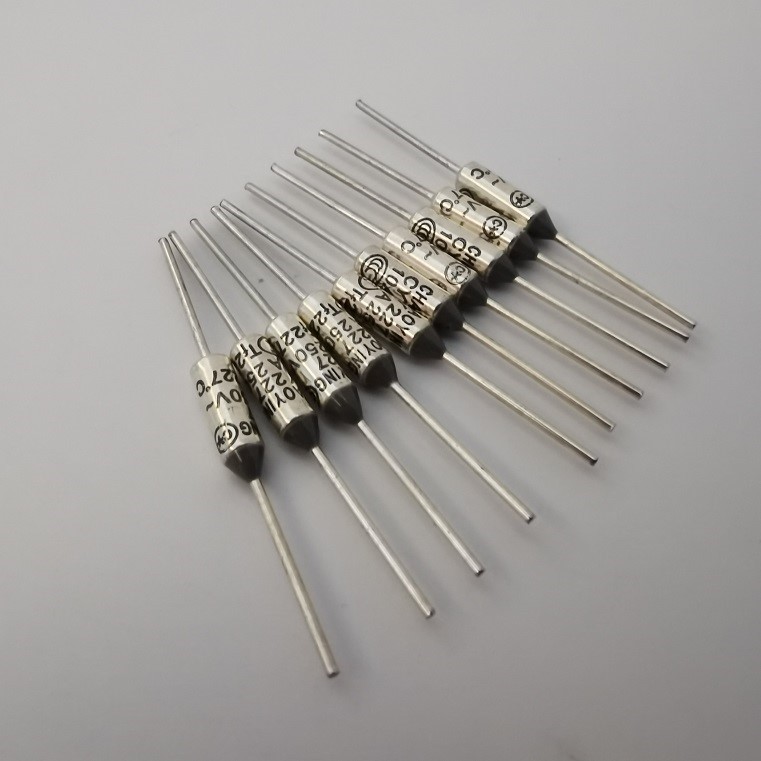
B. Normal Operation (Temperature is SAFE):
- The fusible pellet is solid and strong.
- It mechanically holds the movable contact against the fixed contact point against the strong pull of the spring.
- This creates a continuous electrical path for current to flow.
- The circuit is CLOSED. The device operates normally.

C. Fault Condition (Temperature is TOO HIGH):
- The surrounding temperature rises to the fuse's exact rated temperature (e.g., 92°C, 142°C).
- The heat causes the fusible pellet to melt, soften, or disintegrate.
- The pellet can no longer withstand the force of the spring.
- The spring instantly snaps back, jerking the movable contact away from the fixed contact.
- This creates a physical air gap between the contacts.
- The circuit is permanently OPEN. All current flow stops.

D. After It Trips:
- The thermal fuse cannot be reset.
- Even if the temperature returns to normal, the pellet remains melted and the spring remains released.
- The electrical gap remains, keeping the circuit safe.
- The unit must be replaced to restore power to the appliance. This ensures the faulty device is inspected and repaired before further use.
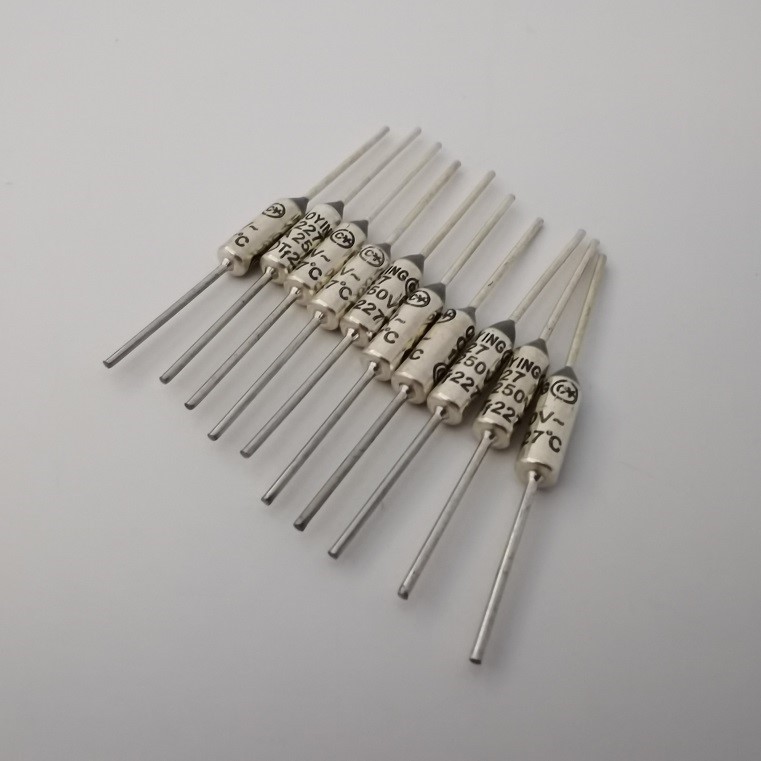
3. Key Characteristics for Product Design:
- Rated Temperature (T_f): The precise temperature at which it will open. Available in many standard values (e.g., 72°C, 77°C, 94°C, 102°C, 121°C, 142°C, 192°C).
- Tolerance: The accuracy of the rated temperature (e.g., ±2°C, ±3°C, ±5°C). A tight tolerance is crucial for sensitive equipment.
- Rated Current & Voltage (I_max, V_max): The maximum electrical load it can carry safely in its normal state (e.g., 10A, 250V AC). Do not exceed these ratings.
- Form Factor: Many sizes exist (e.g., popular 4.3mm x 11mm radial lead type).
4. Why Use a Thermal Fuse? Key Applications:
It is a critical, cost-effective component for product safety and liability prevention.
- Consumer Electronics: Hair dryers, coffee makers, rice cookers, clothes irons, soldering irons.
- Power Equipment: Transformers, motors, battery packs (e.g., in e-bikes, laptops) to prevent thermal runaway.
- HVAC Systems: Heating elements in furnaces and space heaters.
- Industrial Equipment: Protecting expensive machinery from overheating due to cooling system failure.

In short, the thermal fuse is a simple, foolproof, and highly reliable component that ensures your products are safe, compliant with international safety standards (like UL, CE, VDE), and protected from dangerous overheating failures.