Oct 15, 2025
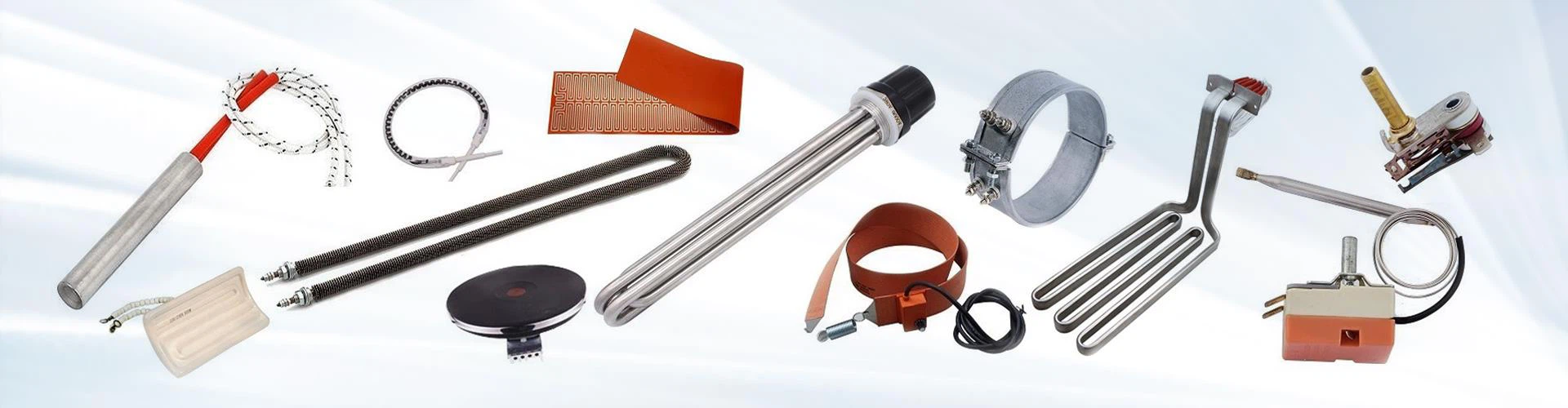
A custom heater design transforms a critical component from a simple commodity into a precision engineering tool, delivering direct and measurable improvements in both extrusion output and product quality. While standard heaters provide basic functionality, a custom solution is tailored to the specific thermal dynamics of your machine, material, and process, addressing the fundamental limitations that cap performance.
Enhancing Extrusion Output
The pursuit of higher output is often thermally limited. A custom heater design directly tackles these bottlenecks:
Maximized Throughput: As screw speed increases to push more material, the melting and mixing zones require a significant and consistent heat input. Standard heaters may lack the necessary watt density or thermal transfer efficiency, creating a "cold bottleneck" that limits maximum screw RPM. A custom design strategically applies higher, optimized wattage precisely where it is needed, ensuring the polymer melt temperature remains stable at elevated throughput rates, allowing you to fully utilize the machine's mechanical potential.
Reduced Operational Delays: Custom heaters, often employing advanced materials like mineral insulation, achieve startup temperatures far more rapidly than standard ceramic bands. Furthermore, their superior fit and thermal conductivity allow them to recover setpoint temperatures quickly after a purge or material changeover. This slashes non-productive time, leading to more active production hours.
Minimized Process Scrap: Unstable temperature profiles cause variations in melt viscosity, leading to surging, erratic parisons in blow molding, or uneven gauge in film. This generates a significant volume of off-spec product during start-up and steady-state operation. By delivering exceptional temperature stability, a custom heater ensures a consistent melt from the very beginning of a run, dramatically reducing the scrap rate and increasing the yield of saleable product from the same raw material input.
Elevating Product Quality
Product quality in extrusion is exceptionally sensitive to temperature gradients. Hot and cold spots introduced by inferior heaters are a primary source of defects.
Elimination of Degradation Defects: Localized hot spots, common in aged or poorly fitting heaters, thermally degrade the polymer, causing yellowing, dark specks, and unmelted gels. These defects are catastrophic in applications like medical tubing or optical film. Custom heaters, utilizing technologies like etched-foil elements, provide unparalleled circumferential uniformity, eliminating these points of degradation and ensuring a pure, homogeneous melt.
Guaranteed Dimensional Consistency: The viscosity of a polymer melt is highly temperature-dependent. Inconsistent thermal profiles along the barrel or die lead to unpredictable flow, causing variations in wall thickness, ovality in tubes, or uneven gauge in sheet. The precise zoning and perfect uniformity of a custom heater ensure a consistent melt viscosity, which is the foundation for holding tight dimensional tolerances run after run.
Superior Surface Finish and Dispersion: A non-uniform melt stream manifests as surface defects like sharkskin or die lines on the extrudate. On the die, custom heater jackets ensure perfect thermal uniformity, promoting a smooth flow and a glossy, defect-free surface. This stability also ensures thorough melting and mixing of color masterbatches and additives, eliminating streaking and ensuring a perfectly homogeneous final appearance.
In conclusion, investing in a custom heater design is not merely a component replacement but a process upgrade. It provides the stable, responsive, and uniform thermal foundation that unlocks the full potential of an extrusion line. The return is realized through tangible gains in productivity, material efficiency, and the ability to consistently manufacture high-value, superior-quality products.
Previous: How Hot Does a Hot Plate Get? A Guide to Temperature Ranges and Control
Next: When Should You Consider Custom Band & Cartridge Heaters for Your Extruder?