Jun 26, 2025
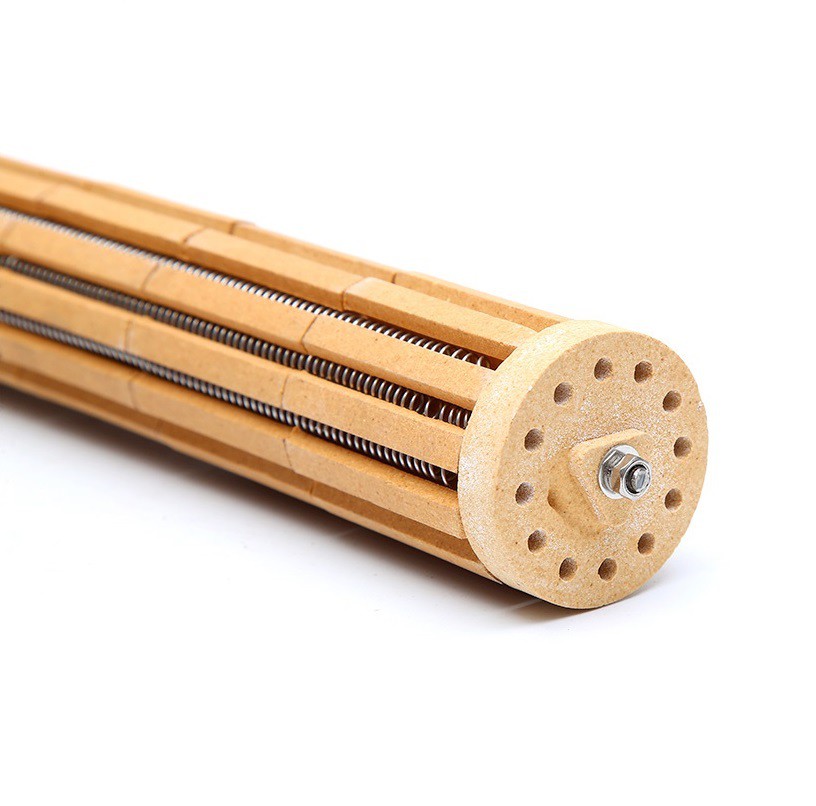
Here's how your bobbin heating element (often called an "Ou Jie" or "Spool" heater) efficiently converts electricity into targeted heat:
The Resistant Wire. At the absolute heart of your element lies a tightly coiled wire, typically made from a high-resistance alloy like Nickel-Chrome (NiCr) or Iron-Chrome-Aluminum (FeCrAl). You deliberately choose these materials because they strongly oppose the flow of electrical current.

When you connect your bobbin heater to its power source (matching its specified voltage like 120V, 240V, or 380V), electrical current is forced through this coiled resistance wire.
This is the fundamental principle you rely on: As electrons struggle to move through the resistant wire, their kinetic energy is converted directly into thermal energy – heat. The higher the resistance of the wire and the greater the current you push through it, the more heat you generate. This process is known as Joule Heating or Resistive Heating.

The Ceramic Bobbin. Your coiled resistance wire isn't loose. It's precisely wound onto a specially formed ceramic bobbin or spool (the "Ou Jie" shape). You use high-grade alumina or steatite ceramics because they excel at two critical jobs:
2.Electrical Insulation: Crucially, the ceramic material is an excellent electrical insulator. It prevents the live resistance wire from contacting the outer metal sheath, eliminating dangerous shorts and ensuring user safety.

The Metal Sheath. Surrounding the ceramic bobbin and coiled wire is your durable outer metal sheath, usually made of stainless steel, Incoloy, or titanium. You seal this sheath hermetically.
1.Containment: The sheath encapsulates the internal components, protecting them from environmental damage (moisture, chemicals, physical impact).
2 .Heat Transfer: As the coiled wire heats up, the heat is conducted first into the ceramic bobbin and then efficiently into the surrounding metal sheath. You design this sheath to have maximum contact with the surface you need to heat (like a nozzle, barrel, or mold cavity).

For peak efficiency, you frequently pack the space between the ceramic bobbin and the inner wall of the metal sheath with a thermally conductive, electrically insulating magnesium oxide (MgO) powder.

Finally, the intense heat generated within the resistance wire, transferred through the ceramic and MgO (if used), and absorbed by the metal sheath, is conducted directly into your target application surface (the part the heater is tightly fitted against). You achieve highly efficient, localized heating precisely where it's needed.

Your bobbin heating element works because you force electricity through a resistant wire coiled on a strong, insulating ceramic core. The wire resists the current and gets hot. The ceramic holds the wire safely in place and insulates it. The metal sheath captures this heat and delivers it efficiently to your machine part. It's a robust, self-contained system built for demanding, focused heating tasks.
Previous: How PTC heating elements use in the cars?
Next: What Are the Latest Advancements in High-Power PTC Air Heater Designs?





