Apr 14, 2025
| Component | Standard Heater | High-Temp Heater |
|---|---|---|
| Ceramic Insulator | 90-94% Al₂O₃ purity | 99%+ Al₂O₃ purity |
| Resistance Wire | Nichrome 80/20 (1200°C max) | Kanthal APM (1425°C capability) |
| Outer Clamp Material | 304 stainless steel | Inconel 600/625 alloy |
| Lead Insulation | Fiberglass (450°C rating) | Ceramic-beaded mica (800°C rated) |
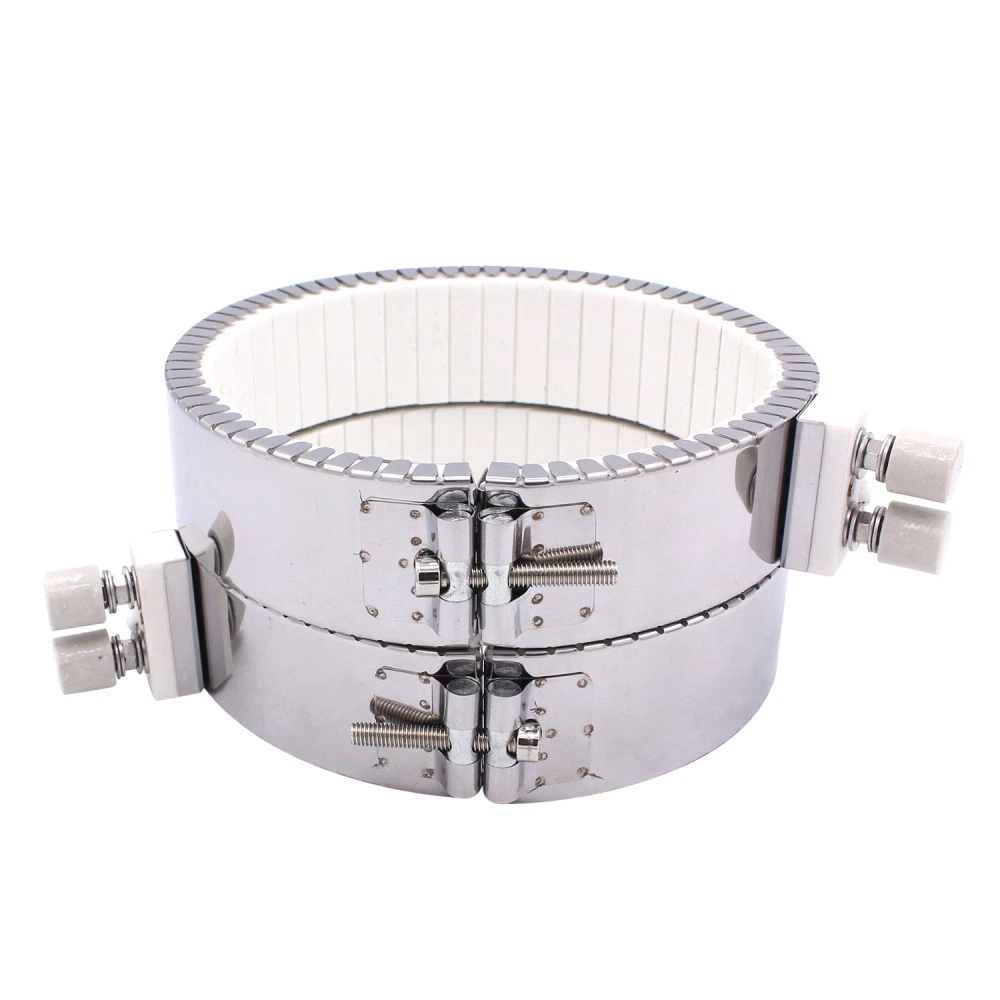
Standard: -20°C to 650°C (intermittent 700°C peaks)
High-Temp: -196°C to 950°C (continuous 800°C operation)
Standard: ±15°C fluctuation @ 600°C after 50 cycles
High-Temp: ±5°C drift @ 800°C after 200 cycles (per ASTM E230)
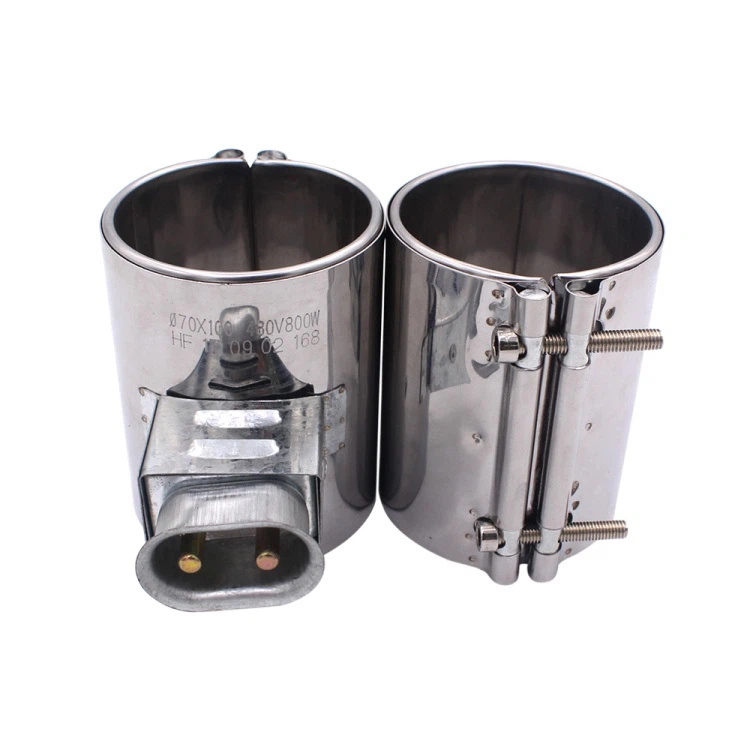
High-Temp Exclusive Features:
✓ Double-layer ceramic tiles with zirconia coating
✓ Spiral-lock clamp mechanism (prevents thermal expansion warping)
✓ Gold-plated terminals for oxidation resistance
✓ Vacuum-brazed seam joints (vs standard spot welding)

| Parameter | Standard (500°C) | High-Temp (800°C) |
|---|---|---|
| Resistivity Drift | +8% after 1000h | +1.2% after 1000h |
| Insulation Resistance | 50 MΩ @ 500VDC | 200 MΩ @ 1000VDC |
| Dielectric Strength | 2.5kV/mm | 4.8kV/mm |

Standard Heater Uses:
• Plastic injection molding (PP, ABS processing)
• Food packaging machines (<450°C)
• Low-temperature extrusion barrels
High-Temp Applications:
✦ Advanced polymers (PEEK, PEI processing @ 550-750°C)
✦ Metal injection molding (MIM) furnaces
✦ Semiconductor CVD chambers
✦ Aerospace composite curing

| Metric | Standard | High-Temp |
|---|---|---|
| Mean Time Between Failures | 8,000-12,000h | 15,000-20,000h |
| Re-tightening Frequency | Every 3 months | Annual |
| Ceramic Tile Replacement | 18-24 months | 36-48 months |
Price Premium Justification for High-Temp Models:
2.3X material costs (Inconel vs stainless steel)
Triple-layer vacuum impregnation process
100% individual performance testing
Specialized certifications (ATEX/IECEx for explosive atmospheres)

Choose Standard When:
✓ Operating below 600°C continuously
✓ Budget-sensitive projects
✓ Non-corrosive environments
Opt for High-Temp When:
✦ Process requires 700°C+ temperatures
✦ Dealing with thermal cycling extremes
✦ Operating in vacuum/controlled atmospheres
✦ Compliance with ASME BPV Code Section VIII needed
Data sourced from:
ASTM E230 temperature testing protocols
IEC 60519-1 safety standards
3rd-party lab reports (Intertek/SGS) on material performance
This comparison helps engineers specify heaters based on actual process requirements rather than over-specifying. Most industrial applications (80%+) operate effectively with standard ceramic heaters, while high-temp variants prove essential for advanced manufacturing processes.
Previous: What are the advantages of thickened silicone rubber heater
Next: Why are more air fryer brands switching from traditional tubular heaters to coil heaters?