Oct 24, 2025
Step 1: Heat Generation
An electric current is passed through the internal resistor wire. Due to its high electrical resistance, the wire heats up intensely, converting electrical energy into thermal energy.
Step 2: First Heat Transfer (Wire to Tube)
The heat from the glowing wire is conducted through the ceramic insulator (MgO) to the outer metal tube (the sheath). The entire tube becomes hot.
Step 3: Second Heat Transfer (Tube to Fins)
The heat from the tubular sheath is conducted into the fins that are attached to it. Because the fins are made of highly conductive metal and are in intimate contact with the tube, they quickly and evenly reach a high temperature.

Step 4: Forced Convection (Main Heat Exchange)
This is the critical step. The fan/blower forces cool air at high velocity over and through the array of hot fins.
As the cool air molecules come into direct contact with the large surface area of the hot fins, they absorb energy and become hot.
This heated air is immediately carried away by the air stream, and new, cooler air replaces it, repeating the process continuously.
Step 5: Distribution
The now-heated air is discharged from the ventilation equipment into the target space (a room, a warehouse) or into a duct system for distribution.
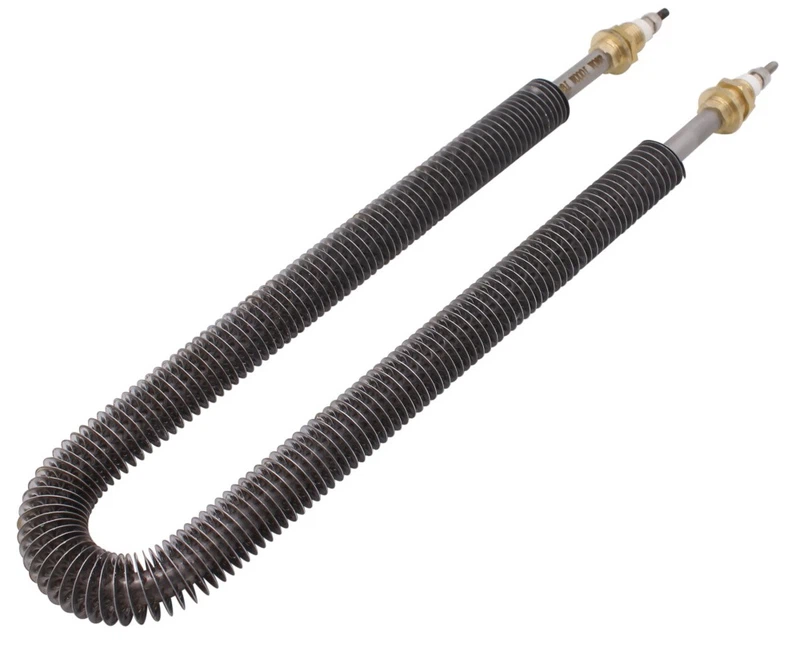
High Efficiency & Power Density: The large surface area allows for very high heat output from a relatively compact and low-mass heater. This is essential for heating large volumes of air quickly.
Robustness & Durability: The tubular sheath protects the fragile resistor wire from moisture, dust, vibration, and physical impact. This makes them ideal for harsh industrial or commercial environments.
Safety: The sheath and fins operate at a much lower and safer surface temperature than the internal resistor wire. This minimizes burn risks and prevents the ignition of dust or fibers, a critical feature in ventilation systems.
Long Lifespan: The robust construction and protected heating element lead to a very long operational life.
Customizable Design: These heaters can be bent into various shapes and have their fin density and tube length customized to fit specific airflow, space, and power requirements within the ventilation unit.

Previous: How are IBC heaters applied?
Next: What Distinguishes the Etching Process of Silicone Heaters from Traditional Heating Wire Production?