Jan 07, 2026
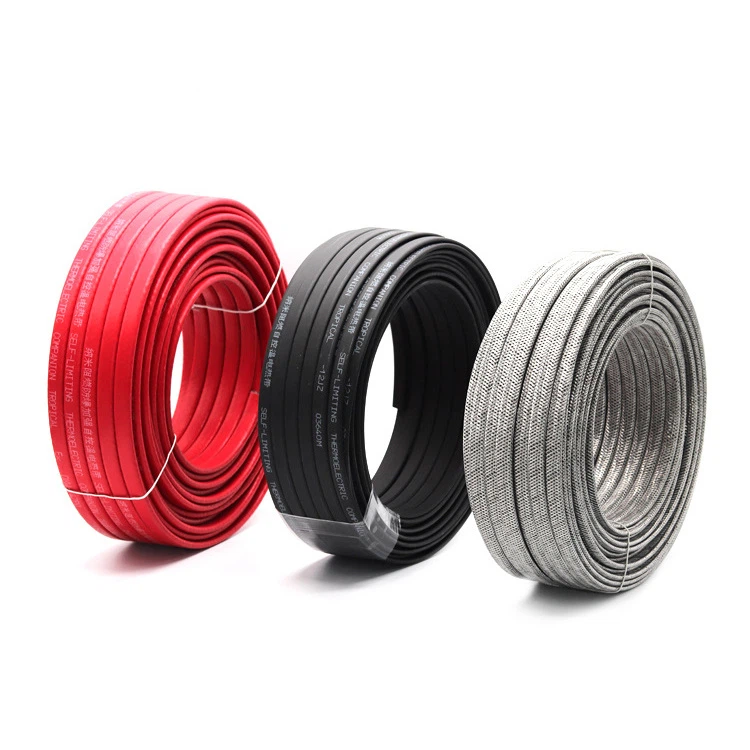

Self-regulating heat tracing cables represent a paradigm shift in industrial thermal management, offering an intelligent solution that automatically adjusts heat output based on ambient conditions. Unlike traditional constant-wattage systems that consume energy indiscriminately, these innovative cables operate with precision, delivering heat only when and where it's needed. With over 1.8 billion feet installed globally across more than 100 countries, this technology has become the industry standard for applications ranging from pipeline freeze protection to process temperature maintenance in critical industrial operations.
The fundamental breakthrough lies in the conductive-polymer core technology, which enables the cable to self-regulate its power output in response to temperature fluctuations. This not only eliminates the risk of overheating but also delivers significant energy savings-typically 20-50% compared to conventional heating methods. As industries face increasing pressure to reduce energy consumption and meet stringent safety regulations, self-regulating heat tracing cables provide a reliable, cost-effective solution that addresses both operational efficiency and environmental sustainability.
At the heart of self-regulating heat tracing technology lies a sophisticated conductive-polymer core that functions as an intelligent heating element. The system consists of two parallel nickel-plated copper bus wires embedded within this conductive core, which is radiation-cross-linked to ensure long-term reliability and thermal stability. The magic happens through microscopic changes in the polymer matrix: as ambient temperature decreases, the conductive core contracts, creating more electrical paths between the bus wires and increasing heat output. Conversely, when temperature rises, the core expands, reducing electrical conductivity and automatically decreasing heat generation.
This self-regulating mechanism operates independently at every point along the cable length, allowing for localized temperature control without the need for external sensors or complex control systems. The technology can maintain continuous operating temperatures up to 205°C (400°F) and withstand intermittent exposure to 260°C (500°F), making it suitable for a wide range of industrial environments. The parallel construction enables field cutting to length and termination, while the self-limiting nature prevents overheating even when cables overlap or cross-a critical safety feature that traditional systems cannot match.

The oil and gas sector dominates global demand, accounting for over 35% of market revenue. Extreme operational environments in Arctic drilling operations (Alaska North Slope, Russian Yamal Peninsula) and offshore platforms (North Sea, Gulf of Mexico) require robust frost protection for pipelines, valves, and separators. In the Permian Basin shale facilities, sub-zero temperature operations drove an 18% year-over-year increase in heat trace cable installations in 2023. Operators prioritize these cables for their energy efficiency-they reduce power consumption by 20-40% compared to constant-wattage systems in intermittent freezing conditions.
Chemical processing represents 22% of global installations, driven by stringent temperature maintenance requirements. Ethylene cracker units in Saudi Arabia's Jubail Industrial City and polymer plants in Germany's ChemSite cluster deploy self-regulating cables to maintain process temperatures between 60°C and 150°C. Explosion-proof certifications make them indispensable in hazardous areas. A 2024 plant audit in South Korea's Ulsan Petrochemical Complex revealed that 92% of heat management systems now use self-regulating technology, replacing legacy steam tracing methods.
Power generation facilities, particularly LNG terminals and renewable energy plants, contribute 18% of demand. Japan's Sodegaura LNG Terminal uses 42 km of self-regulating cables to maintain cryogenic storage tanks at -162°C. Wind farms in Canada's Newfoundland require these systems to prevent ice accumulation on turbine blades-a single 5MW turbine typically needs 800-1,200 watts of heat tracing capacity. Solar thermal plants in Spain's Andalusia region reported 30% fewer operational disruptions after switching to self-regulating cables for molten salt loop freeze protection.
The food and beverage sector demonstrates accelerated adoption, with 15% annual growth in cold chain applications. Brazilian meat processing giant JBS installed 7.5 km of self-regulating cables in 2023 across its refrigerated warehouses (-25°C zones). European dairy processors like Arla Foods use them to maintain pasteurization lines at 72°C±1°C, achieving 99.7% temperature compliance in 2024 audits. Hygienic design variants with FDA-compliant jackets now penetrate 68% of North American beverage plants.
Hydrogen Production: Hydrogen electrolyzers must operate within 5–80°C to prevent membrane degradation. Self-regulating cables are replacing steam tracing due to their energy efficiency (30–50% lower energy consumption) and adaptability to variable outdoor conditions. A 2023 study found that hydrogen production facilities using these systems reduced downtime by 18% compared to conventional methods.
Battery Manufacturing: Battery manufacturing for electric vehicles demands ultra-pure environments maintained at 23±1°C to prevent lithium-ion electrode contamination. Self-regulating cables enable zone-specific heating in dry rooms without creating hot spots that could compromise air purity. Major Asian battery manufacturers reported 12% yield improvements after implementing these systems in 2022.
Carbon Capture (CCUS): CO₂ pipelines must stay above critical temperatures (31°C at 73 bar) to prevent phase changes that cause pressure surges. Self-regulating cables with explosion-proof certifications are being deployed in Norwegian and Canadian CCUS networks, demonstrating 40% better temperature stability than constant-wattage alternatives during pressure fluctuations.
Self-regulating heat tracing cables are categorized into three temperature classes based on their maximum operating capabilities:
|
Temperature Class |
Maximum Maintenance Temperature |
Maximum Withstand Temperature |
Typical Applications |
|---|---|---|---|
|
Low Temperature (LT) |
65°C |
85°C |
Freeze protection, water pipes, roof gutters |
|
Medium Temperature (MT) |
110°C |
130°C |
Process maintenance, chemical lines |
|
High Temperature (HT) |
150°C |
190°C |
Industrial processes, steam tracing |
Power output typically ranges from 5-75 W/m at 10°C, with circuit lengths up to 293 meters (978 feet) depending on voltage and ambient conditions. The self-regulating index-the rate of power output change per degree temperature change-varies from -0.020 to -0.127 W/°C, ensuring precise temperature control across different applications.
The outer jacket material selection is critical for long-term performance:
Modified Polyolefin: Common standard type offering corrosion resistance, flexibility, and moderate cost for general industrial applications
Fluoropolymer (FEP/PFA): High temperature resistance (up to 205°C), strong chemical corrosion resistance, low smoke and halogen-free flame retardant properties-ideal for food, pharmaceutical, and corrosive environments
Perfluoroelastomer: Highest level of chemical resistance and high temperature performance for extreme conditions
Common AC voltage options include 120V, 208V, 240V, 277V, and 480V, with selection based on site power supply availability. For hazardous locations, cables must carry appropriate certifications such as ATEX Zone 1/2, IECEx, UL HazLoc Class I Div 2, and FM approvals. These certifications ensure compliance with international safety standards including UL 1309, IEC 60800, and CSA C22.2 No. 130.
Proper installation begins with comprehensive thermal calculations to determine heat loss requirements based on pipe diameter, insulation thickness, ambient temperature, and desired maintenance temperature. The heating cable layout should account for valves, flanges, and supports, with spacing typically ranging from a few inches to several feet depending on the application. It's essential to ensure that the designed loop length falls within the manufacturer's specified maximum circuit length to maintain proper voltage drop and starting current characteristics.
Self-regulating heat tracing systems must be installed in accordance with national electrical codes (NEC Article 427 in North America) and manufacturer specifications. Ground-fault protection is mandatory for outdoor industrial pipelines, while explosion-proof junction boxes and end seals are required for hazardous locations. Thermal insulation covering both the pipe and heating cable is critical for system efficiency, with insulation materials selected based on operating temperature, environmental conditions, and local fire codes.
While self-regulating cables require minimal maintenance due to their self-adjusting nature, regular inspections should include checking for physical damage, verifying insulation integrity, and confirming proper operation of control and monitoring systems. Advanced systems now incorporate IoT-enabled monitoring with real-time temperature feedback and predictive maintenance capabilities, allowing facilities to detect issues before they impact operations. These smart systems can reduce energy waste by 25-30% through optimized heating control.
While self-regulating heat tracing cables typically have a 15-20% higher initial cost compared to constant-wattage alternatives, their lifecycle cost advantage becomes apparent over time. The 50,000-hour maintenance-free operation (versus 30,000 hours for alternatives) significantly reduces long-term compliance expenses. A 2024 analysis of European power plants showed a 22% lower total cost of ownership for self-regulating cables over a decade, factoring in energy savings and reduced inspection frequency.
The self-regulating nature of these cables translates directly to energy savings. By automatically adjusting power output based on ambient conditions, they eliminate the energy waste associated with constant-wattage systems that heat regardless of actual need. In chemical processing plants, where thermal management accounts for 25-30% of total energy use, facilities using self-regulating cables reported 18% lower annual energy costs in 2022. The ISO 50001 energy management standard, adopted by over 22,000 organizations globally, further accelerates adoption by requiring auditable efficiency improvements.
Industrial insurers recognize the enhanced safety profile of self-regulating systems, offering 7-12% premium discounts for facilities using certified equipment. In Canada's Alberta oil sands region, operators avoided $220 million in potential fire-related liabilities over five years by adopting these systems. Regulatory compliance also drives adoption-following the 2021 NEC update requiring ground-fault protection for outdoor industrial pipelines, U.S. sales of self-regulating cables grew by 34% year-over-year in 2022.
Recent innovations in material science and nanotechnology have led to the development of semi-conductive polymer nanocomposites with groundbreaking performance. The new HTV heating cable technology retains at least 95% power retention after 10 years of operation at maximum operating temperature (205°C/400°F), extending the design life to 30 years or more. These advancements in conductive polymer technology continue to push the boundaries of temperature performance and longevity.
The integration of IoT sensors and predictive maintenance capabilities represents the next frontier in heat tracing technology. Systems now offer real-time temperature monitoring, remote control, and data analytics that optimize energy consumption and predict maintenance needs before failures occur. These smart systems can reduce operational costs by up to 30% while improving reliability and compliance with regulatory requirements.
As industries focus on decarbonization, self-regulating heat tracing cables play a crucial role in reducing energy consumption and greenhouse gas emissions. Their application in hydrogen production, carbon capture, and renewable energy infrastructure positions them as key enablers of the energy transition. With global markets projected to reach $1.2 billion in heat trace cable spending by 2025, these technologies will continue to drive efficiency improvements across industrial sectors.
Self-regulating heat tracing cables have transformed industrial thermal management by combining intelligent self-regulation with proven reliability and energy efficiency. From protecting critical infrastructure in extreme environments to maintaining precise process temperatures in manufacturing, this technology delivers tangible benefits across the entire lifecycle-from reduced energy costs and enhanced safety to lower maintenance requirements and regulatory compliance. As industries continue to prioritize sustainability and operational efficiency, self-regulating heat tracing cables will remain at the forefront of innovative heating solutions for years to come.

If you are interested in it, please free to contact us.
Previous: How to Select the Right Mica Band Heater for Your Application?
Next: OEM Thick Film Heating in EV Thermal Management: Addressing Challenges with Innovative Solutions