May 14, 2025
Air/Gas Heating (e.g., HVAC, industrial ovens):
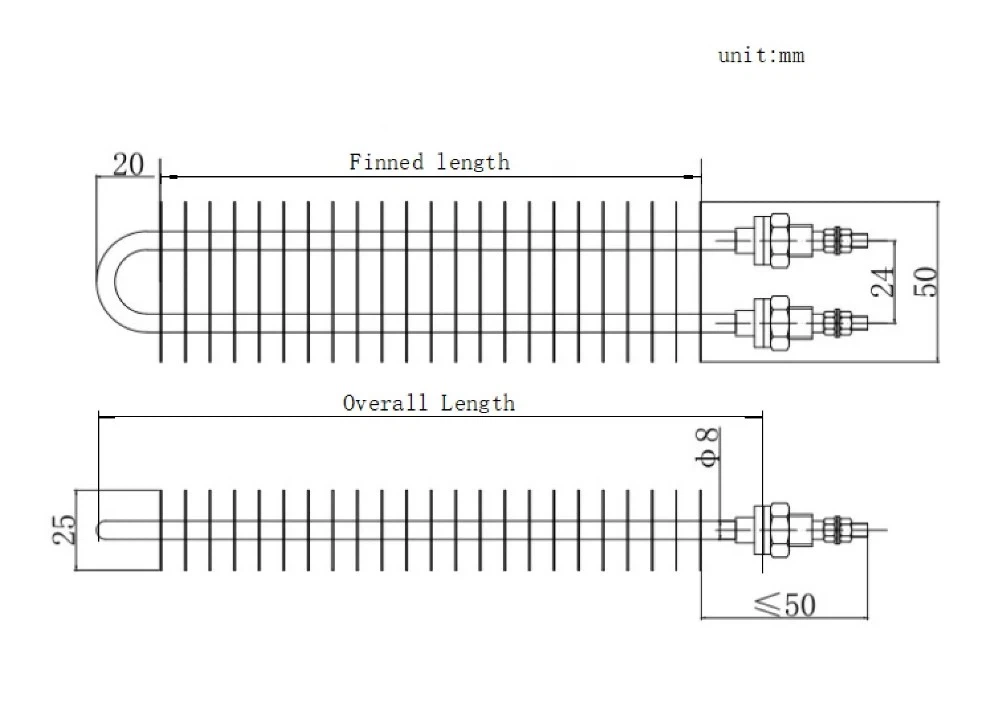
High fin density (8–12 FPI) is preferred for fast heat transfer in low-viscosity media.
Example: High-density fins in air handlers ensure rapid warming of airflow.
Liquid or High-Viscosity Fluids (e.g., oil heating, chemical processing):
Low fin density (4–6 FPI) reduces clogging risks and allows better fluid flow around fins.
Dusty or Particulate-Laden Environments (e.g., wood drying, powder coating):
Low-to-medium density (4–8 FPI) minimizes debris accumulation between fins.
Clean Environments (e.g., laboratories, food processing):
High density (10+ FPI) maximizes efficiency without maintenance concerns.
Compact Systems (e.g., portable heaters, tight ductwork):
Higher fin density compensates for limited surface area but requires careful airflow management.
Lower density may suffice, reducing material costs while maintaining performance.
Energy Efficiency vs. Cost
High-density fins improve heat exchange but increase material and production costs.
Tip: For long-duration operations (e.g., 24/7 factories), prioritize higher density to save energy costs over time.


| Application | Recommended Fin Density | Reason |
|---|---|---|
| HVAC Air Heating | 10–12 FPI | Maximizes heat transfer in clean, fast airflow. |
| Industrial Oil Heating | 4–6 FPI | Prevents oil sludge buildup between fins. |
| Paint Drying Chambers | 6–8 FPI | Balances heat distribution and dust resistance. |
| High-Temperature Exhaust Gas | 8–10 FPI | Ensures durability while handling rapid heating. |
Too High Density:
Risk of overheating due to restricted airflow.
Increased pressure drop, forcing fans/pumps to work harder.
Higher maintenance in dirty environments (clogging).
Too Low Density:
Slower heating and uneven temperature distribution.
Wasted energy and higher operational costs.

Food Processing: Use 8–10 FPI stainless steel fins for hygienic, easy-to-clean designs in drying tunnels.
Renewable Energy (Biogas): Opt for 6–8 FPI with corrosion-resistant coatings to handle moist, acidic gases.
Previous: How Flexible Silicone Rubber Heaters Can Improve Chocolate Production
Next: What Makes Etched Silicone Heaters a Great Choice for Aerospace Applications?