Apr 14, 2026
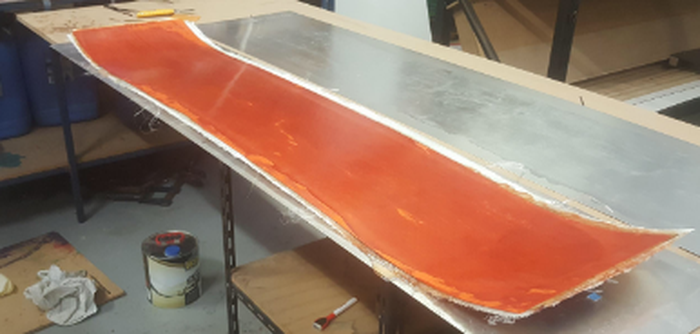
When manufacturing snowboards, achieving consistent, controllable heat across the pressing surface is critical for proper epoxy curing and lamination. While heat lamps have been used in some applications, silicone rubber heaters have become the industry standard for snowboard pressing.
Here's why.
Heat Lamps: Produce focused, directional heat that creates uneven temperature zones. Areas directly under the lamp get much hotter than surrounding areas, leading to inconsistent epoxy curing and potential board defects.
Silicone Heaters: Provide uniform heat distribution across the entire surface of the press. The etched foil or wire-wound elements are embedded in flexible silicone rubber, eliminating hot spots and ensuring every part of the snowboard receives the same temperature-1-2.
| Feature | Heat Lamps | Silicone Heater |
|---|---|---|
| Heat Distribution | Uneven, directional | Even across entire surface |
| Hot Spots | Common | Eliminated |
Heat Lamps: Fixed in position, cannot adjust to the shape of the board. The camber (arched middle) and rocker (curved tip/tail) profiles of snowboards create varying distances from a fixed heat source.
Silicone Heaters: Extremely flexible – as thin as 1.0–1.5mm – and conform perfectly to the snowboard's curved surface-1. They lie directly against the board, ensuring heat transfer is consistent across camber, rocker, and flat sections.
Heat Lamps: Convert only a portion of electricity into infrared heat, with significant energy lost to the surrounding air. They also require warm-up time.
Silicone Heaters: Direct contact heating transfers nearly all electrical energy directly into the snowboard. They heat up rapidly and maintain temperature with lower power consumption, reducing operating costs over time-1-2.
Heat Lamps: Exposed glass bulbs can break, creating safety hazards. They operate at very high surface temperatures and present burn and fire risks. Bulbs also require regular replacement.
Silicone Heaters: Encapsulated in durable silicone rubber that is moisture-resistant, chemical-resistant, and mechanically robust-1-2. They operate safely even in demanding workshop environments, with no exposed heating elements.
Heat Lamps: Difficult to control precisely. Adjusting heat output typically requires moving the lamps closer or farther away or using dimmers, which is imprecise.
Silicone Heaters: Easily integrated with PID controllers, thermostats, and thermal cut-offs for precise temperature regulation-2. You can maintain exact curing temperatures required for different epoxy systems.
Heat Lamps: Limited to standard sizes and configurations. Covering a large press area requires multiple lamps, creating more uneven zones.
Silicone Heaters: Fully customizable in size, shape, voltage (12V to 600V), wattage (1W to 10,000W+), and even can include cutouts for press clamps or sensors-1-2. One silicone heater can be designed to perfectly match your exact press dimensions.
For snowboard pressing, flexible silicone rubber heaters outperform heat lamps in every critical category: uniform heating, conformability to board profiles, energy efficiency, safety, control precision, and customizability. While heat lamps may still be used in some DIY setups, any serious snowboard manufacturer or workshop will achieve better, more consistent results with a properly designed silicone heater.
Need a custom silicone heater for your snowboard press? Jaye Heater offers full customization – size, shape, voltage, wattage, and sensor integration. Contact us for a quote.

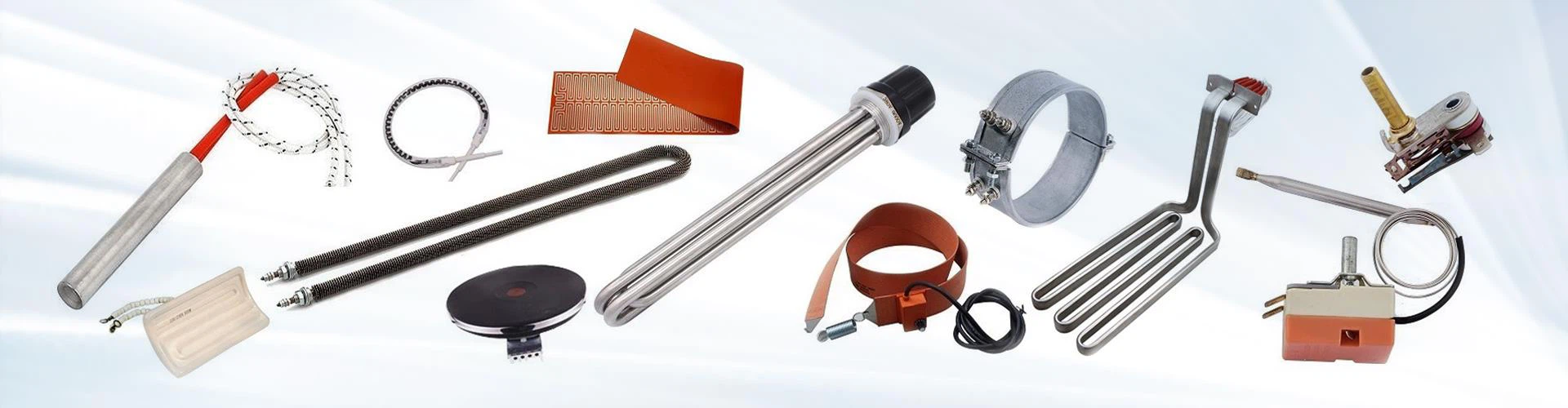
Upgrade your heating systems with Jaye Heater's premium components. For reliable heating elements and precise thermal controllers that ensure performance and safety, contact our experts today for a quote and technical support. Let's find your perfect heating solution.