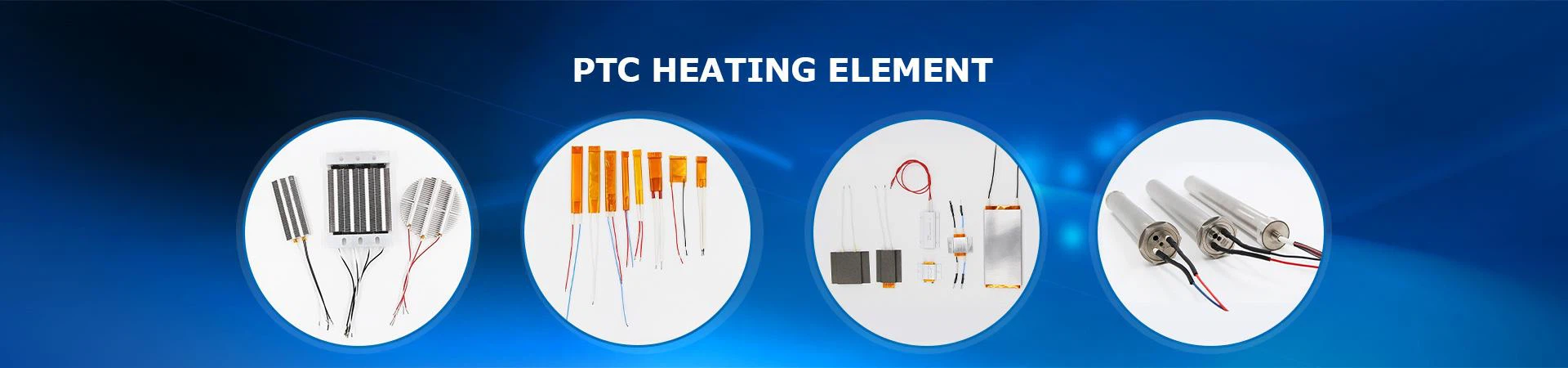
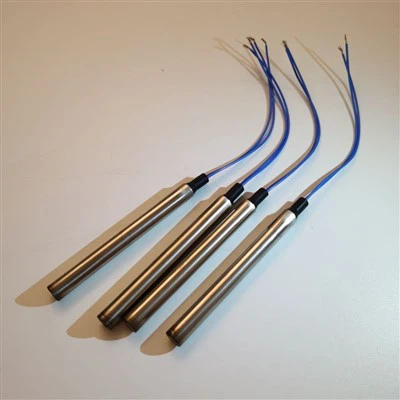
A PTC Cartridge Heater is a rod-shaped electric heating element that incorporates a Positive Temperature Coefficient (PTC) ceramic heating core sealed within a metal sheath (typically stainless steel).
Jaye Heater Technology Co., Ltd. is one of the most reliable manufacturers and suppliers of ptc cartridge heating element in China, also supports custom service. Welcome to wholesale high quality ptc cartridge heating element at competitive price from our factory.
Products Description
A PTC Cartridge Heater is a rod-shaped electric heating element that incorporates a Positive Temperature Coefficient (PTC) ceramic heating core sealed within a metal sheath (typically stainless steel).
Core Principle: Unlike traditional constant-resistance metal wire (e.g., nickel-chromium alloy) heaters, the electrical resistance of a PTC thermistor increases dramatically with rising temperature. When the temperature reaches its designated Curie Point, the resistance increases by several orders of magnitude, thereby automatically and rapidly reducing power output.
Operating Process: Upon cold start, the resistance is low, and power is high, enabling rapid heating. As the temperature approaches the preset Curie point, the resistance surges, causing current and power to drop automatically. This culminates in a dynamic equilibrium (steady-state) near the target temperature, achieving precise self-limiting temperature control without an external thermostat.
Construction: Typically consists of PTC ceramic chips, electrode plates, thermally conductive electrical insulation (e.g., magnesium oxide powder), a metal sheath, and lead wires/terminals.
Products Advantages
Inherent Safety & Overheat Protection:
This is the core advantage. Due to its intrinsic self-limiting characteristic, under fault conditions (e.g., poor heat dissipation, dry-fire, fan failure, controller failure), the surface temperature will not rise uncontrollably. It typically stabilizes within a range of ~20-30°C above the Curie point, significantly reducing fire risk and thermal damage to the heated target.
Temperature Stabilization & Simplified Control:
In applications with stable heat dissipation, it can provide relatively stable temperature output without complex PID controllers or thermocouple feedback, simplifying system design and reducing circuitry costs.
Long Service Life & High Reliability:
The automatically limited operating temperature reduces issues like metal oxidation and insulation aging at high temperatures.
The absence of a glowing wire prevents failure due to filament burnout. Service life is often multiple times that of conventional heaters.
Energy Efficiency:
Upon reaching equilibrium temperature, power automatically decays to a low maintenance level, avoiding the energy waste and temperature fluctuations associated with the continuous cycling of conventional heaters.
Power Self-Adaptation:
Output power self-adjusts to maintain stable temperature within a certain input voltage range. For example, a voltage increase causes a transient power surge but triggers a faster resistance rise, thereby suppressing excessive power output.
Fast Start-Up:
Low cold resistance allows for high initial heating power and rapid warm-up.
Products Spefications
Curie Temperature:The core PTC parameter defining the self-limiting balance point. Common Range: 100°C ~ 300°C (customizable). E.g., 180°C, 220°C, 250°C.
Rated Voltage:Design operating voltage, e.g., AC 110V, 220V, 380V.
Sheath Material:Typically stainless steel 304/316. Corrosion-resistant options like Incoloy 800 are available.
Quotation Guide
size
power and wattage
length of line
Temperature
Drawing and pictures
quantity
Question&Answer
Q1: Can a PTC heater operate directly connected to power, completely without a temperature controller?
A: Yes, in applications with stable heat dissipation where the target temperature matches the PTC's Curie point (e.g., constant-temperature ovens, recirculating air heaters). However, if precise temperature adjustment (changing setpoints) is needed, or if heat dissipation varies significantly (e.g., changing liquid levels), a thermostat is still required for on/off or phase-angle control, though safety remains superior to conventional heaters.
Q2: Is the power output of a PTC heater constant?
A: No. Its power is dynamic: highest at cold start, gradually decreasing as temperature rises, reaching a low maintenance power at equilibrium temperature. The product's labeled "power" typically refers to the "equilibrium power" or "typical power" under specific test conditions, not the maximum power.
Q3: How do I select the right PTC cartridge heater for my application?
A: Provide the following information:
Target Operating Temperature: Determines the required Curie temperature.
Available Space: Dictates allowable diameter and length.
Heat Dissipation Conditions: Heated medium (metal, liquid, air)? Contact area, airflow/liquid flow? This determines suitable watt density.
Warm-up Time Requirement: Influences the required initial power and thermal mass considerations.
Power Supply: Voltage and frequency.
Environmental Requirements: Humidity, corrosives, etc.