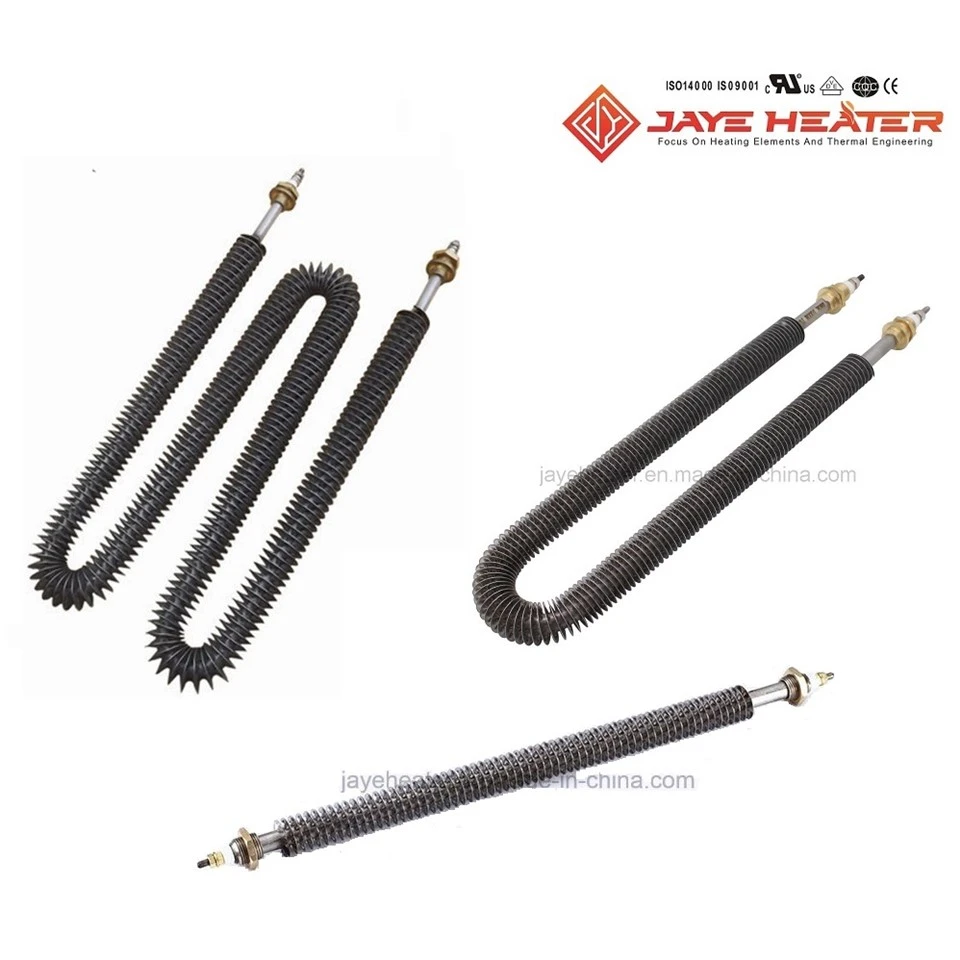
Tray dryers are widely used in the food processing, pharmaceutical, chemical, agricultural, and manufacturing industries to remove moisture from various materials. To achieve efficient and uniform drying, a reliable heating system is essential. Finned air tubular heaters are commonly used in...
Jaye Heater Technology Co., Ltd. is one of the most reliable manufacturers and suppliers of finned air tubular heaters for tray dryers in China, also supports custom service. Welcome to wholesale high quality finned air tubular heaters for tray dryers at competitive price from our factory.
Tray dryers are widely used in the food processing, pharmaceutical, chemical, agricultural, and manufacturing industries to remove moisture from various materials. To achieve efficient and uniform drying, a reliable heating system is essential.
Finned air tubular heaters are commonly used in tray dryers because they provide efficient heat transfer, stable heating performance, and a relatively compact installation structure.
By combining electric tubular heating elements with metal fins, these heaters increase the heat dissipation area and efficiently transfer heat to the circulating air inside the dryer.

A finned air tubular heater is an electric heating element designed specifically for heating air. It consists of a metal-sheathed tubular heating element with closely spaced metal fins attached to its surface.
Its main components include:
Compared with ordinary tubular heaters, finned tubular heaters offer a larger heat dissipation area, making them particularly suitable for forced-air heating applications.

Finned air tubular heaters work through electrical resistance heating and forced-air convection. The drying process generally involves the following steps:
Step 1: Electrical Energy Conversion
When the tray dryer is switched on, electric current passes through the NiCr resistance wire inside the tubular heater. Electrical energy is converted into thermal energy, heating the metal sheath.
Step 2: Enlarged Heat Transfer Surface
The metal fins attached to the tubular heater absorb heat from the sheath and increase the total surface area available for heat exchange.
This larger surface area allows the heater to transfer heat to the surrounding air more efficiently than a conventional smooth tubular heating element.
Step 3: Air Circulation and Heating
A circulation fan moves cold or relatively cool air through the finned heater assembly. As the air passes over the heated fins, it absorbs thermal energy and becomes hot air.
Step 4: Hot Air Distribution
The heated air is circulated throughout the drying chamber and flows around the trays containing the materials.
The hot air transfers heat to the materials, increasing their temperature and encouraging moisture to evaporate.
Step 5: Moisture Removal
As moisture evaporates from the materials, humid air is partially discharged through an exhaust system or replaced with fresh air, depending on the dryer design.
The circulation and heating process continues until the materials reach the required moisture content.

Finned tubular heaters offer several advantages for industrial tray drying equipment.
|
Advantages |
Benefits in Tray Dryers |
|---|---|
|
Large heat transfer area |
Metal fins improve heat exchange with circulating air. |
|
High heating efficiency |
Efficient air heating helps reduce unnecessary heat loss. |
|
Uniform heat distribution |
Supports consistent hot-air circulation throughout the drying chamber. |
|
Compact structure |
Multiple heating elements can be arranged in a relatively small space. |
|
Durable construction |
Stainless steel sheaths offer good corrosion resistance in suitable operating environments. |
|
Customizable design |
Different dimensions, wattages, voltages, and fin configurations are available. |

Finned air tubular heaters are suitable for different types of tray drying equipment.
The heater material and operating temperature should be selected according to the material being dried and the environmental requirements.
Choosing the correct heating element is essential for achieving stable heating performance and reliable operation.
The following factors should be considered:
|
Selection Factor |
Important Considerations |
|---|---|
|
Operating voltage |
Match the heater voltage to the dryer power supply. |
|
Heating power |
Calculate the required wattage based on chamber size, airflow, material load, and heating time. |
|
Sheath material |
Stainless steel 304, 316, or other suitable materials depending on operating conditions. |
|
Heater dimensions |
Match the installation space and heater arrangement. |
|
Fin configuration |
Select appropriate fin density, fin dimensions, and spacing for the required airflow. |
|
Air velocity |
Ensure sufficient airflow to prevent excessive heater surface temperatures. |
|
Temperature control |
Use thermostats, temperature sensors, and controllers to maintain the required drying temperature. |
Q1: Why are finned tubular heaters better than ordinary tubular heaters for tray dryers?
Finned tubular heaters have a larger heat transfer surface area because of their metal fins. This allows them to transfer heat to circulating air more effectively, making them suitable for forced-air drying systems.
Q2: Can finned air tubular heaters provide uniform heating in a tray dryer?
Yes. They can support uniform hot-air heating when properly combined with circulation fans, suitable heater positioning, and well-designed air distribution channels. Actual drying uniformity also depends on tray loading and airflow conditions.
Q3: What materials are commonly used for finned tubular heaters in tray dryers?
Stainless steel 304 is commonly used for general industrial applications. Stainless steel 316 may be considered for environments requiring better corrosion resistance. The final material selection depends on temperature, humidity, chemical exposure, and cleaning requirements.
Hot Tags: finned air tubular heaters for tray dryers, China, manufacturers, suppliers, factory, wholesale, custom, price, electric, high quality, Dryer Finned Heater, Duct Heating Element, Finned Heat Exchanger Tube, Finned Heater For Dryers And Ovens, Finned Heating Element For Duct Heaters, Resistance Finned Heating Element