11
Sep
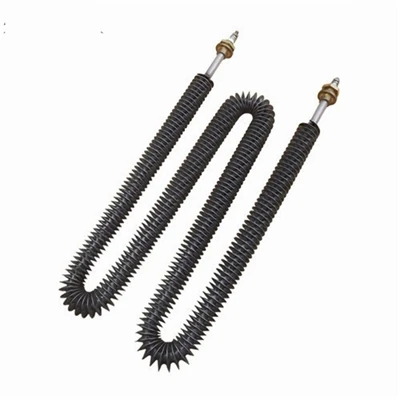 When is it necessary to use a customized shape in a finned heater?
When is it necessary to use a customized shape in a finned heater? Use a custom shape when a standard straight or U-shaped heater doesn't fit or doesn't heat evenly . Common Reasons to Customize the Shape: Limited or Odd-Shaped Space The duct or equipment has bends or tight spaces. More Even Air...
11
Sep
 When should you use a finned tubular heater instead of a standard cartridge h...
When should you use a finned tubular heater instead of a standard cartridge heater? Use a Finned Tubular Heater When: You Need to Heat Air or Gases (Convection Heating) Finned heaters are designed to increase heat transfer to air by increasing the surface area. Ideal for HVAC systems, duct...
10
Sep
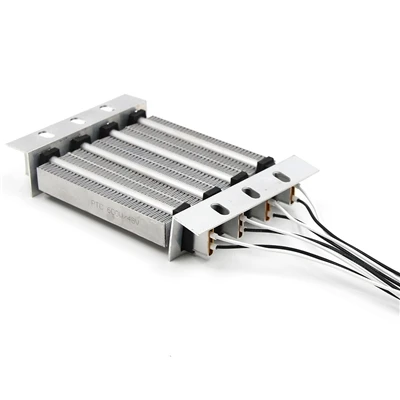 What Makes PTC Heaters Ideal for Medical Equipment like Respiratory Therapy D...
1. Inherent Safety for Patient-Critical Applications Self-Limiting Temperature : PTC heaters automatically reduce power output as they approach their target temperature (Curie point), eliminating the risk of overheating. This is critical for devices like nebulizers or CPAP machines, where...
09
Sep
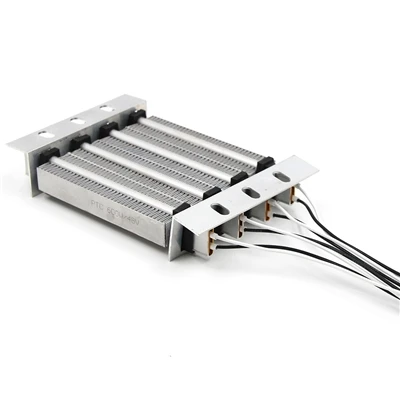 How Do PTC Heaters Improve Safety in Industrial Air Handlers and Unit Heaters?
PTC heaters improve safety in industrial air handlers and unit heaters primarily through their inherent self-regulating and self-limiting property, which eliminates several critical failure modes associated with traditional resistive heating elements. Here's a detailed breakdown of how they...
08
Sep
 What Makes a Silicone Rubber Heater Suitable for UAV De-icing Applications?
The suitability of silicone rubber heaters for UAV (Unmanned Aerial Vehicle) de-icing applications stems from a combination of critical properties that meet the stringent demands of aerospace environments. They offer a unique solution that is both highly effective and practical for the size,...
08
Sep
 How are Silicone Rubber Heaters Used in Semiconductor Wafer Processing Equipm...
Silicone rubber heaters are critical components in semiconductor wafer processing equipment, primarily used for precise, uniform, and reliable thermal management. Their unique properties make them ideal for the extreme demands of semiconductor fabrication (fabs). Here's a detailed breakdown of...
29
Aug
 How are Silicone Heaters Used to Maintain Precise Temperatures in Diagnostic ...
1. Core Engineering Challenges Heating complex 3D surfaces (e.g., curved pipes, irregular machinery parts, or aerodynamic components) requires addressing: Conformability : Ensuring the heater maintains full contact without air gaps. Heat Uniformity : Preventing hot/cold spots due to uneven...
29
Aug
 How Finned Heating Element Works For Conveyor Belt Ovens?
Finned heating elements are widely used in conveyor belt ovens because they deliver efficient, uniform, and controlled heating. Here's how they work in this application: 1. Heating Mechanism The finned heating element consists of a tubular heater with metal fins attached. When electricity passes...
30
Aug
 How Finned Heating Tubes Work for Shrink Wrap Tunnels?
Finned heating tubes are widely used in shrink wrap tunnels because they provide strong, uniform, and energy-efficient heating for the shrink process. Here's how they work in this application: 1. Heating Mechanism A finned heating tube is essentially a tubular heating element with metallic fins...
30
Aug
 How 1000W Finned Tubular Heater Work For baking ovens?
1. Structure of a Finned Tubular Heater A finned tubular heater consists of: A resistive heating element (usually Ni-Cr wire) inside a metal sheath. Fins attached to the sheath to increase the surface area for better heat transfer. Electrical terminals for connection to the oven's power supply....
29
Aug
 How M Shaped Finned Tubular Heaters Work For food dehydrators?
1. Design and Structure M-shaped tubular heater: The heating element is bent in an "M" shape to increase the surface area without occupying too much space. Fins: Metal fins are attached along the heater. These increase heat transfer efficiency by allowing more heat to dissipate into the...
29
Aug
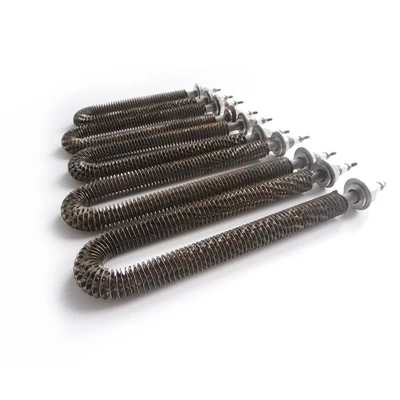 How Finned Tubular Heaters work for paint booths?
Finned tubular heaters are widely used in paint booths because they provide efficient, uniform, and controllable heat, which is critical for proper paint drying and curing. Here's how they work in this application: 1. Air Heating: Finned tubular heaters are installed inside the air ducts or...
29
Aug
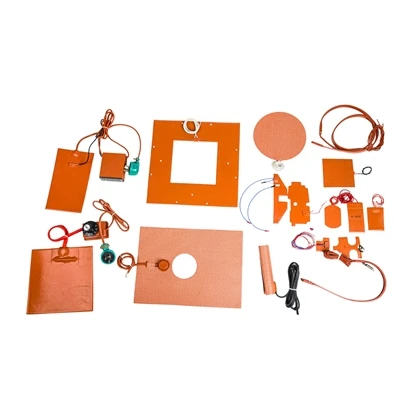 How are Silicone Rubber Heaters Engineered for Complex 3D Surfaces?
1. Core Engineering Challenges Heating complex 3D surfaces (e.g., curved pipes, irregular machinery parts, or aerodynamic components) requires addressing: Conformability : Ensuring the heater maintains full contact without air gaps. Heat Uniformity : Preventing hot/cold spots due to uneven...
28
Aug
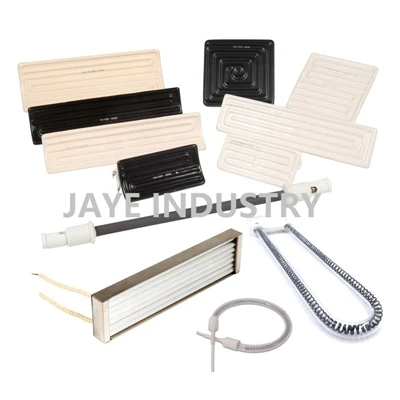 Elstein Ceramic Infrared Heating Elements: European Origins and JAYE Alternat...
Ceramic infrared heating elements are widely used in industrial heating, drying, and thermoforming applications. They are valued for their uniform infrared radiation, long lifespan, and energy efficiency. The origins of this technology can be traced back to Europe, where Elstein, a German...
28
Aug
 Comparing EGO 300x300mm Marine Square Hot Plates with JAYE Alternatives
In the marine industry, the 300x300mm square hot plate is a standard heating solution used in ship galleys and industrial applications. Global brands such as EGO are well recognized for their reliable performance and long history in the market. In recent years, JAYE has introduced alternative...
28
Aug
 What are the typical applications for finned tubular heaters?
Finned tubular heaters are essentially tubular heating elements wrapped with metallic fins (typically aluminum or stainless steel). Their core function is to efficiently heat air or gases by drastically increasing the surface area for heat transfer. This makes them indispensable in a wide range...
28
Aug
 How Mica Heaters Work For Magnetic Stirrer?
1. Overview of Magnetic Stirrers A magnetic stirrer is a lab device that uses a rotating magnetic field to spin a magnetic stir bar in a liquid, allowing for uniform mixing. Many magnetic stirrers also include a heating function to warm the liquid while stirring. 2. Role of Mica Heaters Mica...
28
Aug
 Why are Quartz IR Heaters Preferred for Rapid Response Times in Process Heating?
1. Minimal Thermal Mass for Instant Activation Low Density Structure : Quartz tubes have extremely low thermal mass compared to ceramic or metal sheathed elements. They contain no dense insulating materials (e.g., MgO) or thick metal housings that require time to heat up. Direct Radiation :...
28
Aug
 How Mica Heaters Work For Fan Systems?
Mica heaters are efficient, durable, and compact heating elements widely used in fan systems for residential, commercial, and industrial applications. Made by embedding resistance wire between layers of high-quality mica sheets, these heaters provide consistent heat transfer while maintaining...
28
Aug
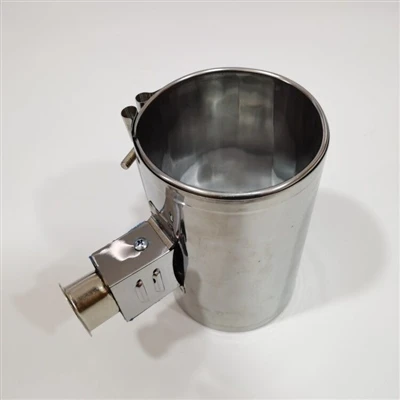 How Industrial Mica Band Heaters Work For Blow Molding?
Industrial mica band heaters are widely used in blow molding applications due to their efficient heat transfer, durability, and versatility. 1. Design and Placement Mica band heaters are flexible, strip-like heaters wrapped around the extrusion or injection barrel of a blow molding machine. The...