
Aug 27, 2026
Maintaining the right temperature is important when storing and transporting temperature-sensitive liquids in IBC containers. Materials such as oils, chemicals, resins, adhesives, and other viscous liquids may become difficult to pump or discharge when their temperature drops.
Two common external heating solutions are aluminum foil heaters and IBC heating jackets. Although both are designed to heat the contents of an IBC container, they differ in construction, installation, heating coverage, and application flexibility.
Understanding these differences can help users select the most suitable heating solution for their specific application.
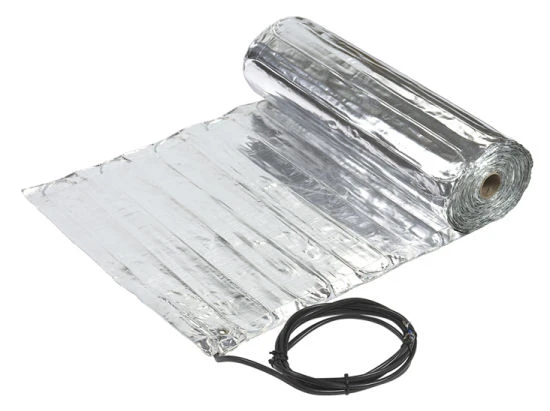
An aluminum foil heater is a thin electrical heating element laminated or bonded with aluminum foil. When energized, the resistance heating element generates heat and transfers it through the aluminum surface to the target container.
For IBC applications, the heater can be customized according to the required heating area, shape, dimensions, voltage, and wattage.
Typical applications include:
Its thin construction makes it suitable for applications where installation space is limited.
An IBC heating jacket is an external heating system designed to wrap around an IBC container. It generally consists of flexible heating elements combined with an insulated outer layer and temperature controller.
The heating jacket surrounds a larger portion of the container, allowing heat to be transferred over a relatively large surface area.
IBC heating jackets are commonly used for:
Because they are designed specifically for IBC containers, many heating jackets are available in standard IBC sizes.

Although both solutions provide external heating, their designs are different.
| Feature | Aluminum Foil Heater | IBC Heating Jacket |
|---|---|---|
| Structure | Thin heating element with aluminum foil | Flexible jacket with heating and insulation layers |
| Installation | Attached to selected tank surfaces | Wrapped around the IBC |
| Heating Area | Customizable | Usually covers a larger area |
| Thickness | Very thin | Thicker |
| Customization | High | Usually based on standard IBC dimensions |
| Installation Space | Minimal | Requires additional external space |
| Heat Distribution | Targeted or customized | Broad surface heating |
| Portability | Depends on installation design | Easy to install and remove |
| Insulation | Can be designed separately | Usually integrated |
| Temperature Control | Thermostat or sensor can be added | Usually equipped with a controller |
One of the main differences is the way heat is distributed.
An IBC heating jacket generally surrounds the container and provides heating over a large surface area. This makes it suitable when relatively uniform heating or temperature maintenance is required.
An aluminum foil heater, on the other hand, can be designed for a specific section of the IBC.
For example, a manufacturer may install heating elements on:
This provides greater flexibility when the entire container does not need to be heated.
Customization is an important advantage of aluminum foil heaters.
The heating element can be manufactured according to the required:
This makes aluminum foil heaters particularly useful for custom IBC heating applications where a standard heating jacket may not perfectly match the customer's requirements.
IBC heating jackets are generally designed around standard container dimensions, although customized jacket sizes are also available.
Because aluminum foil heaters are extremely thin, they can be installed directly against the surface of the container without adding significant bulk.
This can be useful when:
An IBC heating jacket requires more external space because the jacket normally surrounds the container and includes insulation and other protective layers.
Both solutions can be used for materials that become highly viscous at lower temperatures.
Examples may include:
The purpose is generally not to heat the material to an extremely high temperature, but to maintain a suitable temperature and reduce viscosity so that the material can be pumped, mixed, or discharged more easily.
For highly viscous materials, heater placement becomes particularly important. Heating the lower section of the IBC near the outlet can help improve discharge performance.
Both aluminum foil heaters and IBC heating jackets can be combined with temperature-control devices.
A typical system can include:
Heating Element + Temperature Sensor/Thermostat + Controller
For example:
Temperature below set point → Heater ON
Temperature reaches set point → Heater OFF
This prevents unnecessary continuous heating and helps maintain a stable material temperature.
For customized aluminum foil heaters, a thermostat or temperature sensor can be positioned according to the customer's heating requirements.
The best solution depends on the application.
You need a thin and lightweight heater
Only part of the IBC needs heating
The heater requires a customized shape or size
Installation space is limited
You need customized voltage or wattage
You want heating concentrated around a specific area
You need to heat a large portion of the container
You prefer a removable heating solution
The IBC needs general temperature maintenance
You need integrated insulation
A standard IBC heating solution is sufficient
In some applications, yes-but they are not direct substitutes in every situation.
An aluminum foil heater can be a suitable alternative when the application requires targeted, low-profile, or customized heating.
For applications requiring broad surface heating and easy installation/removal, an IBC heating jacket may be more convenient.
Therefore, the choice should be based on the heating area, required temperature, power, installation method, material properties, and operating environment.
Both aluminum foil heaters and IBC heating jackets provide effective solutions for maintaining the temperature of materials stored in IBC containers, but they are designed for different requirements.
IBC heating jackets are well suited for broad, removable, and insulated container heating, while aluminum foil heaters offer greater flexibility for thin, lightweight, targeted, and customized heating applications.
For IBC manufacturers and industrial users, the right choice should be based on the material being heated, required temperature, heating area, power requirements, and installation conditions.
For customized applications, Jaye Heater can design aluminum foil heaters according to the IBC dimensions, heating area, voltage, wattage, and temperature-control requirements, providing a flexible heating solution for liquid and viscous material applications.

Your one-stop partner for all electric heating needs. JAYE delivers fully customized, high-quality elements and controls with massive capacity and full international certifications.
Previous: How Do Aluminum Foil Heaters Maintain Product Temperature in Packaging?
Next: Heating Element Applications in New Energy Vehicles: Supporting Smart Thermal Management






