
Aug 31, 2026
Chocolate is not simply melted and used immediately. During processing, cocoa butter crystals need to be controlled properly to achieve the desired final quality.
A typical chocolate tempering process involves several temperature stages:
The exact temperature depends on the type of chocolate and the processing method. For example, dark chocolate, milk chocolate, and white chocolate may require different temperature curves.
If the temperature is not controlled properly, problems may occur:
Therefore, the heating system inside the equipment needs to provide stable and controllable heat rather than simply producing maximum power.
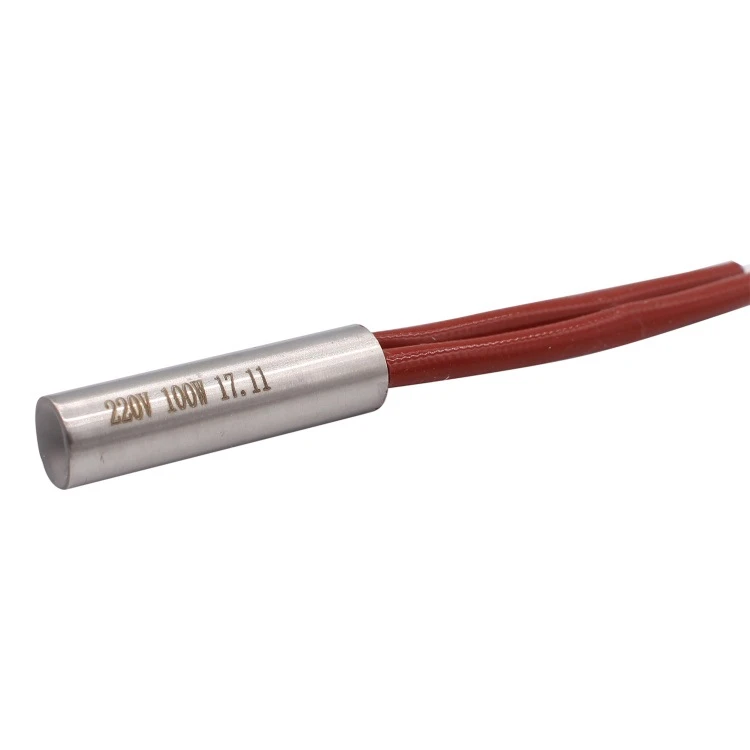
A cartridge heater is a cylindrical electric heating element designed to provide concentrated heating in a compact space.
The heater normally consists of:
When electrical power is supplied, the resistance wire generates heat. This heat transfers through the insulated structure to the outer metal sheath and then into the surrounding metal component.
Unlike some traditional heating methods that heat from the outside, a cartridge heater is usually inserted into a precisely machined hole inside a metal block. This allows heat to be generated close to the area where it is needed.

In chocolate processing equipment, cartridge heaters are usually not placed directly into the chocolate.
Instead, they are installed inside a conductive metal component, such as:
Aluminum heating blocks
Stainless steel tanks
Heating plates
Metal pipes or channels
The basic heat transfer process is:
Electrical Energy → Cartridge Heater → Metal Heating Block → Chocolate → Controlled Temperature
The cartridge heater transfers heat through the metal structure, which then heats the chocolate container or flow channel.
This design provides several advantages:
Some chocolate tempering equipment designs use embedded heating elements together with temperature sensors and control systems to maintain the required chocolate temperature during operation.

A chocolate tempering machine typically contains several functional areas:
For example:
A stainless steel or aluminum heating block may be manufactured with a drilled hole. The cartridge heater is inserted into this hole, while a temperature sensor monitors the block temperature.
The controller then adjusts the heating output according to the required temperature.
The complete system can be represented as:
Temperature Sensor → Controller → Cartridge Heater → Heating Block → Chocolate Temperature Control
This combination allows the machine manufacturer to achieve more stable temperature management.

Chocolate tempering machines often have limited internal space. The heating system needs to fit together with:
Because cartridge heaters are cylindrical and installed inside metal parts, they can provide heating without requiring a large external heating structure.
Chocolate equipment usually does not require heating the entire machine body.
Instead, heat is needed in specific areas such as:
A cartridge heater can deliver heat directly to these components, helping reduce unnecessary heat loss.
Chocolate equipment manufacturers may have different mechanical designs.
A small chocolate dispenser may require a compact heater, while an industrial tempering machine may require multiple heaters distributed around a larger heating area.
Cartridge heaters can be customized according to:
This makes them suitable for OEM equipment development.

| Parameter | Consideration |
|---|---|
| Heater Type | Single-ended cartridge heater |
| Diameter | Matched with the machined installation hole |
| Length | Based on heating area and available space |
| Voltage | According to equipment power supply |
| Wattage | Based on heating requirement |
| Heating Zone | Determined by the required heat transfer area |
| Sheath Material | Selected according to working environment |
| Lead Wire | Length, insulation and exit direction |
| Temperature Sensor | Thermocouple, RTD or other sensor type |
| Installation Method | Inserted into aluminum or stainless steel heating block |
| Quantity | Based on machine structure and heating capacity |

Chocolate equipment manufacturers often require customized heating solutions because every machine design is different.
A standard heater may not always fit the available installation space or heating requirements.
A customized cartridge heater can be developed according to:
For OEM projects, providing detailed drawings, photos, or existing heater samples can help engineers evaluate the most suitable heating solution.
Temperature control is one of the most important factors in chocolate processing equipment. A stable heating system helps maintain the working condition of chocolate and supports consistent product quality.
Cartridge heaters provide a compact and flexible heating solution by transferring heat through metal blocks, tanks, or channels inside the equipment. Their small size, customizable design, and efficient heat transfer make them suitable for various chocolate processing applications.
For manufacturers developing chocolate tempering machines, melting equipment, or other food processing systems, a properly designed cartridge heater can become an important part of a reliable thermal management solution.
JAYE Heater provides customized cartridge heaters for OEM heating applications. Based on your equipment structure, heating requirements, voltage, wattage, installation dimensions, and quantity, we can help develop a suitable cartridge heater solution.






