Nov 12, 2026
Sourcing a Chinese manufacturer alternative for an EGO hotplate typically yields three key operational differences: a shift from rigid catalog ordering to highly flexible OEM customization (e.g., specific wattages, CNC-machined flatness tolerances down to ≤0.15mm, and custom surface treatments), a compressed lead time of 15–25 days instead of the typical 6–8 weeks via European distribution, and a significantly lower minimum order quantity (MOQ) that supports rapid prototyping. However, to achieve and sustain EGO-grade performance, buyers should expect to meticulously verify metallurgical stability (warpage resistance at 500°C+), thermal cycling endurance, and strict dimensional interfaces for standard EGO thermostats. A reputable Chinese manufacturer like JAYE addresses these engineering requirements, offering factory-direct alternatives that meet or exceed European standards while providing the supply chain agility required for modern appliance OEMs.
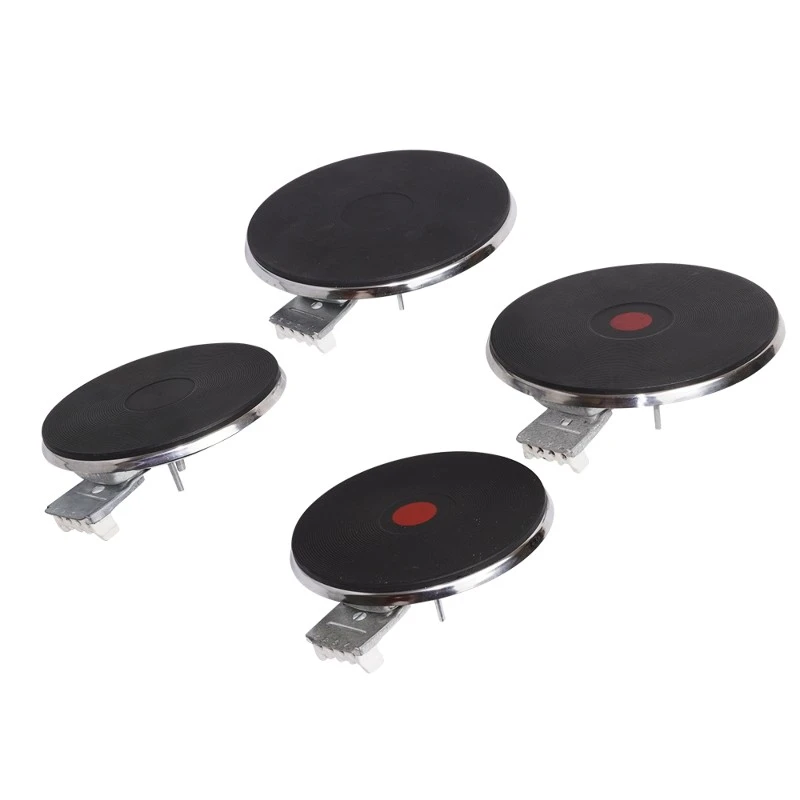
Supply Chain Agility: JAYE offers factory-direct manufacturing with typical custom lead times of 15–25 days, compared to the 6–8 week lead times often associated with European distributor networks for non-stock items.
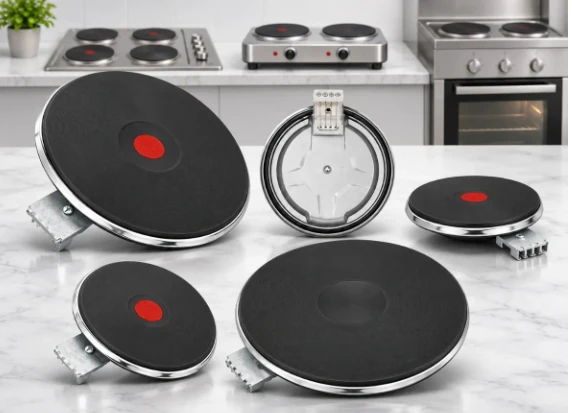
Customization Depth: Expect the ability to modify power ratings (e.g., 1000W to 2500W), voltages (110V for North America, 220V/230V for Europe/Asia), and physical dimensions without incurring prohibitive tooling fees.
Surface Precision: Quality Chinese manufacturers utilize CNC machining to achieve surface flatness of ≤0.15mm, which often exceeds the standard foundry tolerances of standard catalog hotplates (approx. 0.3mm), ensuring superior cookware contact.
Thermostat Integration: Engineered to directly accept standard EGO capillary thermostats (like the EGO 55 series) with precise probe channels and mounting hole positions, maintaining accurate temperature feedback loops.
In the commercial and domestic appliance industry, the technical pain point with standard European catalog parts (like EGO) is often a combination of supply chain rigidity and engineering constraints. When an OEM designs a new electric range for a specific regional voltage (e.g., 110V for North America) or requires a non-standard cooking zone size, relying exclusively on standardized EGO catalog parts can lead to massive minimum order quantities (MOQs), long lead times, and limited flexibility for design iterations. Furthermore, relying on a single geographic source for critical heating components introduces supply chain vulnerability. This scenario requires a manufacturing partner that can deliver the same high thermal mass and strict safety standards (IEC 60335-2-6) but with the agility to adapt to custom wattages, different surface treatments (e.g., high-temp enamel or passivation), and faster go-to-market timelines.
When evaluating a Chinese manufacturer, the engineering and procurement teams must conduct a thorough technical audit focusing on the following dimensions:
Metallurgical Stability vs. Warpage: Requires verifying the use of high-grade grey cast iron (e.g., HT200/HT250) and a controlled annealing process to relieve internal stress. Engineering significance: Low-quality cast iron will warp after a few hundred thermal cycles. When the plate warps, the air gap between the pan and the plate acts as a thermal insulator, ruining heat transfer and causing the thermostat to overheat the element to compensate.
Machining Precision & Flatness: Requires a CNC machined surface with flatness ≤0.15mm. Engineering significance: This ensures maximum contact with the cookware and prevents localized hotspots that can damage non-stick coatings or cause uneven cooking.
Heating Element Embedding Process: Requires inspecting how the resistance wire is embedded. Engineering significance: Top-tier manufacturers use a specialized casting process where the wire is precisely positioned and cast into the iron. Poor embedding can lead to localized overheating, wire shorting, or uneven thermal distribution across the plate.
Thermostat Interface Tolerance: Requires manufacturing the probe grooves and mounting brackets to match EGO specs (e.g., matching EGO 55 thermostat dimensions). Engineering significance: Even a 1mm deviation can alter the thermal sensing feedback, causing the burner to cycle incorrectly (overshooting or undershooting the target temperature).
Certification and Testing: Requires IEC/EN 60335 compliance, dielectric strength testing (>1250V AC), and thermal cycling endurance tests. Engineering significance: Ensures the final appliance can pass safety certifications (CE, UL) in target markets without the heater failing electrical insulation or structural integrity tests.
| Technical Dimension | JAYE Custom Cast Iron Hotplate | EGO Standard Cast Iron Hotplate |
|---|---|---|
| Material Grade | HT200 / HT250 (Stress-relieved) | Standard European cast iron |
| Surface Flatness | ≤ 0.15mm (CNC machined) | Standard foundry tolerance (approx. 0.3mm+) |
| Power Range | 1000W – 2500W (Customizable) | Standard catalog (e.g., 1500W, 2000W) |
| Voltage | 110V, 220V, 230V, 240V | 230V, 240V (Standard European) |
| Thermostat Compatibility | Direct fit for EGO 55 series (customizable) | Native EGO compatibility |
| Thermal Cycling Resistance | Tested to 10,000+ cycles without warpage | High (established manufacturing standards) |
| Sourcing Model | Factory-direct OEM/ODM, low MOQ | Catalog standard, distributor-based |
| Lead Time | 15–25 days | Typically 6–8 weeks (via distribution) |
| Testing & Certification | IEC/EN 60335, custom testing available | Established European certifications |
Application Boundary: JAYE is positioned for OEMs that require drawing-specific customization, lower MOQs for prototyping, and faster lead times for North American or Asian markets. EGO is positioned for large-volume European appliance manufacturers requiring standard catalog parts with no modifications to existing burner assemblies and established local distribution channels.
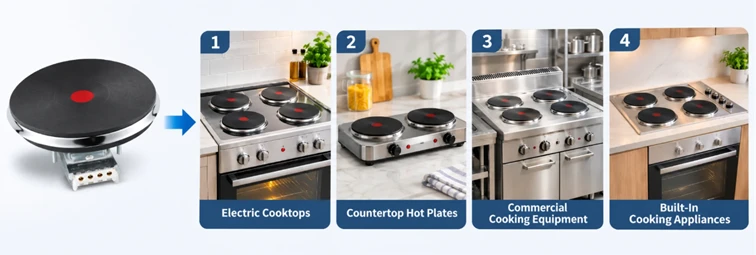
Custom cast iron hotplates extend beyond standard domestic electric ranges. Key application scenarios include:
Commercial Portable Hot Plates: Matching the requirement for rapid heat-up and high thermal stability; cast iron plates provide the necessary thermal mass for continuous commercial use in catering, buffets, and food trucks.
Laboratory Heating Equipment: Matching the requirement for uniform surface heating; custom stainless steel or enamel-coated cast iron plates offer corrosion resistance for chemical environments and high-temperature testing.
Marine and RV Galleys: Matching the requirement for robust, vibration-resistant heating; cast iron plates with secure terminal connections and anti-corrosion treatments are suitable for mobile environments with 110V systems.
Specialty Cooking Appliances: Matching the requirement for specific heat distribution profiles; OEMs can tailor the internal resistance wire layout to create distinct hot zones or specific thermal gradients for specialized cooking equipment like commercial griddles or simmer plates.
Can a Chinese manufacturer like JAYE truly match EGO's quality?
Yes, provided the specifications are clearly defined and audited. JAYE uses HT200/HT250 cast iron and CNC machining to achieve ≤0.15mm flatness, which can match or exceed EGO's standard foundry tolerances. The key is verifying the annealing process and requesting thermal cycling test data to ensure long-term warpage resistance.
What is the typical MOQ for a custom cast iron hotplate from JAYE?
For new custom designs or pilot runs, the MOQ can start as low as 500 pieces. For standard catalog-equivalent sizes, MOQs are scalable based on the annual volume forecast and are generally more flexible than European suppliers.
How long does it take to receive samples for testing?
Sample production typically takes 7–10 days, followed by express shipping (5–7 days). OEMs can then conduct their own flatness (feeler gauge), thermal distribution (thermal imaging), and dielectric strength tests.
How does JAYE handle intellectual property (IP) and custom tooling?
JAYE operates on an OEM/ODM basis. For custom tooling (such as unique die casts for specific hotplate dimensions), ownership and exclusivity can be negotiated. Standard probe channels for EGO thermostats are generic and do not infringe on proprietary designs.
To ensure your burner system is completely optimized, pair your custom cast iron plate with our capillary thermostats for precise temperature regulation. For other high-temperature or custom-shaped heating applications, explore our flat tubular heaters and finned tubular heaters. Learn more about our custom heating element manufacturing capabilities.
How to Get a Custom Cast Iron Hot Plate Quote:
To determine the appropriate cast iron hotplate configuration for your burner assembly, a technical evaluation based on your dimensions, EGO thermostat model, surface treatment, and voltage is necessary. Provide your 2D/3D drawings, target wattage, and annual volume to our engineering team to receive a specification-matched assessment and a custom manufacturing quotation. Send your technical requirements today for a professional review.
1-Jaye Heater Technology. Cast Iron Hot Plates for Electric Burners - Manufacturing and Machining Specifications. Jaye Heater.
2-EGO Elektro-Gerätebau GmbH. EGO Hot Plates and Thermostats for Household Appliances - Technical Datasheet. EGO.
3-IEC 60335-2-6: Household and similar electrical appliances - Safety - Part 2-6: Particular requirements for stationary cooking ranges, hobs, ovens and similar appliances.
4-ASTM A48 / A48M: Standard Specification for Gray Iron Castings.
Previous: JAYE Cartridge Heater vs Durex Cartridge Heater: Mold & Tool
Next: JAYE Band Heater vs. Tempco Band Heater: A Cost-Effective Alternative for Plastic Processing