
Aug 21, 2026
An electric heating element converts electrical energy into heat.
For example:
2000 W electrical input → approximately 2000 W of heat generation
But the heater itself is not the final destination of that heat.
In an air-heating application, the heat needs to move from the heating element into the air.
The basic process is:
Resistance wire → heating tube → aluminum fins → moving air
The air flowing around the fins carries the transferred heat away from the heating surface.
This means the airflow is directly related to how quickly heat can be removed from the heater surface and delivered into the air stream.
When the airflow changes, the thermal condition of the heating element can also change.
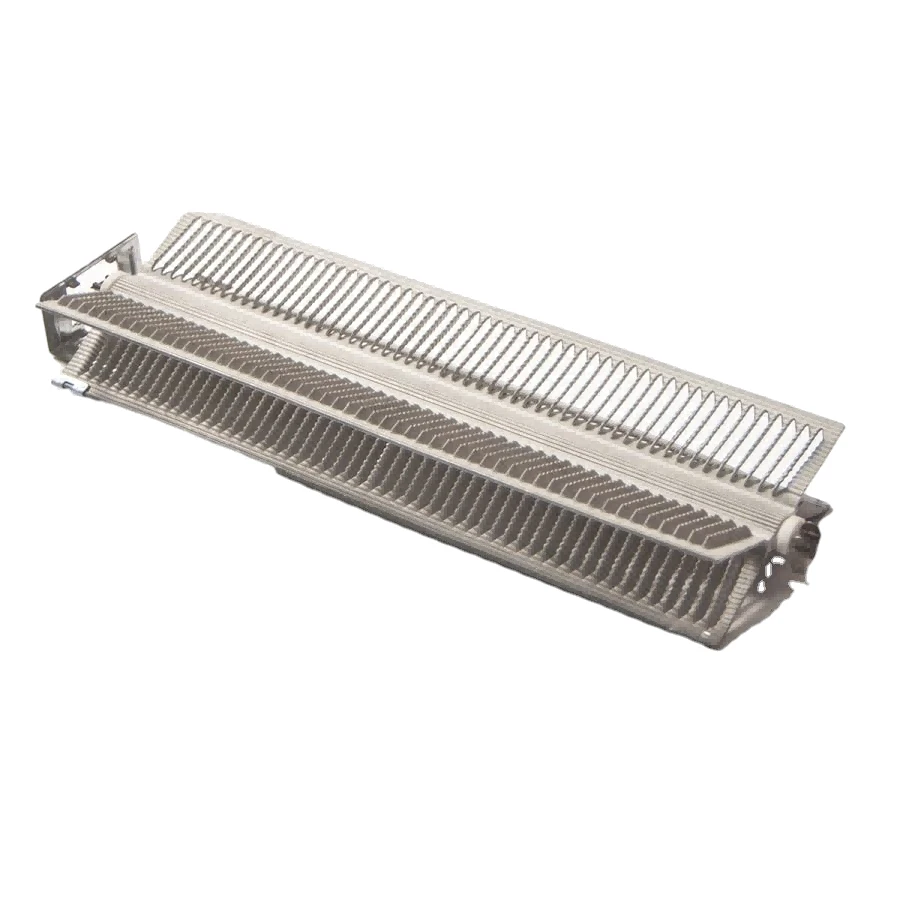
One common situation is using a relatively high-power heater with insufficient airflow.
Imagine a 2000 W heating element installed inside a duct, but the actual air volume passing through the heater is much lower than expected.
The heater still receives electrical power.
The resistance wire still generates heat.
But there is not enough moving air to carry that heat away from the heating surface efficiently.
As a result, the heater surface temperature may rise.
Depending on the design, this can lead to:
This is why simply asking for a higher-wattage heater is not always the right solution.
The heater must be matched to the actual airflow and operating conditions.
Now consider the opposite situation.
The same 2000 W heater is installed in an application with a stronger airflow.
The moving air continuously passes over the aluminum fins and removes heat from the heater surface.
In many forced-air applications, higher airflow can improve the heat transfer between the heater and the air stream.
The result can include:
However, higher airflow does not automatically mean the heater will provide a higher outlet temperature.
This is an important distinction.
The heater still provides approximately the same electrical power if it is still operating at the same voltage and resistance.
What changes is how that power is transferred into the moving air.

A practical way to look at an air heater is to ask:
How much heat do we need, and how much air needs to be heated?
For example, a system may require a large amount of air to be heated from a relatively low inlet temperature to a moderate outlet temperature.
Another application may have a much lower airflow but require a larger temperature increase.
The two applications may therefore require different heater designs even if both use electric heating.
For this reason, an X-shaped aluminum finned heater should not be selected based on wattage alone.
A manufacturer may also need:
• Inlet air temperature
• Required outlet air temperature
• Airflow
• Air velocity
• Working pressure, where relevant
• Continuous or intermittent operation
These conditions give a much clearer picture of the actual heating requirement.
Airflow conditions are also different depending on how the air moves.
Natural convection
In a natural convection application, air movement is mainly caused by temperature differences.
As air around the heater becomes warmer, it becomes less dense and rises. Cooler air then moves in to replace it.
The airflow is generally weaker and less controlled.
This means the heater design may need to consider:
• Heater orientation
• Available convection space
• Surface temperature
• Fin arrangement
• Natural air circulation around the heater
This type of heating is common in some electric convection heaters and other low-airflow applications.
Forced convection
In a forced convection application, a fan or blower pushes air through the heating element.
The airflow is more controlled.
The designer may know:
• Air volume
• Air velocity
• Fan capacity
• Duct dimensions
This makes it easier to evaluate the air side of the heater.
Finned tubular heating elements are widely used in forced-air heating applications because the fins provide an enlarged surface area for heat transfer while the air is directed through the heater.
The main purpose of the X-shaped aluminum fin structure is not to increase electrical power.
It is part of the heat-transfer design.
The fins enlarge the contact area between the heated metal and the surrounding air.
At the same time, the geometry of the fins influences the way air passes through the heater.
Instead of moving along one simple path, air encounters the fin surfaces from different directions.
This can increase local air disturbance around the heated surfaces.
However, the actual performance depends on the complete fin design.
Important factors include:
• Fin height
• Fin thickness
• Fin spacing
• Fin density
• Heating tube diameter
• Air velocity
• Heater arrangement
For this reason, the X shape itself should not be treated as an isolated performance guarantee.
It is one part of the overall heating element design.

Fin spacing is a good example of how mechanical design and airflow are connected.
If fins are packed very closely together, the total available surface area may be high.
But if the air passage becomes too restricted for the application, airflow resistance may increase.
On the other hand, fins that are spaced too far apart provide more open airflow space but may not provide the same amount of heat-transfer surface within the available heater dimensions.
The best spacing depends on the application.
For natural convection, the design considerations may differ from those of a high-velocity forced-air application.
This is why a manufacturer should ideally know the actual airflow conditions before finalizing the fin structure.

Consider two applications.
Application A
• Heater power: 2000 W
• Airflow: Low
• Inlet air: 20°C
• Natural convection
Application B
• Heater power: 2000 W
• Airflow: High
• Inlet air: 20°C
• Forced convection
Both applications use the same electrical power.
However, the thermal conditions around the heating element are different.
Application A may experience a higher heater surface temperature because there is less moving air to carry heat away.
Application B may transfer heat to a larger volume of air, resulting in a different outlet temperature and different heater surface conditions.
This does not mean one system is automatically better than the other.
They simply have different design requirements.
Airflow is one of the most important factors when designing or selecting an X-shaped aluminum finned heater for air heating.
The electrical wattage determines how much heat the resistance element generates, but airflow determines how that heat interacts with the air moving around the heater.
Too little airflow can result in excessive heater surface temperature.
Higher airflow can carry heat away from the element more effectively, but the same heating power may then be distributed across a larger amount of air.
For this reason, the correct design needs to consider the complete set of operating conditions:
Wattage + Airflow + Inlet Temperature + Target Temperature + Heater Dimensions + Fin Structure
An X-shaped aluminum finned heater can be a practical solution for convection and forced-air heating applications, but the fin design should always be evaluated together with the actual airflow and installation conditions.
At JAYE Heater, we manufacture customized tubular and finned heating elements according to customer drawings and application requirements. When requesting an air-heating element, providing the airflow, temperature requirements and installation dimensions along with the electrical specifications will help us evaluate the design more accurately.
Previous: Why Are Cast Aluminum Heaters Used in Plastic Processing Machines?
Next: How Are NTC Sensors Used in Free Cooling Devices for Cold-Climate Data Centers?






