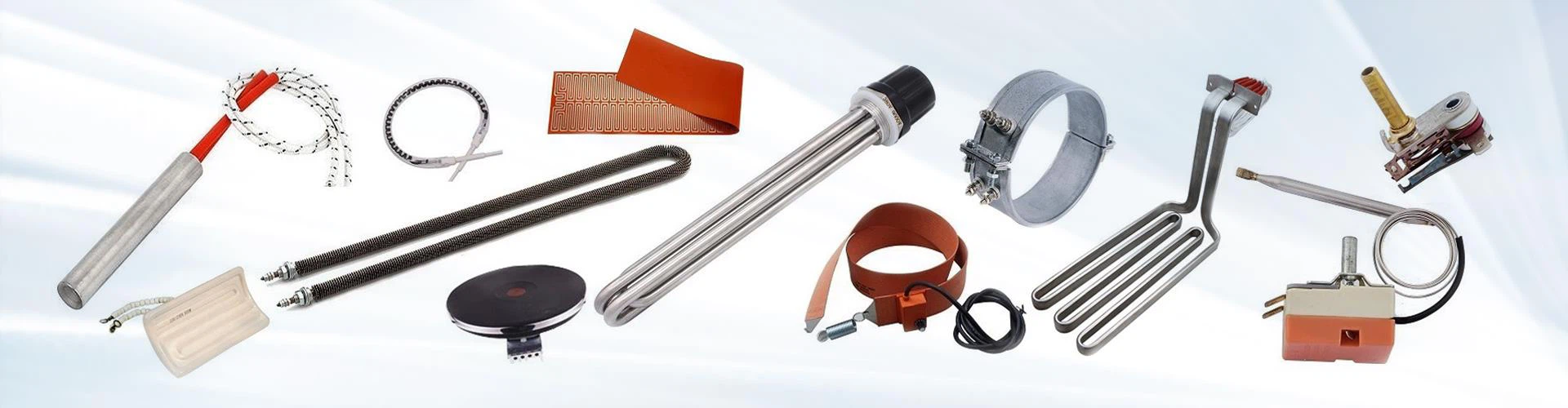
How do flange heating tubes generate and distribute heat?
1. Electrical Resistance Heating:
- Flange heating tubes contain an electrical resistor made of a high-resistance alloy, such as nichrome wire.
- When an electric current passes through this resistor, it encounters resistance, which generates heat according to Joule's law (P = I²R, where P is power, I is current, and R is resistance).
- This resistance heating raises the temperature of the heating element, and subsequently, the surrounding medium in direct contact with the tube.
2. Heat Generation:
- The heat generated within the flange heating tube is transferred to the fluid or substance that surrounds it.
- In immersion applications, the tube is immersed directly into a liquid or gas that needs to be heated. The heat transfers from the tube to the surrounding medium.
3. Direct Contact and Heat Transfer:
- The flange heating tube is in direct contact with the substance to be heated.
- The material of the tube is chosen for its heat conductivity and durability. Common materials include stainless steel for corrosion resistance and efficient heat transfer.
4. Heat Distribution:
- Heat is distributed evenly through the material by conduction. Conduction is the transfer of heat through direct contact between particles of a substance without moving the particles to a new location.
- The design of the tube, including its length, diameter, and watt density, affects how evenly the heat is distributed.