Mar 20, 2026
In industrial heating systems, selecting the right type of heater is critical-especially when dealing with high-power requirements and large volumes of liquid. Among the available solutions, the flange type immersion heater stands out as a preferred option for engineers and manufacturers. Its structure, installation method, and performance characteristics make it particularly suitable for demanding environments where efficiency and durability are essential.
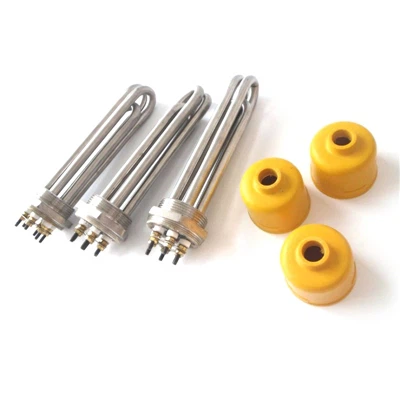
When heating large quantities of liquid, standard heating solutions often fall short in terms of power output and stability. High-power applications require:
Expanded heat transfer surfaces
Stable mechanical support
Flexible configuration for different wattages
Reliable sealing and mounting systems
Without these features, heaters may struggle with uneven heating, reduced lifespan, or complicated installation processes. This is where flange-mounted designs offer a clear advantage.
Flange type immersion heaters are designed to handle significantly higher power loads compared to conventional options. This is achieved by integrating multiple heating elements into a single flange assembly. The larger surface area allows for more efficient heat distribution, making it ideal for heating tanks, reservoirs, or industrial fluids.
Additionally, the modular structure allows manufacturers to adjust the number and arrangement of heating tubes based on specific power requirements, offering excellent flexibility.
One of the key benefits of flange heaters is their user-friendly installation process. Instead of complex threading or welding, the heater is mounted directly onto a flange connection, which can be bolted onto a tank or vessel.
This design provides several practical advantages:
Faster installation time
Reduced labor costs
Easier alignment and positioning
Maintenance is equally straightforward. If a heating element needs replacement, it can be removed and swapped without dismantling the entire system, minimizing downtime and operational disruption.
Flange-mounted heaters are known for their robust construction. Once installed, they remain firmly secured, reducing the risk of loosening during operation. This is particularly important in high-temperature or high-pressure environments.
Furthermore, these heaters are often manufactured using corrosion-resistant materials such as stainless steel. This enhances their durability and ensures consistent performance even in aggressive or chemically active liquids.
To better understand the advantages, the following table highlights the differences between flange type and threaded immersion heaters:
| Feature | Flange Type Immersion Heater | Threaded Immersion Heater |
|---|---|---|
| Power Capacity | High (suitable for large systems) | Limited to moderate levels |
| Installation Method | Bolted flange connection | Screw-in threaded fitting |
| Maintenance | Easy replacement of elements | More complex removal |
| Mechanical Stability | Strong and secure | May loosen over time |
| Application Scale | Large tanks and industrial use | Small to medium systems |
This comparison clearly shows why flange heaters are the better choice for high-power and large-scale operations.
Due to their versatility and performance, flange type immersion heaters are widely used across multiple industries, including:
In these applications, consistent heating, reliability, and ease of maintenance are essential-making flange heaters an optimal solution.
Flange type immersion heaters provide a well-balanced combination of high power output, structural reliability, and operational convenience. Their ability to accommodate multiple heating elements and deliver efficient heat transfer makes them particularly suitable for large-scale industrial applications.
Compared to traditional threaded heaters, they offer clear advantages in installation, maintenance, and long-term performance. For any system requiring dependable and high-capacity heating, flange-mounted immersion heaters remain a practical and effective choice.

Connect with our technical specialists today for a customized quotation and expert support-let us help you design the ideal heating solution tailored to your needs.
Previous: How Finned Heater Elements Improve Oven Performance and Efficiency?
Next: How Polyimide Kapton Film Heating Element Works in Cameras?