Feb 28, 2026
When selecting flexible heaters for industrial applications, engineers face a critical question: Kapton (Polyimide) or Silicone Rubber?
Both are proven technologies, but they serve different needs. At Jaye Heater, we manufacture both, giving us an unbiased perspective to help you make the right choice for long-term value.
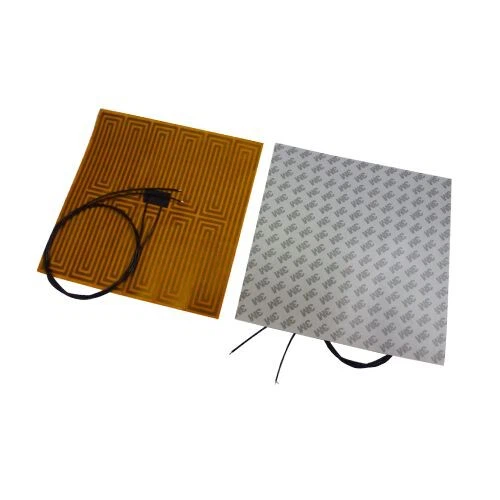
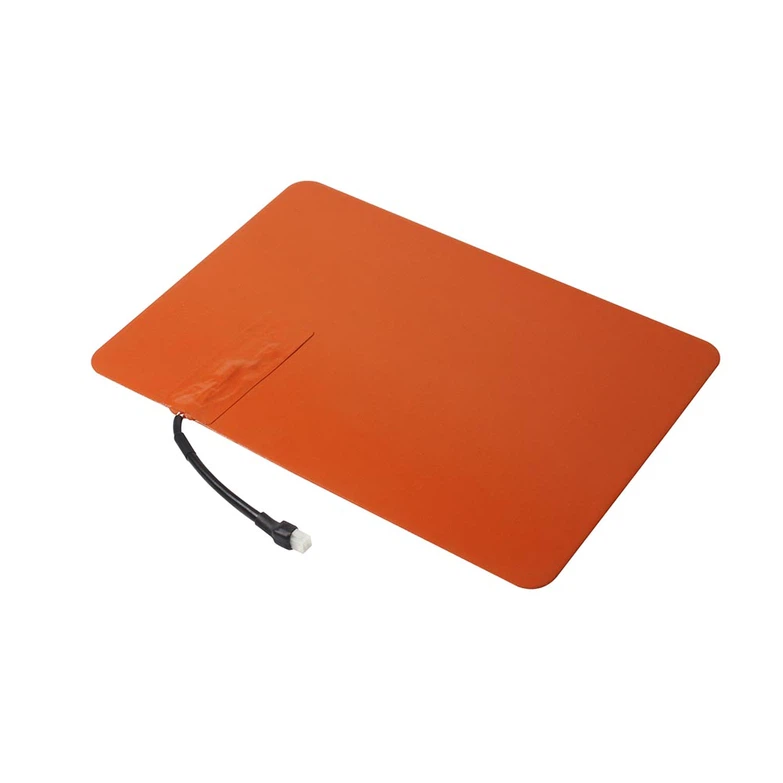
| Parameter | Kapton Heater | Silicone Heater |
|---|---|---|
| Thickness | 0.15mm - 0.3mm | 1.5mm - 3.0mm |
| Temp Range | -200°C to +200°C (peak 250°C) | -50°C to +150°C (peak 200°C) |
| Flexibility | Good (bendable) | Excellent (stretchable) |
| Dielectric Strength | Up to 7kV | 3-5kV |
| Chemical Resistance | Excellent | Good |
| UV/Weather Resistance | Moderate | Excellent |
| Relative Cost | Higher | Lower |
Kapton delivers better long-term value when:
✅ Operating temperatures exceed 150°C – Silicone degrades above this range
✅ Space is extremely tight – At just 0.15mm thin, Kapton fits where silicone cannot
✅ Chemical exposure or vacuum is present – Kapton resists solvents and has near-zero outgassing
✅ High-voltage safety is critical – Superior dielectric strength protects sensitive electronics
✅ Weight matters – Aerospace and portable devices benefit from Kapton's lightweight construction
Best applications: Semiconductor manufacturing, medical devices, aerospace, battery cell heating, high-temperature industrial equipment
Silicone delivers better long-term value when:
✅ Application involves vibration or movement – Silicone's elasticity absorbs mechanical stress
✅ Outdoor exposure is required – Excellent UV and weather resistance
✅ Conforming to complex shapes – Silicone stretches and wraps around irregular surfaces
✅ Cost is a primary concern – Lower initial investment for moderate temperature applications
✅ Physical robustness is needed – More forgiving if accidentally punctured or compressed
Best applications: Outdoor enclosures, food service equipment, pipe tracing, large-area heating, vibration-prone environments
Initial cost: Kapton typically costs 30-50% more upfront
Lifetime value consideration:
Short-term projects (<3 years): Silicone often offers better value
Long-term installations (5-10+ years): Kapton's reliability justifies premium pricing in demanding environments
Critical applications: The cost of failure (downtime, safety risks) may justify Kapton regardless of initial price
With over a decade manufacturing both technologies, we provide unbiased recommendations based on your specific needs-not what we happen to sell.
Contact our engineering team with your requirements, and we'll help you select the optimal solution for long-term value.

Upgrade your heating systems with Jaye Heater's premium components. For reliable heating elements and precise thermal controllers that ensure performance and safety, contact our experts today for a quote and technical support. Let's find your perfect heating solution.
Previous: Are Silicone Rubber Heaters the Best Solution for 3D Printer Bed Heating?
Next: How do Pencil Cartridge Heater For Absorption Refrigerators?

Aug 18, 2026

Aug 18, 2026




