Nov 30, 2021
Principle Of Resistance Heating
Using the Joule effect of electric current to convert electrical energy into thermal energy to heat objects. Usually divided into direct resistance heating and indirect resistance heating. The power supply voltage of the former is directly applied to the object to be heated, and when current flows, the object to be heated will generate heat.
The object that can be directly resistance heated must be a conductor, but it must have a higher resistivity. Since the heat is generated by the heated object itself, it belongs to internal heating, and the thermal efficiency is very high. Indirect resistance heating requires special alloy materials or non-metallic materials to make heating elements. The heating elements generate heat, which is transmitted to the object to be heated by means of radiation, convection and conduction. Since the heated object and the heating element are divided into two parts, the type of the heated object is generally not limited, and the operation is simple.
The object that can be heated by direct resistance must be a conductor, but it must have a high resistivity. Because the heat occurs in the heated object itself and is attributed to internal heating, the thermal efficiency is very high. Direct resistance heating requires special alloy data or non-metal data. The heat generated by the heating element is transferred to the heated object through radiation, convection and conduction. Since the object to be heated and the heating element are divided into two parts, the type of object to be heated is usually not limited, and the operation is simple.
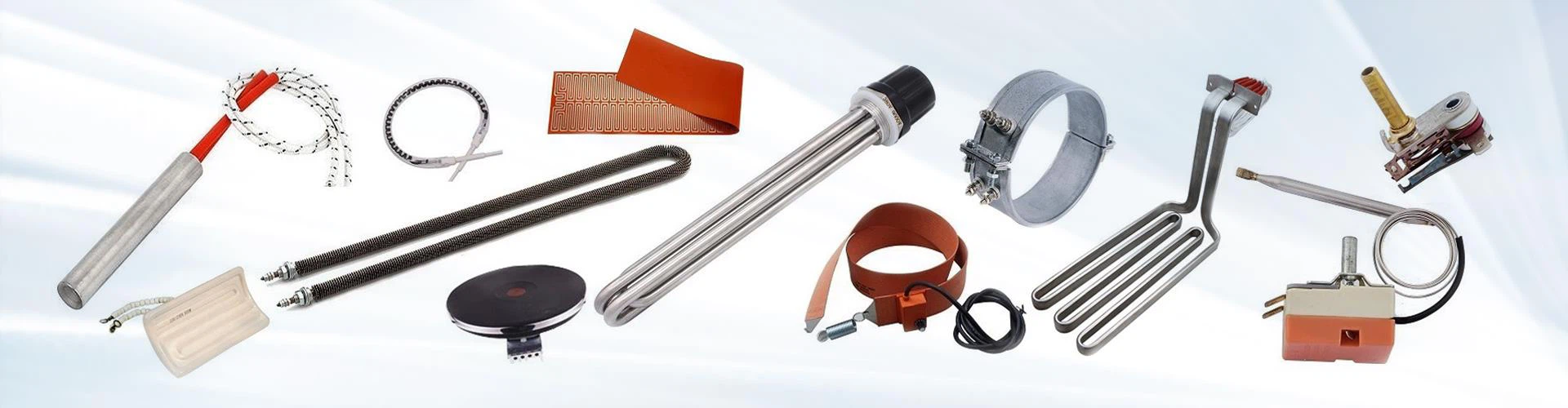
According to the data used for the heating element of the direct resistance heating in the electric heating tube, the electric heating tube usually needs a larger resistivity, a smaller temperature coefficient of resistance, small deformation at high temperature, and not easy to embrittlement. Commonly used are metal materials such as iron-aluminum alloy and nickel-chromium alloy, and non-metallic materials such as silicon carbide and molybdenum disilicide.
According to data changes, the working temperature of metal heating elements can reach 1000~1500℃; the higher working temperature of non-metal heating elements can reach 1500~1700℃. The latter equipment is convenient and can be replaced by a hot furnace, but it needs a voltage regulating device during operation, and its service life is shorter than that of alloy heating elements. It is usually used in high-temperature furnaces, local and special occasions where the temperature exceeds the higher working temperature promised by the metal heating element.