Sep 14, 2026
In a heat transfer machine, reaching the target temperature is only part of the heating challenge.
Temperature uniformity across the entire platen can have a direct impact on transfer quality, especially when printing large-area graphics or working with sublimation materials.
Many heat transfer processes operate between 150°C and 200°C.
For example, DTF transfer commonly uses around 150–160°C, heat-transfer vinyl is often processed around 160–170°C, while sublimation applications can require approximately 180–200°C.
This is where a silicone rubber heating pad can be useful.
A heat press transfers heat from the upper heating platen through the transfer film and substrate. If some areas of the platen are significantly hotter or colder than others, the same transfer cycle may produce different results across the working area.
For example, sublimation commonly operates at around 180–200°C. A machine may reach 200°C at its center while the edges recover more slowly after the platen contacts a colder workpiece. Some heat-press manuals also note that the displayed temperature can temporarily drop when heat is transferred into the colder product.
Therefore, the design of the heating element is important-not simply the rated wattage.
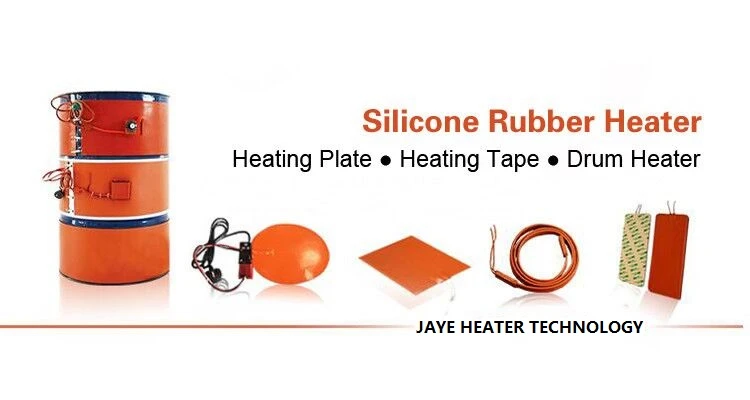
A silicone heating pad normally consists of a resistance wire or etched-foil heating element laminated between layers of silicone rubber.
Instead of heating a large metal block indirectly, the flexible heater can be positioned directly against the heating platen. The heating circuit can also be distributed across the required area to create a more controlled heat pattern.
For heat-press applications, this is particularly useful when the heating plate has:
Commercial silicone heaters are commonly designed for continuous operation around 200°C, although the actual allowable temperature depends on the heater construction, insulation, watt density and application.
One less-discussed aspect of heat-press heater design is heat distribution rather than total power.
Suppose a platen requires 1,200 W. Simply installing a 1,200 W heater does not automatically mean the entire surface will heat evenly.
The resistance circuit can instead be designed according to the actual heating area. Areas that lose heat more quickly-such as edges or corners-can be considered during the circuit layout.
Etched-foil silicone heaters are particularly suitable for this approach because the resistance pattern can be designed to distribute wattage over a defined area and compensate for certain heat-loss characteristics.
This means that two heaters with the same voltage and total wattage can potentially have different temperature-distribution characteristics.

Silicone rubber provides several practical advantages for heat-transfer machinery:
1. Thin construction
The heater can be manufactured in a relatively thin profile, reducing the additional distance between the heating element and the platen.
2. Flexible installation
Silicone heaters can be manufactured as flat, curved or custom-shaped components. This is useful for not only flat T-shirt presses but also mug, cap and plate presses.
3. Custom heating circuits
The resistance wire or etched-foil pattern can be designed according to the required voltage, wattage, dimensions and heating area.
4. Sensor integration
Thermocouples, RTDs or thermostats can be incorporated into the heater assembly to work with the machine's temperature-control system.
For a replacement or new heat-press design, dimensions alone are usually not enough. The heater supplier should receive at least:
For existing machines, a drawing or clear photo of the original heater and platen can also help the manufacturer understand the installation requirements.
The key point is that a silicone heating pad for a heat transfer machine is not simply a flexible electrical heater. Its resistance pattern, watt density, dimensions, sensor location and contact with the platen all influence the final thermal performance.
For OEM heat press manufacturers, designing the heater around the actual platen can therefore be more effective than selecting a generic heater based only on voltage and wattage.

Send your inquiry about cosmetic tubes to us and experience the transformative power it can have on your business.
Previous: How Do Mica Band Heaters Work for Plastic Processing Machines?
Next: How Do PTFE Immersion Heaters Work in Corrosive Liquids?