Nov 16, 2026
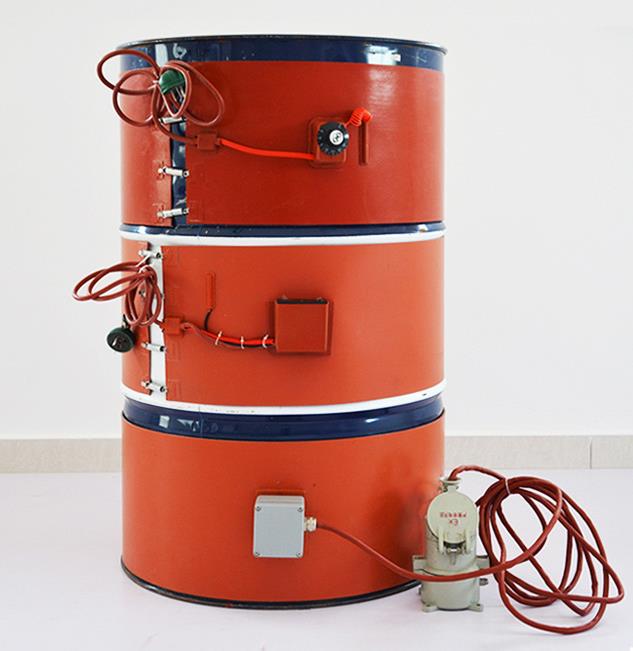
Silicone rubber heaters are widely used in industrial heating applications where flexible installation, uniform heat distribution, and precise temperature control are required. They are commonly found in drums, tanks, pipes, processing equipment, laboratory instruments, and manufacturing systems.
When comparing silicone rubber heaters from established manufacturers such as BriskHeat, Hi-Heat and JAYE, buyers should consider more than the initial purchase price. Heating performance, material quality, temperature requirements, dimensional accuracy, customization capabilities, and long-term operating costs all play important roles.
JAYE Silicone Rubber Heaters offer a practical alternative for customers looking for comparable product quality, flexible customization, and competitive pricing without compromising essential heating performance.

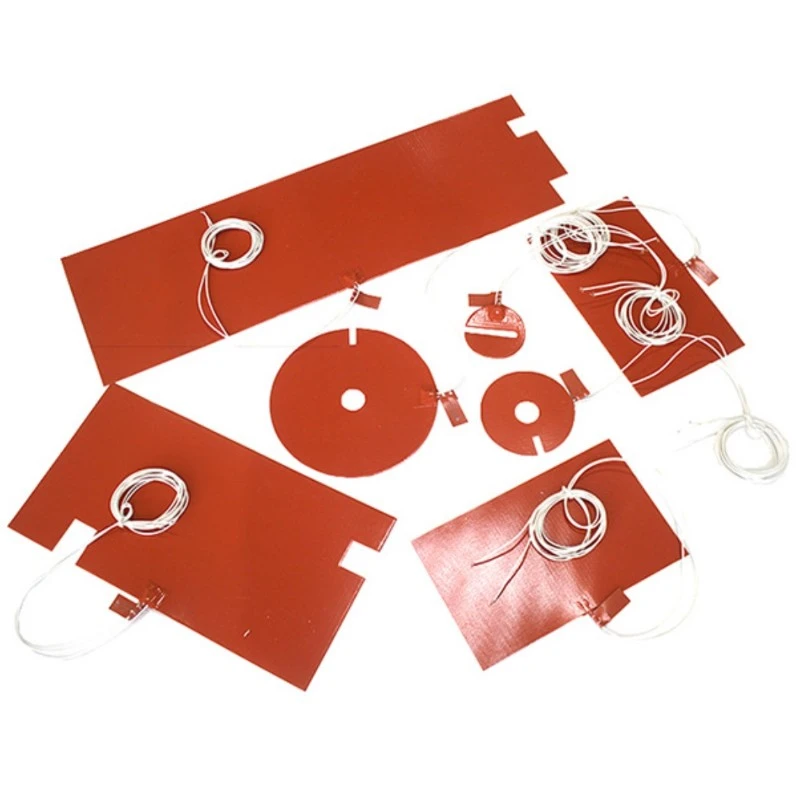
A silicone rubber heater is a flexible electric heating element manufactured by embedding resistance wires, typically made of nickel-chromium alloy, between layers of silicone rubber insulation.
Its flexible structure allows it to fit curved, flat, and irregular surfaces. When electrical power is applied, the resistance wire generates heat and transfers it to the target surface.
BriskHeat and Hi-Heat are recognized options in the industrial flexible heating market. JAYE provides another sourcing option for customers who need customized silicone rubber heaters with competitive pricing and dependable performance.
|
Comparison |
BriskHeat |
Hi-Heat |
JAYE |
|---|---|---|---|
|
Product range |
Industrial flexible heaters |
Silicone rubber heaters |
Customized silicone rubber heaters |
|
Product applications |
Industrial heating |
Industrial heating |
Industrial and OEM heating |
|
Heater dimensions |
Model-dependent |
Model-dependent |
Customizable |
|
Voltage and wattage |
Model-dependent |
Model-dependent |
Customizable |
|
Shape and construction |
Model-dependent |
Model-dependent |
Flexible design options |
|
Temperature control |
Available depending on model |
Model-dependent |
Optional thermostat or temperature sensor |
|
OEM customization |
Product-dependent |
Product-dependent |
Available |
|
Pricing |
Brand and model-dependent |
Brand and model-dependent |
Competitive, based on specifications |
|
Supply approach |
Established product range |
Established product range |
Standard and customized manufacturing |
JAYE Silicone Rubber Heaters can serve as an alternative to suitable BriskHeat and Hi-Heat models when the electrical specifications, dimensions, heating requirements, and installation conditions are properly matched.
The main advantage is the combination of customizable manufacturing, comparable quality objectives, and better cost-performance for suitable applications.
Regardless of whether you choose BriskHeat, Hi-Heat, or JAYE, selecting the right heater starts with understanding your actual application requirements.
The heater dimensions should match the surface being heated.
JAYE supports customized dimensions and shapes according to customer drawings or application requirements.
Common voltage options include 12V, 24V, 110V, 120V, 220V, and 230V, depending on the design.
The wattage should be calculated according to the target temperature, heated material, surface area, heat loss, and required heating time.
JAYE can customize voltage and wattage to meet different industrial heating requirements.

Different applications require different operating temperatures.
When selecting a silicone rubber heater, consider:
The allowable temperature depends on the silicone material, heater construction, and operating conditions. Proper temperature control is essential to prevent overheating and extend service life.
Accurate temperature control helps maintain stable heating performance.
JAYE can integrate suitable temperature sensors and control solutions according to the customer's requirements.

The installation method affects heat transfer efficiency and operating safety.
For applications requiring consistent contact with the heated surface, the installation method should be carefully selected to minimize air gaps and improve heat transfer.
Silicone rubber heaters from BriskHeat, Hi-Heat, and JAYE can be considered for various industrial applications, depending on the specific product design.
|
Application |
Heating Purpose |
Recommended Configuration |
|---|---|---|
|
Drum heating |
Maintain liquid viscosity and reduce material solidification |
Wrap-around silicone heater |
|
Tank heating |
Maintain stable liquid temperature |
Customized silicone heating blanket |
|
Pipeline heating |
Prevent material solidification and maintain fluid temperature |
Flexible silicone heating pad |
|
Battery heating |
Maintain suitable battery operating temperatures |
Low-voltage silicone heater |
|
Laboratory equipment |
Provide controlled surface heating |
Precision silicone heating pad |
|
Industrial machinery |
Heat metal plates and equipment surfaces |
Customized silicone rubber heater |
|
Chemical processing |
Maintain material temperature during processing |
Temperature-controlled silicone heater |
BriskHeat and Hi-Heat have established product offerings and experience in industrial heating. However, buyers do not always need to purchase from the same brand for every heating project.
JAYE provides an alternative for customers seeking a balance between product performance, customization, and procurement costs.
1. Competitive Cost-Performance
JAYE offers competitive pricing while maintaining quality requirements appropriate to the specified application. This makes JAYE an attractive alternative for OEM manufacturers, equipment builders, distributors, and industrial buyers.
2. Flexible Customization
JAYE can manufacture silicone rubber heaters according to customer drawings, samples, or technical specifications, including customized dimensions, shapes, voltage, wattage, and cable configurations.
3. Application-Based Design
Rather than simply supplying a standard heating pad, JAYE can evaluate the actual heating requirements and recommend a suitable heater construction.
4. Temperature Sensor Integration
Temperature sensors and control components can be incorporated according to the customer's application, helping achieve more accurate temperature regulation.
5. OEM and Bulk Supply
JAYE supports customized heating solutions for equipment manufacturers and industrial customers, making it suitable for both initial sample orders and repeat production requirements.
6. A Practical Replacement Option
For customers currently using BriskHeat or Hi-Heat silicone rubber heaters, JAYE can evaluate existing specifications and drawings to develop compatible alternative products.
The objective is to maintain the required heating performance and application compatibility while offering a more competitive purchasing solution.

Q1: Can JAYE Silicone Rubber Heaters replace BriskHeat or Hi-Heat heaters?
Yes. JAYE Silicone Rubber Heaters can be considered as replacement alternatives for suitable BriskHeat and Hi-Heat models. JAYE can evaluate the original heater's dimensions, voltage, wattage, operating temperature, installation method, and sensor configuration to develop a compatible solution. Final compatibility should be confirmed through technical evaluation and testing.
Q2: Are JAYE Silicone Rubber Heaters suitable for customized industrial applications?
Yes. JAYE supports customized silicone rubber heaters for industrial equipment, drums, tanks, pipelines, metal plates, and other heating applications. Customers can specify dimensions, voltage, wattage, shape, cable length, adhesive backing, and temperature sensor requirements.
Q3: Why should buyers consider JAYE instead of purchasing only from established brands?
JAYE offers an additional sourcing option with flexible OEM customization, application-based engineering support, and competitive pricing. For projects where the technical specifications can be matched, JAYE can provide a practical alternative with a favorable balance of quality and cost-performance.
Previous: Screw Plug Immersion Heaters: Chromalox vs JAYE Design & Material
Next: JAYE Immersion Heater vs Chromalox Immersion Heater: Process Heating Comparison