Nov 25, 2026
Industrial air heaters convert electrical energy into heat and transfer it to moving or stationary air for manufacturing, drying, curing, ventilation, and other thermal processes.
The appropriate heater depends on the required air temperature, airflow rate, operating pressure, heating capacity, installation structure, and temperature-control method.
TUTCO SureHeat focuses on process air and inert-gas heating solutions, including inline process heaters, spot heaters, and high-temperature air heaters.
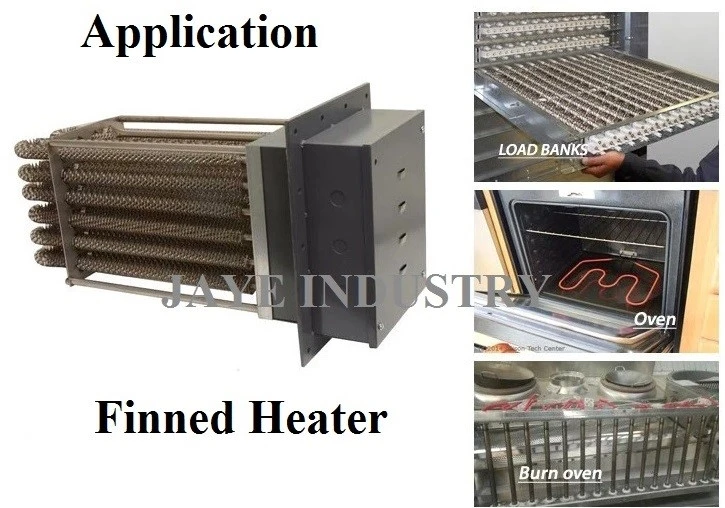
JAYE Heater Technology offers customized electric heating elements, including finned tubular heaters for forced-air applications such as industrial ovens, air ducts, dryers, and load banks.
These product ranges serve overlapping but different parts of the industrial air-heating market.
TUTCO's published portfolio includes specialized high-temperature process heaters, while JAYE's finned tubular heating elements are designed for integration into customer equipment and heating assemblies.
Product selection should therefore be based on the actual process conditions and heater construction rather than brand names alone.
The figures above refer to specific published product information.
They are not universal operating limits for every model or a direct performance ranking between manufacturers.
The term "air heater" covers several different heating technologies. The distinction is important because an inline process heater, a finned tubular element, and a spot heater do not perform the same function.
An inline air heater is installed directly in an air or gas flow path. The process medium passes through the heater, where electrical heating elements transfer heat to the moving gas.
This configuration is commonly used when a process requires a defined outlet temperature, controlled gas flow, or concentrated high-temperature air.
TUTCO SureHeat's Jet, Max, and Max HT products are examples of this category. The product range includes built-in Type K thermocouples and closed-loop process heating configurations.
Typical engineering considerations include:
For example, TUTCO's Jet product page lists a maximum outlet temperature of 760°C, a maximum pressure of 60 psi, and minimum airflow of 2 SCFM for its published configurations.
These figures must be checked against the specific model and its performance data before use.
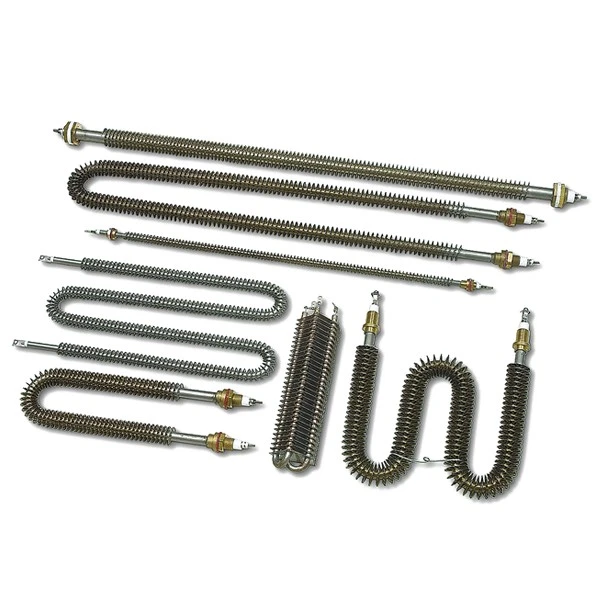
A finned tubular heater consists of a resistance wire enclosed inside a metal sheath, typically with electrically insulating and thermally conductive magnesium oxide between the wire and the sheath.
Metal fins are attached to the outer tube to increase the surface area available for heat transfer.
When air flows across the heated tube and fins, heat transfers from the element surface into the air.
The finned structure is particularly relevant to forced-convection heating, where air moves through a duct, oven, drying chamber, or other equipment.
JAYE's finned tubular heater range includes:
The final construction depends on the available installation space, airflow direction, required heating capacity, material requirements, and terminal arrangement.
Relevant JAYE product: Finned Tubular Heater
Spot air heaters deliver heated air to a relatively concentrated area rather than heating a large air duct or chamber.
Open-loop systems generally operate through manual or power-based adjustment. Closed-loop systems use temperature feedback to regulate heater output.
TUTCO's published product range includes Series open-loop spot heaters and Hot Air Tools designed with built-in thermocouples for temperature monitoring.
For localized heating, the key design questions include nozzle geometry, air velocity, distance from the target, outlet temperature, and the response of the control system.
A high outlet temperature does not automatically mean that the target component will reach the same temperature. Heat loss between the heater outlet and the workpiece must also be considered.
The following comparison summarizes the published product categories and design approaches of the two manufacturers.
| Comparison point | TUTCO SureHeat | JAYE Heater Technology |
|---|---|---|
| Main air-heating focus | Process air and inert-gas heating systems | Customized electric heating elements for air-heating equipment |
| Typical product structures | Inline process heaters, spot heaters, triple-pass heaters, threaded inline heaters | Finned tubular heating elements, straight and formed tubular elements |
| Heating medium | Air and inert gases, depending on model | Primarily air and non-corrosive gases for finned tubular applications |
| Temperature range | Selected process models publish outlet temperatures up to 760°C or 900°C | Depends on the element construction, sheath material, fin material, and operating conditions |
| Temperature monitoring | Selected models include built-in Type K thermocouples | Sensor and terminal arrangements depend on the customized heater design |
| Airflow requirements | Model-specific airflow and pressure limits are published | Must be evaluated together with the complete equipment's airflow and heat-transfer design |
| Product integration | Process heater units and specialized heating assemblies | OEM heating elements customized for integration into customer equipment |
| Typical applications | Process air heating, drying, sealing, curing, and localized hot-air applications | Industrial ovens, air ducts, dryers, ventilation equipment, and load banks |
Important comparison note:
These products are not interchangeable simply because both are used to heat air. TUTCO's inline process heaters are complete process-heating units with defined airflow and pressure conditions.
JAYE's finned tubular heaters are heating elements that are generally integrated into a larger air-heating assembly.
A direct replacement evaluation would require checking the heater's physical dimensions, electrical ratings, airflow conditions, outlet temperature, pressure drop, control arrangement, and safety requirements.
Airflow is one of the most important variables in an air-heating system.
The approximate sensible heat requirement can be expressed as:
Q = ṁ × Cp × ΔT
Where:
Q = required heat-transfer rate.
ṁ = mass flow rate of the air.
Cp = specific heat capacity of the air.
ΔT = required air-temperature increase.
This relationship explains why heater power cannot be selected from the desired outlet temperature alone.
A higher airflow rate or a larger temperature increase generally requires more heat input. Actual heater sizing must also account for heat losses, operating conditions, and system efficiency.
The inlet temperature determines how much additional heat the heater needs to supply.
For example, a system heating air from 20°C to 150°C has a different thermal requirement from a system heating air from 200°C to 300°C, even if the target outlet temperature is lower in the first case.
Engineers should confirm:
The maximum temperature stated on a heater product page should not be treated as the normal continuous operating temperature without checking the manufacturer's operating instructions.
The pressure rating of a heater and the pressure drop across the heater are different engineering parameters.
Maximum operating pressure describes the pressure the heater assembly is designed to withstand under specified conditions.
Pressure drop describes the reduction in gas pressure as air passes through the heater.
For compressed-air systems, engineers should verify:
A heater suitable for a blower-driven duct may not be suitable for a high-pressure compressed-air process.
In finned tubular heaters, the fins increase the external heat-transfer area.
This allows the heating element to transfer heat to moving air through a larger surface.
However, the required surface load must be assessed together with airflow velocity, fin spacing, sheath temperature, and the heat-transfer conditions of the complete assembly.
If airflow is insufficient, the element may overheat even when its electrical power rating appears suitable.
For this reason, the element's wattage and surface load should be evaluated against the actual air movement and installation arrangement.
Temperature control is not determined by the heating element alone.
A complete air-heating system may require:
TUTCO's technical guidance emphasizes that airflow should be established before heater power is applied and that a controlled ramp-up can reduce temperature overshoot and heater damage.
Sensor location also matters. The temperature measured close to the heater outlet may differ from the temperature measured farther downstream because of heat loss through connecting pipes or surrounding equipment.
Different air-heating applications require different heater constructions and operating conditions.
| Application | Main heating requirement | Relevant heater type |
|---|---|---|
| Industrial air ducts | Heating a continuous airflow within a duct | Finned tubular elements or integrated duct heaters |
| Industrial ovens | Maintaining a defined temperature in a circulating-air chamber | Finned tubular heating elements |
| Drying equipment | Supplying heat to moving air for moisture removal | Finned tubular heaters or process air heaters |
| Hot-air processing | Delivering concentrated, high-temperature air to a specific point | Inline or spot air heaters |
| Adhesive curing and sealing | Supplying controlled hot air to a defined process area | Closed-loop process air or spot heaters |
| Load banks | Converting electrical power into heat for load testing | Finned tubular heating elements |
| OEM industrial machinery | Integrating a customized heating element into a machine | Application-specific tubular or finned heaters |
Duct heating systems use electrical heating elements to increase the temperature of air passing through a ventilation or process-air channel.
Finned tubular heaters are commonly used because the external fins increase the heat-transfer area available within the duct.
The design should account for duct dimensions, airflow distribution, heater spacing, electrical protection, and the required outlet temperature.
Related product: Finned Tubular Air Duct Heaters
Industrial ovens and dryers use heated air to support drying, baking, curing, and other thermal processes.
The heater configuration must match the chamber's air circulation pattern.
Uneven airflow can create temperature differences even when the electrical heating elements have identical ratings.
Important considerations include circulation fan capacity, heater placement, chamber insulation, temperature uniformity, and operating duty cycle.
Some manufacturing processes require a concentrated stream of hot air rather than heating an entire chamber.
Examples include localized drying, surface heating, adhesive activation, and thermal processing of selected components.
In these applications, an inline or spot heater may be more appropriate than a conventional duct heating element.
The required outlet temperature, gas flow, nozzle arrangement, and control response should be evaluated together.
A useful technical evaluation starts with the actual operating conditions and the heater's intended role in the equipment.
For a customized finned tubular heater, the following information helps establish manufacturing feasibility:
For a complete inline process air heater, additional system information is necessary, including gas type, inlet and outlet pressure, mass or volumetric flow rate, temperature-control requirements, and safety interlocks.
These details help distinguish a heating-element manufacturing inquiry from a complete process-heater system design requirement.
A finned tubular air heater is an electric heating element with external fins that increase the heat-transfer area. It is commonly installed inside ducts, ovens, and dryers.
An inline process air heater is a heater assembly through which air or gas flows directly. It is commonly designed around defined flow, pressure, and outlet-temperature requirements.
The two types can serve related applications, but their construction and integration requirements are different.
Yes. Finned tubular heaters are commonly used in forced-air applications because their external fins increase the surface area available for heat transfer.
However, the required airflow velocity, element spacing, wattage, sheath temperature, and pressure drop must be evaluated for the actual equipment.
The basic thermal calculation requires the air mass flow rate, specific heat capacity, and required temperature increase:
Q = ṁ × Cp × ΔT
A practical system evaluation also needs to consider heat losses, inlet conditions, operating pressure, airflow distribution, and the required heating time.
Not automatically.
A TUTCO process air heater and a JAYE finned tubular element may have different constructions and operating requirements.
Before considering a replacement, engineers should compare the electrical ratings, installation dimensions, airflow, pressure, outlet temperature, temperature-control arrangement, and safety protection.
A finned tubular element should not be assumed to replace a complete inline process heater without reviewing the complete system.
Airflow carries heat away from the heating element. If the heater is energized without sufficient airflow, heat may accumulate around the element and cause overheating or premature failure.
The required minimum airflow and start-up sequence depend on the specific heater design and manufacturer's operating instructions.
No. The required outlet temperature depends on the process material, production conditions, heat-transfer distance, and allowable temperature range.
A higher temperature may increase thermal stress or create a risk of damaging the material being processed.
The heater should be selected according to the actual process requirement rather than the maximum temperature stated in a product catalogue.
[1] TUTCO SureHeat – Electric Air & Inert Gas Heaters
[2] TUTCO SureHeat – Jet Air Heaters
[3] TUTCO SureHeat – Closed-Loop Process Air Heaters
[4] TUTCO SureHeat – Max HT Air Heater Operating Manual
[5] TUTCO SureHeat – Air Heater Set-up and System Design Considerations
[6] TUTCO SureHeat – Proper Temperature Control Set-up for Process Air Heaters
[7] JAYE Heater Technology – Finned Tubular Heater
[8] JAYE Heater Technology – Finned Tubular Air Duct Heaters
[9] JAYE Heater Technology – Electric Finned Tubular Air Heater

JAYE Heater Technology manufactures customized electric heating elements for industrial equipment. Its finned tubular heater range includes straight, U-shaped, W-shaped, and other formed configurations for air-heating applications.
Previous: No Information
Next: Zoppas Appliance Heating Element vs JAYE Custom Element