Jun 11, 2026
In modern HVAC systems, maintaining consistent indoor comfort often requires more than primary heating sources alone.
Fan coil units (FCUs) are widely used in hotels, hospitals, office buildings, residential developments, and commercial facilities where localized temperature control is essential.
To improve heating response and support seasonal demand fluctuations, many manufacturers integrate electric air heaters into their fan coil unit designs.
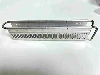
Among the available heating technologies, the U shape finned tubular heater remains one of the most commonly used solutions due to its combination of efficient heat transfer, compact construction, and long-term reliability in forced-air applications.
While hydronic systems provide the primary heating capacity in many buildings, they may not always respond quickly to changing indoor conditions. Supplemental electric heating allows individual zones to reach target temperatures faster without relying entirely on the central heating loop.
For fan coil unit manufacturers, the objective is not simply to generate heat but to achieve the required heating performance without negatively affecting airflow, safety, or equipment lifespan.
This is why heater selection often involves balancing several factors simultaneously:
A finned tubular heating element consists of a resistance wire positioned inside a metal sheath and insulated by highly compacted magnesium oxide (MgO). Metal fins are mechanically bonded to the outer surface of the tube to increase heat transfer area.
Because air is a relatively poor conductor of heat, a standard tubular heater may not provide sufficient heat transfer efficiency in forced-air applications. By increasing the surface area surrounding the heating tube, fins enable more heat to be transferred into the moving airflow.
The U-shaped configuration is particularly suitable for fan coil units because it allows a larger heating surface to be installed within a compact space while simplifying electrical connections.

Selecting the correct HVAC heating element involves more than choosing a voltage and wattage. In practice, several engineering factors have a direct impact on system performance.
Increasing fin density generally improves heat transfer. However, excessive fin density may restrict airflow and increase static pressure inside the fan coil unit.
For this reason, fin spacing should be designed according to the airflow characteristics of the specific application rather than simply maximizing the number of fins.
Fan coil units experience repeated heating and cooling cycles throughout their service life.
If the bond between the fin and tube weakens over time, heat transfer efficiency may gradually decrease. Proper manufacturing processes help maintain consistent thermal contact between the fin and the heating tube, reducing the risk of performance degradation after prolonged operation.
Many HVAC installations operate in environments where condensation and humidity are present. Hotels, hospitals, coastal buildings, and commercial facilities often require materials that can withstand long-term exposure to moisture.
Depending on the operating environment, sheath and fin materials may be selected from:
SUS304 Stainless Steel
SUS316 Stainless Steel
Aluminized Steel
Incoloy Alloys
Material selection should be based on both temperature requirements and environmental conditions.
Electric air heaters should never operate without adequate airflow.
To improve safety, many HVAC manufacturers integrate additional protection devices such as:
Thermal cut-outs
Manual reset thermostats
Automatic reset thermostats
Airflow switches
Temperature sensors
These devices help prevent overheating in the event of fan failure or restricted airflow conditions.
The final heater specification depends on airflow, installation space, temperature requirements, and power supply conditions.
| Item | Typical Specification |
|---|---|
| Tube Diameter | 6.5 mm, 8 mm, 10 mm, 12 mm, 16 mm |
| Tube Material | SUS304, SUS316, Incoloy |
| Fin Material | Aluminum, Aluminized Steel, Stainless Steel |
| Voltage Options | 110V, 220V, 230V, 380V, 415V, 480V |
| Recommended Air Velocity | Typically 2–6 m/s depending on heater design |
| Insulation Resistance | ≥1000 MΩ (Cold Condition) |
| Dielectric Strength | Up to 1500–2500V depending on design |
| Protection Options | Thermal Fuse, Thermostat, Airflow Switch Integration |
| Installation Method | Bracket Mounted, Flange Mounted, Custom Design |
| Heater Configuration | Single U, Double U, Multi-U Arrangement |
Actual heater performance should always be evaluated according to the airflow conditions and thermal requirements of the final equipment.
For HVAC equipment supplied to international markets, electrical safety and material compliance are often mandatory requirements.
Depending on customer specifications and target markets, finned tubular heaters can be designed with reference to:
These evaluations help ensure consistency throughout production and support customer-specific quality requirements.
Many heating failures are not caused by the heating element itself but by mismatched application conditions.
Some common issues include:
Improper fin spacing can reduce airflow and increase operating temperatures.
Selecting a heater with excessive power may create uneven heating and unnecessary thermal stress.
Without adequate airflow, heater temperatures can rise rapidly and activate safety protection devices.
Unsuitable material selection may shorten heater life in humid or corrosive environments.
Reviewing these factors during the design stage often helps reduce maintenance requirements and improve overall HVAC system reliability.
Although commonly used as a fan coil unit heater, finned tubular heating elements are suitable for a wide range of air heating applications.
Typical applications include:
Used for pre-heating, reheating, and air temperature control.
Installed within air ducts to provide supplemental heating.
Provide heated air barriers at entrances and loading docks.
Used in unit heaters, cabinet heaters, and ventilation systems.
Suitable for ovens, drying chambers, packaging equipment, and process air heating systems.
Jaye Heater specializes in custom heating elements for HVAC manufacturers, OEM equipment suppliers, and industrial heating applications.
Our team supports projects from prototype development through production, helping customers select suitable materials, heater configurations, and installation methods based on actual operating conditions.
We have supplied custom heating solutions for customers in Germany, the United States, Canada, Thailand, and other international markets where product consistency, safety, and long-term reliability are important purchasing considerations.
Customization options include:
Rather than relying on standard catalog specifications, heater designs can be adapted to match airflow characteristics, available installation space, and equipment performance requirements.
A U shape finned tubular heater remains a practical and widely used solution for fan coil units and other HVAC air heating applications. Effective heater design requires careful consideration of airflow, heat transfer efficiency, safety protection, material selection, and long-term operating conditions.
For HVAC manufacturers, selecting the appropriate finned tubular heating element is often as much an engineering decision as it is a purchasing decision.
By evaluating airflow conditions, environmental requirements, and system performance objectives early in the design process, manufacturers can achieve more reliable and efficient heating performance throughout the life of the equipment.

Send your inquiry about cosmetic tubes to us and experience the transformative power it can have on your business.
Previous: How Does a Cartridge Heater Affect Temperature Uniformity in a Freeze Dryer?
Next: Capillary Thermostats for Industrial Heating Equipment: Improving Reliability and Process Control