Sep 29, 2026
Cast aluminum heaters are widely used in industrial heating equipment because they combine efficient heat distribution, structural strength, and a design that can be customized for specific applications. By embedding electric heating elements into an aluminum casting, these heaters provide an integrated heating solution for machinery that requires consistent temperatures across a defined surface.
They are commonly used in plastic processing machinery, injection molding machines, extrusion equipment, packaging systems, and industrial heating plates.

Cast aluminum heater typically consists of electric resistance heating elements embedded within an aluminum body. When electrical power passes through the heating elements, heat is generated and transferred to the aluminum casting. The aluminum body then distributes the heat across its surface and transfers it to the target component through direct contact.
Because the heating elements are integrated into the casting, the structure provides mechanical support and helps maintain consistent thermal contact between the heating source and the aluminum body. Compared with a heating element mounted externally, this integrated design can improve heat distribution and reduce localized temperature differences when properly engineered.
Actual heating performance depends on the heater design, casting quality, power density, installation conditions, and temperature control system.
Cast aluminum heaters are used in a variety of industrial applications:
The main difference is how the heating element is integrated into the structure. A conventional surface-mounted heater transfers heat through its contact with the target component, while a cast aluminum heater embeds the heating element inside an aluminum body.
This integrated construction can provide better mechanical integration and more consistent heat distribution across the designed surface. However, the best solution depends on the application, maintenance requirements, operating temperature, and total equipment cost.
Cast aluminum heaters are not automatically more energy-efficient in every situation. Their actual energy consumption depends on insulation, temperature settings, heating cycles, heat losses, and system control.
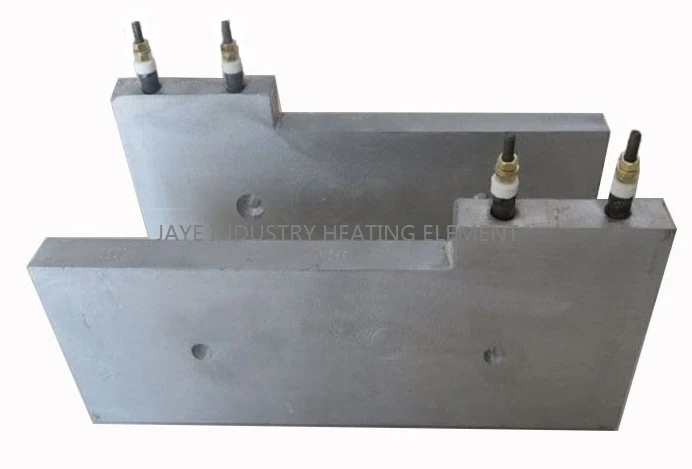
Its main advantage is the integration of the heating elements into an aluminum body, which helps distribute heat across the working surface while providing a mechanically integrated structure.
Yes. Dimensions, shapes, mounting holes, heating element layouts, sensor positions, voltage, and wattage can be designed according to equipment requirements and manufacturing feasibility.
They can be used in many industrial heating applications, but the allowable operating temperature depends on the complete heater design, aluminum alloy, embedded heating element, insulation, and temperature control system. The required temperature should be confirmed during design.
A technical drawing or sample is preferred, together with the dimensions, voltage, wattage, operating temperature, application, and required quantity. These details help determine the appropriate design and quotation.
Previous: How Are Cast Aluminum Heating Plates Used in Food Processing?
Next: Why Are Polyimide Film Heaters Popular for Precision Heating Applications?