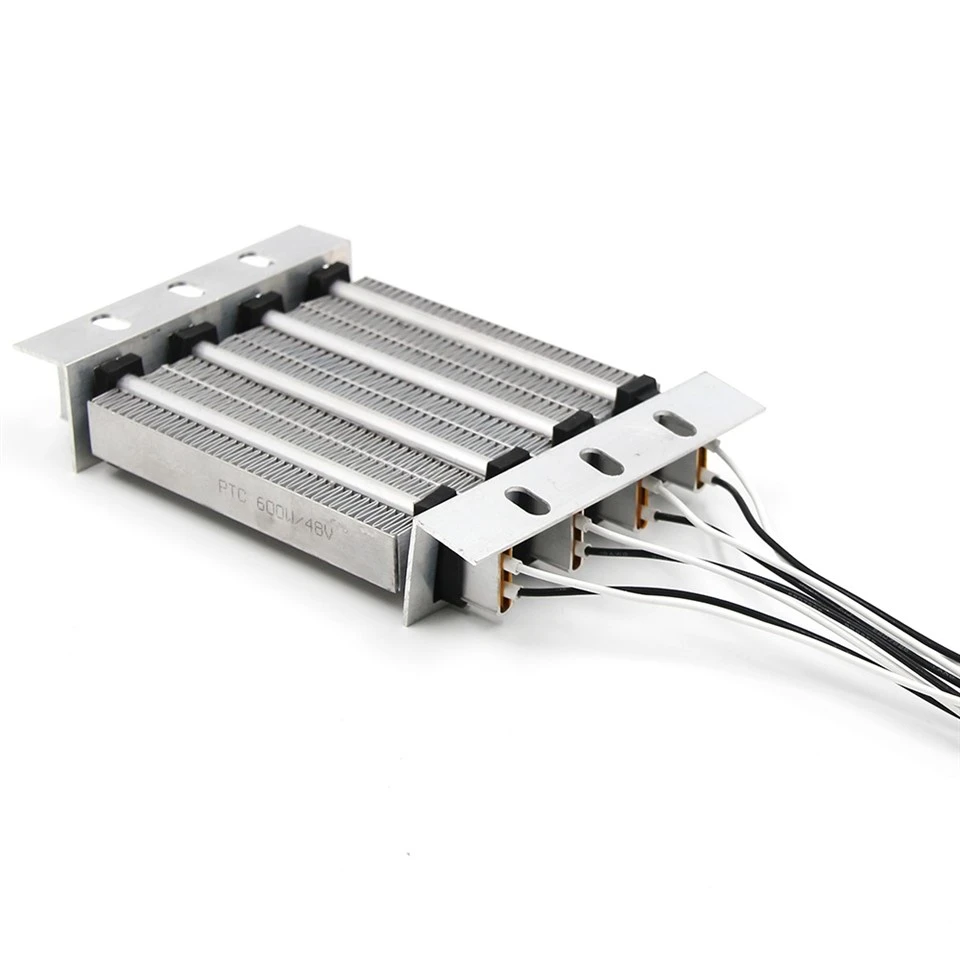
PTC Air Heaters for Dehumidifiers PTC air heaters are used in a range of heating equipment where compact construction and controlled heat generation are important. In dehumidifiers, they can provide supplementary air heating when required by the equipment design. They are also used in selected...
Jaye Heater Technology Co., Ltd. is one of the most reliable manufacturers and suppliers of ptc air heater for dehumidifiers in China, also supports custom service. Welcome to wholesale high quality ptc air heater for dehumidifiers at competitive price from our factory.
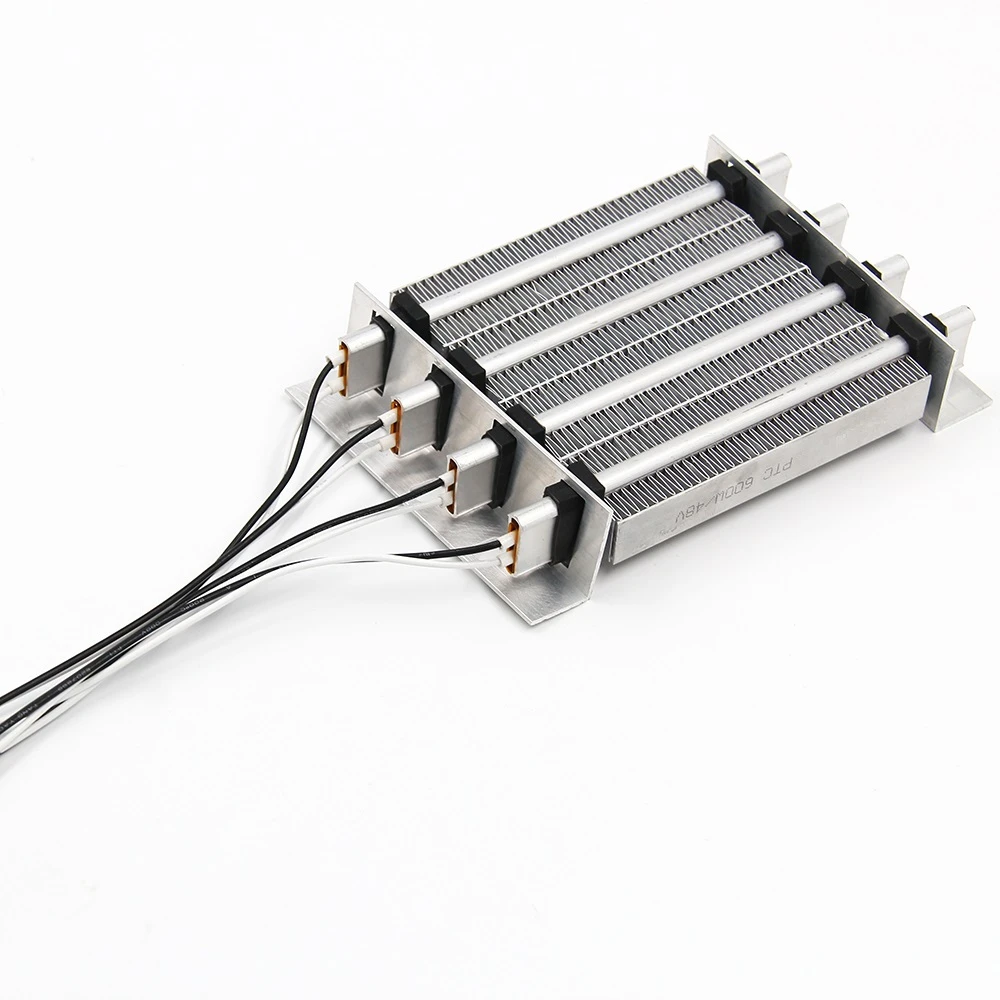
PTC air heaters are used in a range of heating equipment where compact construction and controlled heat generation are important. In dehumidifiers, they can provide supplementary air heating when required by the equipment design. They are also used in selected household appliances, ventilation systems, and industrial air-heating applications.
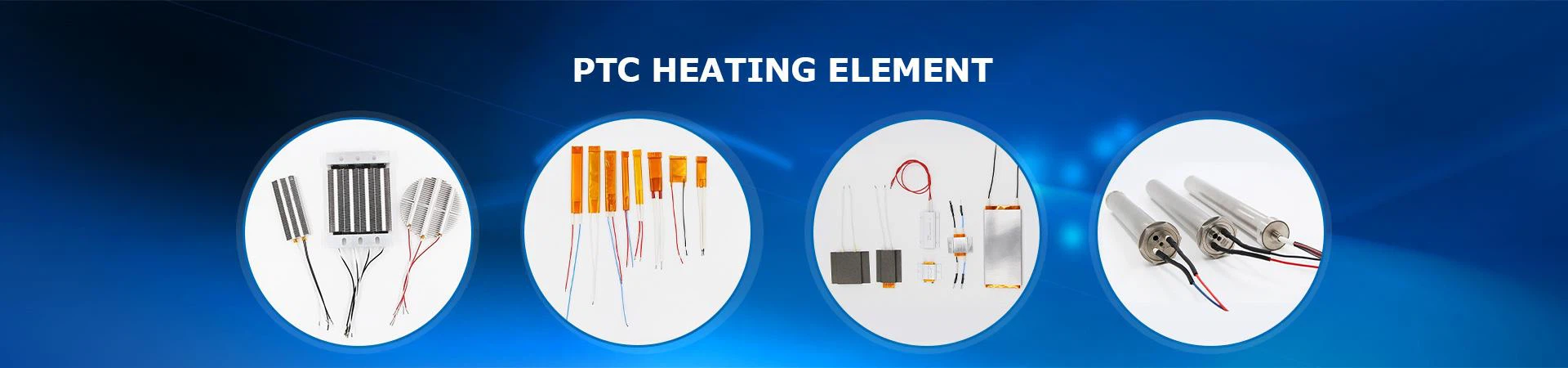
Jaye Heater supplies PTC heating components in different configurations to meet specific equipment requirements. Depending on the application, the assembly can be designed around the required voltage, power, installation space, airflow, and electrical connections.
A PTC air heater uses ceramic elements to convert electrical energy into heat. As the elements warm up, the electrical resistance of the PTC material increases over its characteristic temperature range. This changes the current and heating output under a constant-voltage supply.
For air-heating applications, the ceramic elements may be combined with aluminum fins or other heat-transfer structures. Air passes through or around the assembly, allowing heat to transfer from the elements to the moving air.
The final heating performance depends on more than the PTC element itself. Voltage, power, airflow, inlet-air temperature, assembly dimensions, and heat dissipation all affect the result. The heater should therefore be selected as part of the complete equipment design.
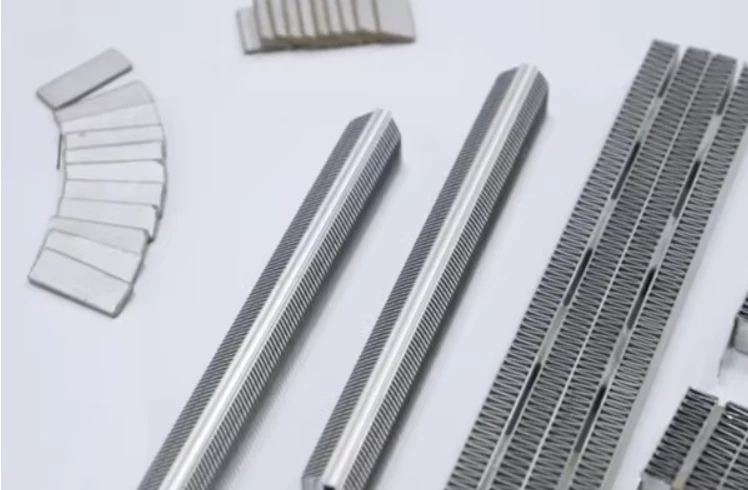
The resistance of a PTC element increases as its temperature rises through its characteristic transition range. This can help limit current and regulate heat generation under suitable operating conditions.
PTC elements can be incorporated into compact assemblies, making them useful for equipment with limited installation space. The overall dimensions and mounting structure can be adapted to specific applications.
PTC elements can begin generating heat soon after power is applied. Actual warm-up time depends on element size, rated power, airflow, and the thermal mass of the surrounding components.
PTC elements can be combined with aluminum fins and suitable supports to form forced-air heating assemblies. These designs can be integrated into equipment that requires controlled airflow and heat transfer.
Depending on the application, PTC heaters can be designed with different voltage ratings, power levels, dimensions, terminal arrangements, and mounting structures. The right configuration should be determined by the electrical and thermal requirements of the equipment.
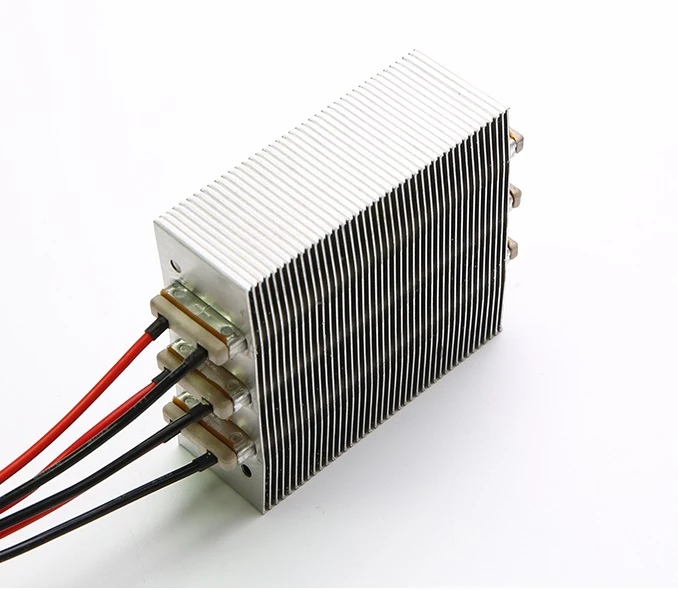
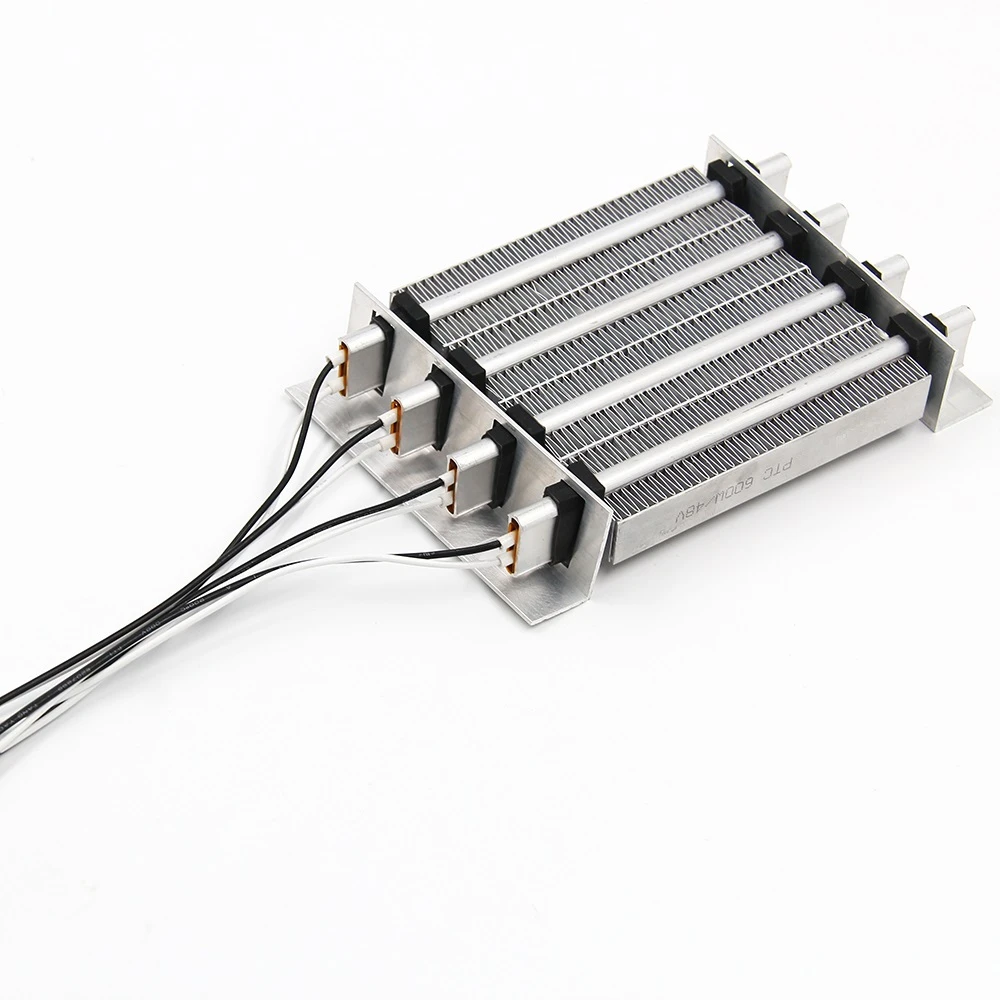

PTC heating technology is used in a wide range of equipment. The specific design and power rating vary according to the heating purpose.
PTC heaters can be found in selected household appliances, including fan heaters, air-treatment equipment, and other products that require compact electric heating.
In suitable systems, PTC air heaters can provide auxiliary air heating. Applications may include ventilation equipment, air-handling units, and certain dehumidifiers where the system design calls for an additional heating function.
Industrial PTC heaters can be integrated into equipment that requires localized heating or forced-air heat transfer. Selection must account for the required temperature, operating cycle, airflow, and environmental conditions.
PTC heating technology is also used in certain automotive heating systems, including electric cabin-heating applications. The design requirements vary significantly with vehicle architecture, voltage level, and applicable safety standards.
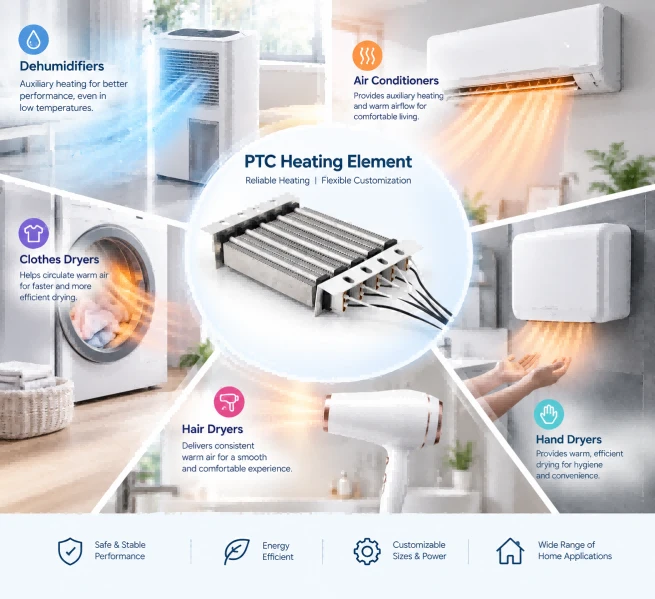
PTC heaters and conventional resistance heaters both convert electrical energy into heat, but their operating characteristics and design considerations differ.
| Feature | PTC Heater | Conventional Resistance Heater |
|---|---|---|
| Heating material | PTC ceramic | Resistance wire or other resistive materials |
| Resistance behavior | Increases significantly with temperature over its characteristic range | Usually changes comparatively little during normal operation |
| Heating output | Changes with element temperature and operating conditions | More directly determined by resistance and supply voltage |
| Common formats | Ceramic elements and finned assemblies | Cartridge, tubular, mica, band, and other heater types |
| Design priorities | PTC characteristics, heat dissipation, airflow, and electrical rating | Element loading, insulation, heat transfer, and temperature control |
| Suitable applications | Applications that benefit from PTC behavior and compatible assembly designs | Applications requiring a broad range of shapes, power ratings, and operating temperatures |
Its main characteristic is that electrical resistance increases as the element temperature rises through its characteristic transition range. This behavior can help regulate current and heating output under suitable conditions.
Not every application uses the same control arrangement. Although PTC elements have self-regulating resistance characteristics, additional temperature controls or independent safety protection may still be required.
Yes. PTC elements can be assembled with fins and suitable supports to transfer heat to moving air. The design must match the required airflow, temperature rise, and installation conditions.
Hot Tags: ptc air heater for dehumidifiers, China, manufacturers, suppliers, factory, wholesale, custom, price, electric, high quality, PTC Ceramic Heater, PTC Ceramic Heater 1500W, PTC Ceramic Heater Element, PTC Ceramic Heating Element, PTC Elements For Surface Heating, PTC Heater Element