24
Oct
 How to choose the right Finned Heater for specific applications?
Navigating the world of finned heaters for specific applications can be daunting. This guide simplifies the process, offering expert insights to help you select the perfect heater efficiently. From understanding your needs to ensuring safety and energy efficiency, this concise article provides essential advice, empowering you to make informed decisions swiftly.
23
Oct
 How are Finned Heaters different from other types of heaters?
Finned heaters, also known as finned strip heaters or finned tubular heaters, are a specific type of electric heater designed for efficient heat transfer and uniform heating in various applications.
20
Oct
 How are Finned Heaters used in industrial processes?
Finned heaters, also known as finned tubular heaters, are commonly used in various industrial processes where efficient and uniform heating is required. These heaters consist of a heating element (usually a tubular heater) that is surrounded by finned metal sheaths. The fins are designed to...
19
Oct
 How do Finned Heaters work?
Finned heaters are electric devices with a metal sheath, heating element, and fins. They provide efficient and uniform heating for various applications, like industrial ovens and HVAC systems.
30
Sep
 How does the airflow direction of finned heating tubes affect the effectivene...
The airflow direction of finned heating tubes significantly affects the effectiveness of air curtains. The finned heating tubes are designed to direct the heated airflow downward, covering the entire width of the doorway. This downward airflow creates a continuous and uniform airstream that...
07
Oct
 How can a flange heater be used for industrial heating applications?
Flange heaters are versatile heating devices commonly used in various industrial applications to heat liquids, gases, and other substances. They are designed for efficient and reliable heat transfer, making them suitable for a wide range of industrial heating needs. Here's how flange heaters can be used for industrial heating applications.
05
Oct
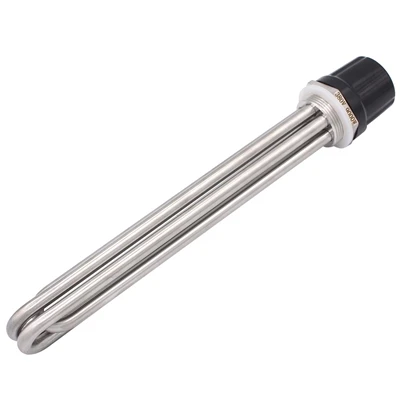 How does the length of the flange heater affect its heating capacity?
The length of a flange heater can have an impact on its heating capacity, but it's important to understand that heating capacity primarily depends on the heater's rated wattage and design. The length of the heating element typically influences the heat distribution and the amount of surface area available for heat transfer.
06
Oct
 How are flange heaters used for process heating in chemical plants?
Flange heaters are widely used in chemical plants for process heating applications, as they are versatile and capable of heating a variety of fluids and materials efficiently.Here's how flange heaters are typically employed in chemical plants for process heating
04
Oct
 How is the heating element of a flange heater protected from damage?
Protecting the heating element of a flange heater from damage is essential to ensure the heater's longevity and safe operation.Here are several methods and strategies used to protect the heating element in a flange heater:
03
Oct
 How is the temperature controlled in a flange heater?
Temperature control in a flange heater is essential to maintain the desired temperature of the fluid or substance being heated. Flange heaters use various temperature control methods and devices to achieve this.
01
Oct
 How do you calculate the power consumption of a flange heater?
To calculate the power consumption of a flange heater, you need to consider the heater's rated wattage and the amount of time it operates. The power consumption (in kilowatt-hours, kWh) can be calculated using a formula.
02
Oct
 How is the electrical connection made to a flange heater?
The electrical connection to a flange heater is a critical aspect of its installation. It must be done correctly to ensure safe and efficient operation.
30
Sep
 How are flange heaters used in the oil and gas industry?
Flange heaters play a crucial role in the oil and gas industry, where they are employed for various heating applications. These applications range from heating process fluids to preventing the freezing of critical equipment. Here are some common ways flange heaters are used in the oil and gas industry.
29
Sep
 How can flange heaters be integrated into a water heating system?
Flange heaters can be integrated into a water heating system to efficiently and effectively heat water for various industrial and commercial applications,let's see the steps.
28
Sep
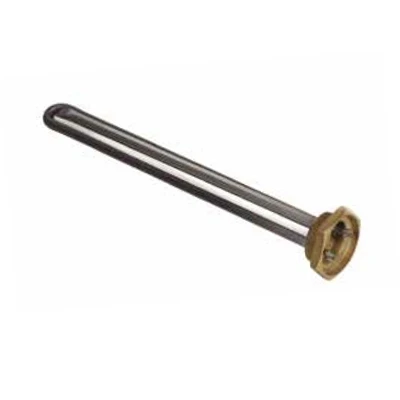 How do flange heaters handle high-pressure applications?
Flange heaters are commonly used in high-pressure applications to heat liquids, gases, and other substances. They are designed to handle the elevated pressures that can be encountered in industrial processes.
25
Sep
 How to prevent overheating in a flange heater?
Preventing overheating in a flange heater is essential to ensure the safety of the equipment, the materials being heated, and the surrounding environment.
25
Sep
 How can flange heaters be used for freeze protection?
Flange heaters can be used for freeze protection in various industrial and commercial applications where there is a risk of freezing in pipes, tanks, or equipment. These electric heaters are designed to provide localized heating, and they are typically installed in a way that allows them to prevent the freezing of liquids or materials inside a container or pipeline.
25
Sep
 How does insulation impact the efficiency of a flange heater?
Insulation in a flange heater improves efficiency by reducing heat loss, enabling faster heating, stabilizing temperatures, saving energy, extending the heater's lifespan, enhancing safety, and lowering operational costs.
22
Sep
 How do you ensure safety when operating a flange heater?
Operating a flange heater safely is crucial to prevent accidents, fires, and damage to equipment. Flange heaters are commonly used in industrial and commercial settings for heating liquids and gases.
21
Sep
 How long is the lifespan of a typical Flange Heater?
The lifespan of a typical flange heater can vary widely depending on several factors, including the quality of the heater, the operating conditions, and how well it is maintained. In general, flange heaters are designed to be durable and have a relatively long lifespan. They are often used in industrial applications for heating liquids and gases in tanks and pipelines.