Nov 25, 2026
Thick film heating technology has become an important option for manufacturers developing compact, responsive, and application-specific heating systems.
Unlike conventional heating elements that use resistance wires enclosed inside metal tubes, thick film heaters use printed resistive circuits on an electrically insulated substrate. This construction allows the heating circuit to be integrated more closely with the component or medium being heated.
Different manufacturers have developed their own thick film heater structures, materials, and application solutions.
Ferro Techniek is known for its thick film heating technology based on metal substrates, glass-ceramic insulation, and printed heating tracks. Its product portfolio also includes flow-through heaters and steamers.
At JAYE Heater, we manufacture stainless steel thick film heating plates and tubular thick film heating elements. Our products are designed for applications where compact construction, direct heat transfer, and customized heating structures are important.
In this article, we introduce the thick film heating solutions offered by Ferro Techniek and JAYE, explain their construction and application differences, and discuss what you should consider when selecting a thick film heater for your OEM equipment.
A thick film heater is an electric heating element manufactured by printing a resistive heating circuit onto an electrically insulated substrate.
Although the exact construction varies by manufacturer and product design, a typical metal-based thick film heater includes several functional layers:
Metal substrate: Provides the mechanical foundation for the heating element.
Electrical insulation layer: Separates the conductive heating circuit from the metal substrate.
Resistive heating circuit: Generates heat when electrical current passes through it.
Protective layer: Protects the printed circuit and supports the heater's operating requirements.
Electrical connection areas: Provide connection points for the power supply.
The heating circuit can be designed with different track patterns, layouts, and heating zones to match the application.
Compared with conventional tubular heating elements, thick film technology can offer a more integrated heating structure and relatively low thermal mass. This makes it useful in equipment that requires responsive heating and compact installation.
However, actual heating performance depends on the substrate, circuit design, power input, mounting conditions, and heat-transfer method.
Ferro Techniek has developed thick film heating technology for domestic appliances, professional catering equipment, automotive applications, and industrial products.
Its published technology focuses on metal substrates coated with glass-ceramic insulation, with resistive heating tracks applied through screen printing.
A typical Ferro Techniek thick film heating element uses a metal substrate, commonly stainless steel.
A glass-ceramic enamel layer is applied to provide electrical insulation. Resistive tracks are then screen printed onto the insulated surface and covered with a protective enamel layer.
This construction allows the heating track layout and power distribution to be adapted to different applications.
Ferro Techniek also describes several design options:
Different heating track layouts
Customized power distribution
Multiple heating zones
Multiple heating tracks
Integrated sensor tracks
Different substrate shapes and assemblies
These options give equipment manufacturers flexibility when designing heating systems around specific thermal requirements.
One of Ferro Techniek's notable technologies is E-FAST, short for Electronic Full Area Sensor Technology.
According to its published technical explanation, E-FAST uses a specialized enamel layer and a detection circuit to identify overheating across the heater surface.
When a particular area becomes too hot, the electrical characteristics of the sensing enamel change. The resulting leakage current can be detected by the associated electronics, allowing the system to respond to overheating.
This is different from relying only on a separate thermostat or thermal fuse positioned at one location.
For applications where localized overheating or uneven heat distribution is a concern, integrated sensing can be an important design consideration.
Ferro Techniek also offers flow-through heating solutions.
In this design, a liquid channel is connected to the surface of a thick film heating element. Water or another suitable liquid flows through the channel and receives heat from the element.
This arrangement is intended for applications requiring rapid, controlled liquid heating.
Potential applications include:
Coffee machines
Hot beverage equipment
Instant hot water systems
Equipment requiring hot water and steam
Professional catering appliances
The heating element, liquid channel, connection structure, and control system need to be designed together to achieve the required heating performance.
Ferro Techniek's thick film technology is also used in steamer applications.
The combination of a responsive heating element and suitable control technology can support rapid steam generation and controlled start-stop operation.
This is relevant to equipment such as steam ovens and professional cooking appliances, where steam output and temperature control are important.
In summary, Ferro Techniek's published solutions cover more than individual thick film heating elements. Its portfolio also includes integrated sensing, liquid heating assemblies, and steam-generating systems.
At JAYE Heater, our current thick film heater range focuses on stainless steel-based heating elements.
We offer two main product structures: thick film heater plates and tubular thick film heaters.
These designs address different heating requirements and installation conditions.
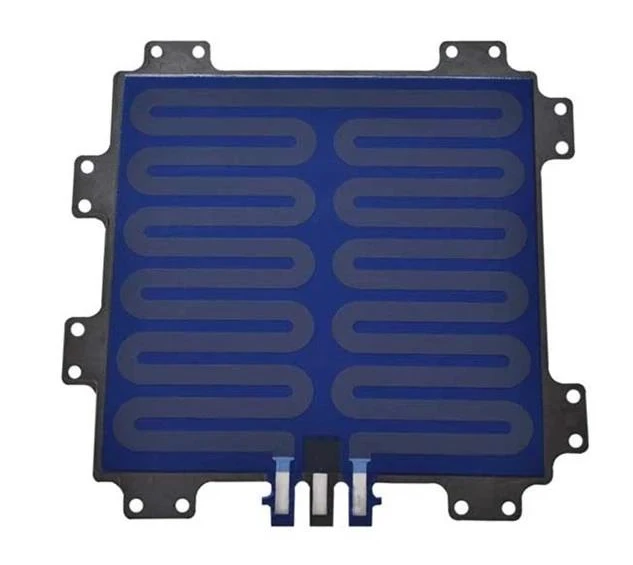
Our stainless steel thick film heater plate uses a stainless steel substrate with an integrated printed heating structure.
The plate-shaped construction is suitable for applications where heat needs to be transferred through a surface in close contact with the component being heated.
Key product characteristics:
Stainless steel substrate
Integrated thick film heating circuit
Compact plate-shaped structure
Thermal response depending on the application
OEM customization options
Potential applications include:
Water-heating appliances
Instant water dispensers
Household appliances
Medical-related equipment
Industrial heating equipment
For OEM projects, the heating area, substrate dimensions, rated power, voltage, and installation method should be evaluated together.
Our stainless steel tubular thick film heater uses a tubular structure rather than a flat heating plate.
The product construction integrates the heating circuit with a stainless steel tube, allowing heat to be transferred through the tubular body.
This structure is particularly relevant to selected water-heating applications.
Key product characteristics:
Stainless steel tubular construction
Integrated thick film heating structure
Compact heating design
Heat transfer through the tubular body
OEM-oriented customization
Potential applications include:
Instant water heaters
Water dispensers
Compact water-heating equipment
Other equipment requiring a tubular thick film heating structure
When selecting this product, you should consider water flow, pressure, water quality, heating demand, electrical insulation, and temperature control.

Both Ferro Techniek and JAYE offer thick film heating solutions, but their publicly presented product portfolios have different areas of emphasis.
Ferro Techniek's published information highlights advanced thick film track design, E-FAST sensing, flow-through heating, and steam-generating assemblies.
JAYE's current product information focuses on stainless steel thick film heater plates and tubular thick film heaters.
The following table summarizes the differences based on their published product information.
| Comparison | Ferro Techniek | JAYE Heater |
|---|---|---|
| Main technology | Thick film heating on insulated metal substrates | Stainless steel-based thick film heating |
| Substrate | Commonly stainless steel; other materials can also be used | Stainless steel |
| Heating structures | Flat, tubular, and other custom-shaped elements | Plate-shaped and tubular heaters |
| Heating circuit | Screen-printed resistive tracks | Integrated thick film heating circuit |
| Special technology | E-FAST integrated sensing, multi-track and zonal heating | Plate and tubular heater structures |
| Liquid heating | Flow-through heater solutions | Tubular thick film heater solutions for selected water-heating applications |
| Steam applications | Published thick film steamer solutions | Suitability should be evaluated according to the specific design |
| Product focus | Heating elements and integrated heating assemblies | Stainless steel thick film heating elements and OEM customization |
This comparison does not mean that the products are directly interchangeable.
The suitability of either solution depends on the actual equipment design, heating medium, operating conditions, electrical requirements, and safety requirements.
If you are an OEM manufacturer evaluating thick film heating technologies, we recommend focusing on the following points:
1. Heating structure
Does your equipment require a flat heating surface, a tubular heating structure, or a complete liquid-heating assembly?
2. Substrate and insulation
What substrate material and insulation structure are required for your operating environment?
3. Heating control
Does your application require a single heating circuit, multiple heating zones, integrated sensing, or external temperature protection?
4. Heat-transfer method
Will heat be transferred through direct surface contact, a water channel, or another medium?
5. Installation and assembly
Does the heater need to be integrated into a vessel, mounted against a surface, or connected to a larger heating assembly?
These factors are more useful for selecting a suitable heating solution than comparing product names alone.
The best thick film heater is not necessarily the one with the most advanced specifications. It is the one that matches your equipment's actual operating requirements.
Start with the heating task.
Do you need to heat water, maintain a surface temperature, generate steam, or heat a solid component?
Each application has different requirements for power distribution, thermal response, temperature stability, and heat transfer.
The substrate influences the heater's mechanical properties and thermal behavior.
You should also check the available installation space, mounting method, contact area, and mechanical loading.
A flat heater plate and a tubular heater should not be treated as interchangeable designs.
The electrical design should match your equipment's power supply and control system.
Important information includes:
Rated voltage
Required power
Electrical connection type
Insulation requirements
Temperature control method
Protection requirements
A heating element may have different temperature distributions depending on its printed circuit layout and operating conditions.
For applications sensitive to local overheating, you should consider the heating track design, sensor arrangement, temperature protection, and thermal testing.
Integrated sensing technologies, such as Ferro Techniek's E-FAST, are one possible approach. Other designs may use external sensors, thermostats, thermal fuses, or a combination of protection methods.
The right choice depends on the equipment's safety architecture and applicable standards.
Before moving to mass production, we recommend evaluating the heater in the actual equipment.
Testing should cover the relevant operating conditions, including heating response, temperature distribution, electrical insulation, thermal cycling, and the behavior of the complete heating system.
This is particularly important when changing the heater structure or supplier.
Thick film heaters can be used in a variety of applications. The appropriate structure depends on the heating task and the equipment design.
JAYE thick film heater application examples
Coffee machines often require rapid water heating and accurate temperature control.
Flow-through thick film heating solutions can be used to heat water as it passes through a heating channel. Some systems are also designed to provide hot water and steam.
Thick film heating technology can be integrated into appliance structures where compact heating and direct heat transfer are important.
The substrate, water-contact arrangement, electrical insulation, sealing, and dry-boil protection need to be considered during product development.
Instant water heaters require the heating element to respond to changes in water flow and heating demand.
Tubular thick film heaters may be evaluated for selected designs. The actual suitability depends on water flow, pressure, scale formation, power requirements, and the control system.
Application image: Instant Electric Faucet
Steam-generating equipment requires controlled heat input and reliable operation under changing thermal conditions.
Thick film heating elements can be incorporated into suitable steamer designs, with the complete system designed around steam output and temperature control.
Thick film heating technology can also be considered for specialized industrial and automotive applications where compact construction and customized heating patterns are required.
However, the substrate, electrical design, thermal environment, and qualification requirements must be evaluated for each project.
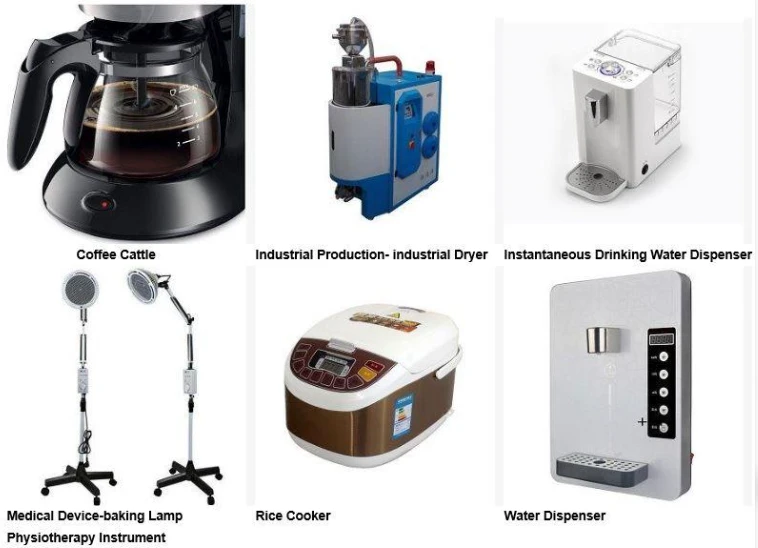
At JAYE Heater, we focus on manufacturing electric heating elements for OEM customers.
Our thick film heater range includes stainless steel heating plates and tubular heating elements for different equipment structures.
We understand that OEM customers do not simply need a heating element. They need a component that can fit into their product design and work under the intended operating conditions.
For your project, we can review the following information:
Heater type and structure
Required voltage and power
Heating area and dimensions
Installation and connection requirements
Heating medium and operating environment
Product drawings, samples, or existing heater specifications
If you are developing a new product or evaluating an alternative thick film heating solution, you can share your technical requirements with our team.
We will review the application and discuss whether our stainless steel thick film heater plate or tubular heater is suitable for your project.
A conventional tubular heater generally uses a resistance wire enclosed inside a metal sheath with electrical insulation material around the wire.
A thick film heater uses a printed resistive circuit on an electrically insulated substrate.
The two technologies have different construction methods, heat-transfer paths, and installation requirements. The appropriate choice depends on the equipment design and heating task.
Ferro Techniek's published portfolio includes thick film heating elements, flow-through heaters, and steamers.
Its technical information also highlights glass-ceramic insulation, customized heating track layouts, multiple heating zones, and E-FAST integrated overheat detection.
Our current published thick film heater range includes two main types:
Stainless steel thick film heater plates
Stainless steel tubular thick film heaters
These products are intended for different heating structures and OEM applications.
Thick film heater designs can be adapted according to the manufacturing process and product structure.
For a JAYE project, please provide your required dimensions, voltage, power, heating application, and installation information. We can then review the available customization options for our plate-shaped and tubular products.
Are you developing a new appliance, instant water heater, or industrial heating system?
At JAYE Heater, we manufacture stainless steel thick film heater plates and tubular thick film heating elements for OEM applications.
Whether you are reviewing an existing heating design or developing a new product, our team can help evaluate the heater structure and electrical requirements.
Send us your product drawing, sample, or technical specifications to discuss a suitable thick film heating solution.
Contact JAYE Heater to discuss your OEM heating project.
Ferro Techniek – Thick Film Technology
https://ottergroup.co.uk/ferro/thick-film-technology
Ferro Techniek – Thick Film Steamers
https://ottergroup.co.uk/ferro/thick-film-steamers
JAYE Heater – Stainless Steel Based Thick Film Heater
https://www.jaye-heater.com/flexible-film-heater/thick-film-heater/thick-film-stainless-steel-based-heater.html
JAYE Heater – Tubular Thick Film Heaters
https://www.jaye-heater.com/flexible-film-heater/thick-film-heater/tubular-tf-heaters.html
JAYE Heater – Flexible Thick Film Heater
https://www.jaye-heater.com/flexible-film-heater/flexible-thick-film-heater.html
JAYE Heater – Thick Film Heater Catalog
https://www.jaye-heater.com/Content/upload/PDF/2021568079/THICK-FILM-HEATER-CATALOG.pdf
Previous: No Information
Next: JAYE Immersion Heater vs WATTCO Immersion Heater: Liquid Heating