Nov 24, 2026
When you are developing a heating system or reviewing an existing OEM design, choosing the right thick film heater is about more than comparing prices. Substrate material, heating structure, thermal response, power requirements, installation space, and operating conditions all affect the final result.
Heatron offers several thick film heater technologies, including alumina, aluminum nitride (AlN), aluminum, and stainless steel. Each material has its own thermal and mechanical characteristics.
At JAYE Heater, we manufacture thick film heating elements with a focus on stainless steel-based designs, including thick film heating plates and tubular heaters. We also support customized solutions for OEM applications.
If you are considering an alternative to a Heatron thick film heater, our products may be worth evaluating when your application is compatible with a stainless steel substrate and our available heater structures.
The important point is that JAYE is not a universal, drop-in replacement for every Heatron heater. The right alternative depends on your application requirements, material selection, heater dimensions, electrical specifications, and installation conditions.
Yes. You can consider JAYE as an alternative supplier for selected thick film heater applications, particularly when your design can use a stainless steel-based heating element.
Our main thick film heater options include:
Stainless Steel Thick Film Heater Plates: Designed for surface heating applications that require a compact heating structure and close contact with the heated component.
Stainless Steel Tubular Thick Film Heaters: Designed for applications that require heat transfer through a tubular structure, including certain water-heating systems.
Customized Thick Film Heating Elements: We can evaluate heater dimensions, power requirements, voltage, connection positions, and installation conditions according to your project.
However, if your existing Heatron design uses an alumina or aluminum nitride ceramic substrate, a direct material-for-material replacement may not be suitable. You should review the thermal, electrical, and mechanical requirements before changing the heater design.
Before selecting an alternative, it is important to understand that thick film heaters are not all built on the same substrate.
The substrate affects heat transfer, insulation, mechanical strength, operating temperature, and the way the heater can be installed.
Heatron offers several substrate options. Here is a practical overview of their general characteristics.
| Substrate | General characteristics | Typical design considerations |
|---|---|---|
| Alumina (Al₂O₃) | Ceramic material with strong electrical insulation and high-temperature capability | Suitable for applications requiring electrical insulation and elevated operating temperatures |
| Aluminum Nitride (AlN) | Ceramic material with high thermal conductivity | Considered for applications requiring rapid heat transfer and temperature uniformity |
| Aluminum (Al) | Lightweight metal with good thermal conductivity | Suitable for controlled, relatively low-temperature heating applications |
| Stainless Steel | Metal substrate with structural strength and corrosion-resistant material options | Suitable for compact heater plates and designs requiring mechanical durability |
These materials are not interchangeable simply because they all use thick film heating technology.
For example, an aluminum nitride heater may be selected for its thermal conductivity, while a stainless steel heater may be preferred for its mechanical structure or installation requirements.
When you evaluate a replacement, we recommend starting with the substrate and the actual heat-transfer conditions rather than comparing product names alone.
At JAYE Heater, we focus on stainless steel-based thick film heating elements. Our product range includes plate-shaped and tubular structures for different heating requirements.
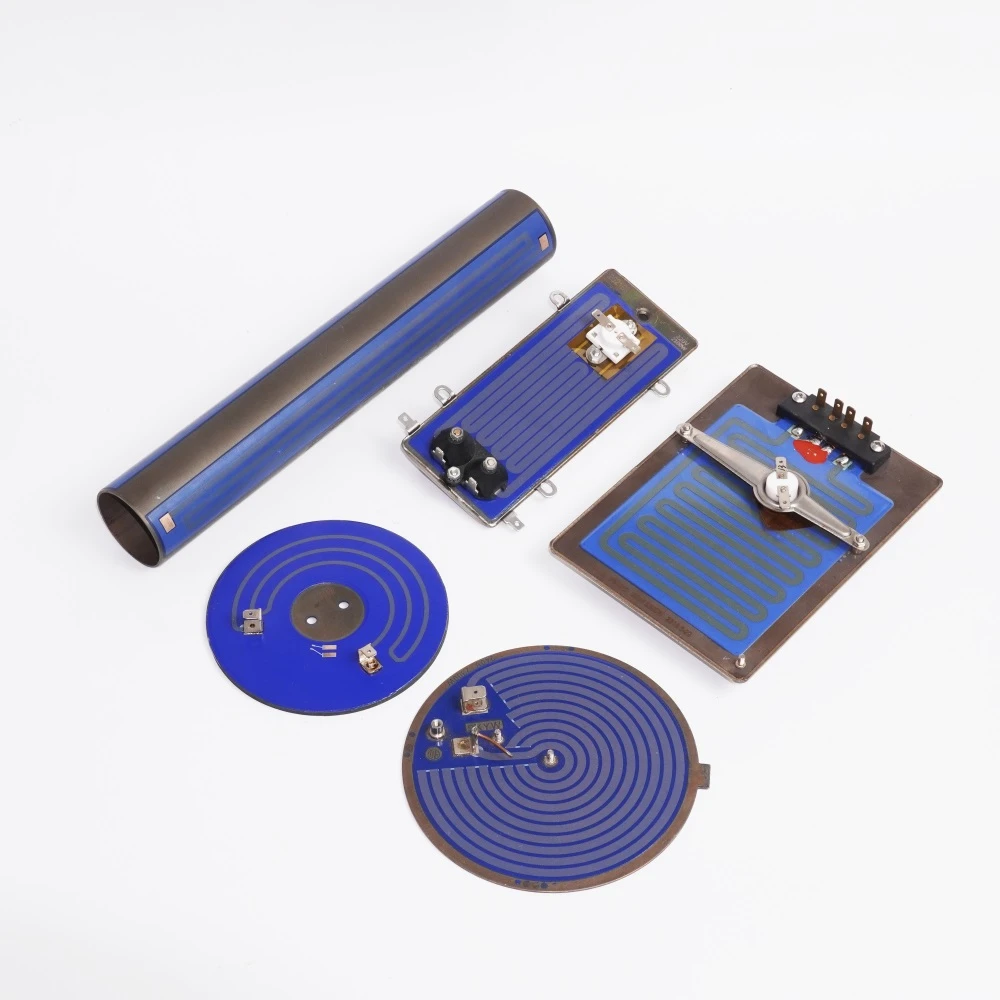
Our stainless steel thick film heater plate uses a screen-printing process to form the insulation layers, resistive heating circuit, conductive patterns, and protective layer on a stainless steel substrate.
This construction creates an integrated heating element with a relatively compact structure.
Key characteristics include:
Stainless steel substrate
Printed resistive heating circuit
Compact heating structure
Fast thermal response, depending on the design and operating conditions
Customizable dimensions and electrical specifications
OEM-oriented manufacturing support
Potential applications include:
Medical and laboratory equipment
Water-heating appliances
Heating surfaces in household appliances
Industrial heating equipment
Compact equipment requiring integrated surface heating
https://www.jaye-heater.com/flexible-film-heater/thick-film-heater/thick-film-stainless-steel-based-heater.html
For applications that require heating through a tubular structure, we also offer stainless steel tubular thick film heaters.
Unlike a flat heater plate, a tubular design provides a defined internal flow path or heating channel, depending on the application structure.
This makes tubular thick film heaters worth evaluating for certain instant water-heating applications.
Key characteristics include:
Stainless steel tubular construction
Integrated thick film heating structure
Heating around the tubular body
Compact installation potential
Customized electrical and structural requirements
For water-heating applications, the design should consider water flow, pressure, heat transfer, scale formation, electrical insulation, and temperature control.
A suitable design must be evaluated as part of the complete heating system rather than as an isolated heating element.
When comparing JAYE and Heatron, we recommend looking at the available product structures and substrate materials first.
The two manufacturers may offer thick film heating solutions, but their product ranges and material options are not identical.
| Comparison point | Heatron | JAYE Heater |
|---|---|---|
| Thick film technology | Offers several thick film heater technologies | Manufactures stainless steel-based thick film heating elements |
| Substrate options | Alumina, aluminum nitride, aluminum, and stainless steel | Stainless steel-based designs |
| Heater structures | Includes ceramic and metal-based heater designs | Includes plate-shaped and tubular designs |
| Customization | Offers customized heater designs and configurations | Supports OEM customization according to project requirements |
| Application focus | Medical, industrial, transportation, semiconductor, food service, and other sectors | Water heating, household appliances, medical-related equipment, and industrial heating applications |
Note: This table describes the product options identified in the manufacturers' published information. It does not establish that every JAYE product is a direct replacement for a Heatron product.
If your existing heater uses a stainless steel substrate, JAYE may be a practical supplier to evaluate.
If your current design uses alumina or aluminum nitride, you should pay particular attention to the differences in thermal conductivity, electrical insulation, mechanical properties, and operating temperature.
Changing the substrate may affect the heater's performance and the surrounding equipment. In some cases, the design may need to be adjusted rather than simply replacing one heater with another.
A flat heater plate and a tubular heater perform different roles in a heating system.
A plate-shaped heater is generally considered when heat needs to be transferred across a surface. A tubular heater may be more appropriate when the application requires a tubular heating structure or an internal flow channel.
Therefore, the replacement decision should consider the complete heater assembly, including its mounting method, contact surface, connections, and heat-transfer path.
If you are considering changing from a Heatron heater to a JAYE solution, we recommend reviewing the following engineering factors before requesting a quotation.
First, identify the substrate used in your existing heater.
Is it alumina, aluminum nitride, aluminum, or stainless steel?
The material affects thermal performance, insulation requirements, mechanical strength, and operating conditions.
If you are changing from a ceramic substrate to stainless steel, you should not assume that the original design can remain unchanged.
The replacement heater must meet the electrical requirements of your equipment.
When evaluating the design, consider:
Rated voltage
Required heating power
Power distribution
Electrical connection method
Power supply characteristics
The heater's power should be selected according to the required heating performance and the actual operating conditions.
The heating area should match the component or medium being heated.
An unsuitable heating pattern may create local hot spots, uneven temperature distribution, or insufficient heating in certain areas.
We recommend reviewing the heater dimensions, printed heating pattern, contact surface, and temperature distribution together.
Thermal response is influenced by the substrate, heater construction, power input, mounting conditions, and the thermal properties of the heated object.
You should also distinguish between the heater's maximum allowable temperature and the normal operating temperature of your equipment.
For a replacement project, the target temperature, heating time, temperature control method, and cooling conditions should all be considered.
Even when two heaters have similar electrical specifications, their mechanical structures may be different.
Before confirming a replacement, check:
Overall dimensions and thickness
Mounting holes and fixing positions
Bending or forming requirements, if applicable
Lead wire position and connection type
Insulation and sealing requirements
Space available inside the equipment
These details are particularly important for OEM projects because a change in heater dimensions or connections may affect the surrounding assembly.
Our stainless steel thick film heater solutions can be evaluated for different applications, depending on the required structure and operating conditions.
Thick film heating elements are used in water-heating equipment where compact construction and efficient heat transfer are important.
Our stainless steel tubular thick film heaters may be considered for selected instant water-heating designs.
For these applications, you should evaluate water flow, pressure, scale formation, temperature control, and electrical safety as part of the complete system.
Compact heating elements may be required in equipment that needs controlled heating within limited installation space.
Our stainless steel thick film heater plates can be evaluated for suitable heating surfaces and equipment structures.
The final design should be reviewed against the equipment's temperature accuracy, cleaning requirements, electrical insulation, and relevant regulatory requirements.
Some household appliances require integrated heating elements with compact structures and customized electrical connections.
Depending on the appliance design, a stainless steel thick film heater plate or tubular heater may be considered.
Industrial equipment may require heating elements designed around specific installation dimensions, heating areas, and operating conditions.
We can evaluate customized stainless steel thick film heater designs according to the requirements of your equipment.
Choosing a replacement supplier is not only about finding a similar product. You also need a manufacturer that can understand your equipment requirements and support the development process.
At JAYE Heater, we focus on electric heating elements and OEM-oriented manufacturing.
For thick film heater projects, we can work with your team to review:
Product structure: Plate-shaped or tubular heater configurations.
Electrical requirements: Voltage, power, and connection design.
Mechanical requirements: Dimensions, installation positions, and mounting conditions.
Application conditions: Heating medium, target temperature, and operating environment.
Customization needs: Product configuration according to your equipment design.
If you already have a Heatron heater sample, technical drawing, or product specification, you can share it with us for an initial evaluation.
We can then review whether our stainless steel thick film heater structure is suitable for your application and whether design adjustments may be required.
JAYE can be considered as an alternative supplier for selected applications, particularly when a stainless steel-based thick film heater is suitable.
However, we do not recommend assuming that every Heatron alumina, aluminum nitride, aluminum, or stainless steel heater can be replaced directly. Material, structure, electrical requirements, and operating conditions should be evaluated first.
We support OEM customization for our thick film heater products. The available shape, dimensions, connections, and construction depend on the selected product structure and manufacturing feasibility.
Please share your drawing or application requirements so we can review the design.
You should compare more than rated power and voltage.
Important factors include substrate material, heating area, temperature distribution, thermal response, insulation performance, mechanical dimensions, mounting method, and connection design.
For critical applications, prototype testing and validation in the actual equipment are recommended before mass production.
Are you looking for an alternative to a Heatron thick film heater for your OEM project?
At JAYE Heater, we manufacture stainless steel-based thick film heating plates and tubular heating elements for selected heating applications.
Send us your existing heater drawing, sample, or technical requirements. Our team can review the substrate, electrical specifications, and mechanical structure to help determine whether a JAYE custom thick film heater is suitable for your equipment.
Contact JAYE Heater to discuss your thick film heater project.
Heatron – Thick Film Heating: Introduction
Heatron – The Basic Components and Structure of a Thick Film Heater
Heatron – Thick Film Stainless Steel Heaters
Heatron – Ceramic Core Aluminum Nitride (AlN) Heaters
Heatron – Thick Film Aluminum Heaters
JAYE – Thick Film Stainless Steel Based Heater
JAYE – Tubular Thick Film Heater
JAYE – Thick Film Heater Catalog
Previous: JAYE vs Backer Domestic Tubular Heater: Home Appliance OEM Guide
Next: Who Manufactures Backer-Type Tubular Heaters? JAYE Included