Sep 16, 2026
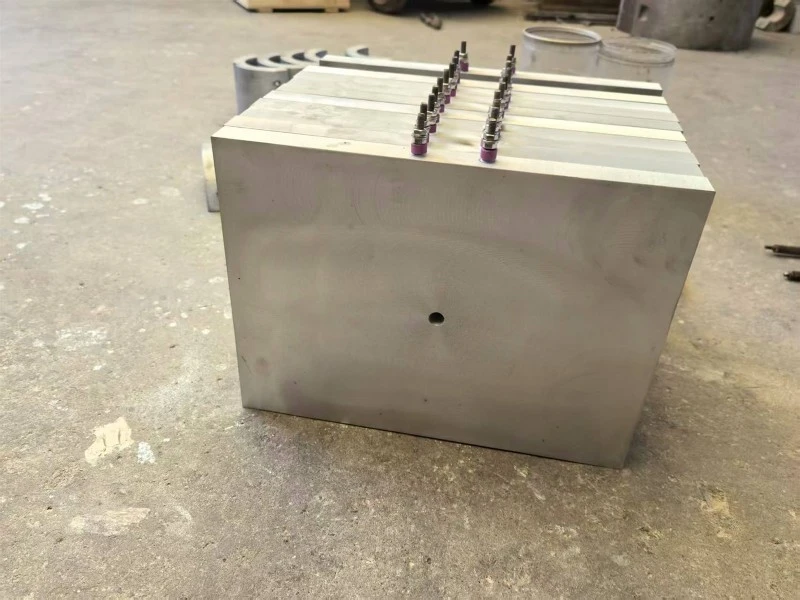
Cast-in aluminum heaters are heating elements designed to provide uniform and efficient heating for aluminum molds, dies, plates, and other industrial tooling. By embedding the heating element directly into a cast aluminum body, the heater creates excellent thermal contact and transfers heat evenly across the mold surface.
They are commonly used in plastic processing, rubber molding, packaging, food processing, thermoforming, and other applications where precise and stable mold temperature is important.

A cast-in aluminum heater consists of an electric heating element embedded inside an aluminum casting. The heating element is positioned according to the required heating area, while the aluminum body acts as an efficient thermal conductor.
When electrical power is supplied, the internal resistance heating element generates heat. The heat is transferred through the aluminum casting and distributed across the mold or tooling surface.
This integrated construction helps reduce hot spots and improves temperature uniformity compared with heaters that only contact the mold externally.
The working process can be divided into four main steps:
When the heater is connected to the power supply, electrical current passes through the internal resistance heating element. The electrical resistance generates heat according to the applied voltage and power.
The heating element is surrounded by cast aluminum. Because aluminum has good thermal conductivity, heat can quickly move from the internal heating element to the entire aluminum heater body.
The cast-in heater is installed directly against or integrated with the aluminum mold. Heat is transferred from the heater into the mold through thermal conduction.
This direct thermal path helps reduce heat loss and allows the mold to reach the required operating temperature efficiently.

Cast-in aluminum heaters can be used for various aluminum mold and tooling applications, including:
Several factors should be considered when selecting a cast-in aluminum heater:
| Parameter | Typical Consideration |
|---|---|
| Heater Type | Cast-in aluminum heating plate/block |
| Mold Material | Aluminum or other thermally conductive materials |
| Voltage | Customized |
| Power | Customized |
| Operating Temperature | Determined by the application |
| Dimensions | Customized to match the mold |
| Heating Element Layout | Designed according to the heating area |
| Mounting | Holes, threaded holes or customized mounting |
The required wattage should be determined according to the mold dimensions, target temperature, heating-up time, insulation, ambient conditions, and heat loss.
Cast-in aluminum heaters provide a practical way to heat aluminum molds with efficient heat transfer, uniform temperature distribution, and an integrated structure. By embedding the resistance heating element into an aluminum casting, the heater can transfer heat efficiently to the mold while allowing customized heating zones, mounting configurations, and temperature-control solutions.
For aluminum molds that require stable and controlled heating, a properly designed cast-in aluminum heater can help improve heating efficiency, temperature consistency, and overall process stability.
Yes. The heater can be customized according to the mold dimensions, wattage, voltage, heating-zone layout, mounting holes, sensor location.
Yes. The internal heating element can be distributed according to the required heating area. Combined with the thermal conductivity of aluminum, this helps provide more uniform heat distribution.
Previous: Silicone Heaters for Pipe Heating: Why Maximum Temperature Is Not the Key
Next: Heating Elements for Air Ducts: Condensation Control in Ventilation Systems